Treasure-Filled Tomb Discovered in the Mausoleum of China’s First Emperor
A New Discovery Inside a Legendary Necropolis
Archaeologists have uncovered an extraordinary tomb filled with treasures inside the massive burial complex of Qin Shi Huang. The discovery was made within the famous Mausoleum of the First Qin Emperor, a site more than 2,000 years old.
The tomb contains a 16-ton casket packed with valuable artifacts, including armor, weapons, approximately 6,000 bronze coins, jade ornaments, and gold and silver camel figures. Researchers believe the burial may belong to Prince Gao, whose tragic story appears in the historical text Records of the Grand Historian.
If confirmed, the discovery could provide rare archaeological evidence supporting stories recorded in ancient Chinese history.
A Discovery That Began With a Well
The story of this remarkable site began in 1974 when farmers digging a well near Xi'an uncovered a single clay soldier.
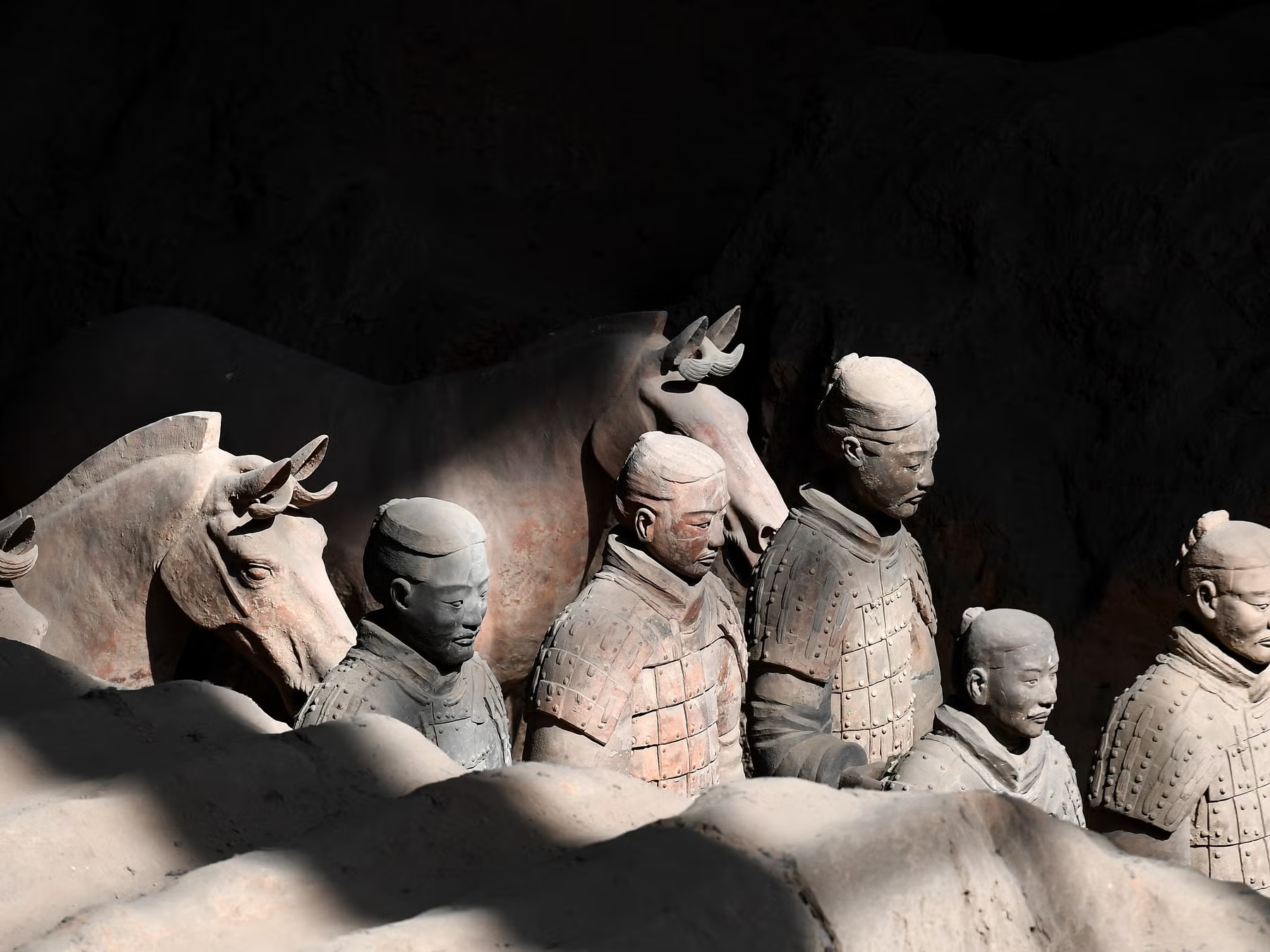
What initially seemed like a strange artifact soon led to one of the greatest archaeological discoveries of the 20th century. Continued excavations revealed thousands of life-sized clay warriors—the famous Terracotta Army—standing guard over a vast imperial necropolis.
This enormous funerary complex was built to protect and accompany Qin Shi Huang in the afterlife. Even after more than five decades of research, the site continues to reveal new secrets about the powerful Qin dynasty.
An Untouched Tomb After Two Millennia
The newly excavated burial chamber stands out because it appears to have remained untouched by grave robbers for over 2,000 years. This is extremely rare in ancient archaeology, as most historical tombs were looted long ago.
According to excavation leader Jiang Wenxiao, researchers initially expected the tomb to have been plundered like many others.
Instead, they discovered a sealed chamber containing an intact treasure-filled coffin. The preservation of such a burial offers archaeologists a unique opportunity to study the burial customs and wealth of the Qin imperial court.
Treasures From the Qin Dynasty
Inside the massive casket, archaeologists found a variety of artifacts that reflect the power and resources of the Qin elite. Among the discoveries were:
Military equipment, including armor and weapons
Thousands of bronze coins, likely symbolizing wealth in the afterlife
Jade ornaments, traditionally associated with protection and status in ancient Chinese culture
Gold and silver camel figurines, possibly representing trade connections along early Silk Road routes
Together, these objects reveal the importance placed on status, protection, and prosperity in ancient Chinese burial traditions.
A Tomb at Risk of Decay
Despite the incredible finds, the tomb itself was already showing signs of deterioration. Archaeologists described the burial structure as heavily decayed, raising concerns that the artifacts could degrade further if left untouched.
For this reason, researchers decided to proceed with careful excavation and study, even though the tomb had originally been discovered in 2011. Their goal was to preserve the artifacts and gather as much information as possible before further damage occurred.
Verifying Ancient Historical Accounts
The potential connection between the tomb and Prince Gao makes the discovery even more significant. Historical records describe dramatic events within the Qin royal family after the death of Qin Shi Huang, including accounts of royal burials and political intrigue.
If archaeologists can confirm the identity of the tomb’s occupant, the discovery could help validate details recorded in Records of the Grand Historian, one of the most important historical works in Chinese history.
A Site That Still Holds Many Secrets
More than half a century after the first terracotta soldier was uncovered, the mausoleum complex near Xi’an remains one of the world’s most fascinating archaeological sites. Each new discovery offers fresh insight into the power, culture, and burial traditions of the Qin dynasty.
As excavations continue, researchers believe many more secrets may still lie hidden beneath the earth surrounding the tomb of China’s first emperor.