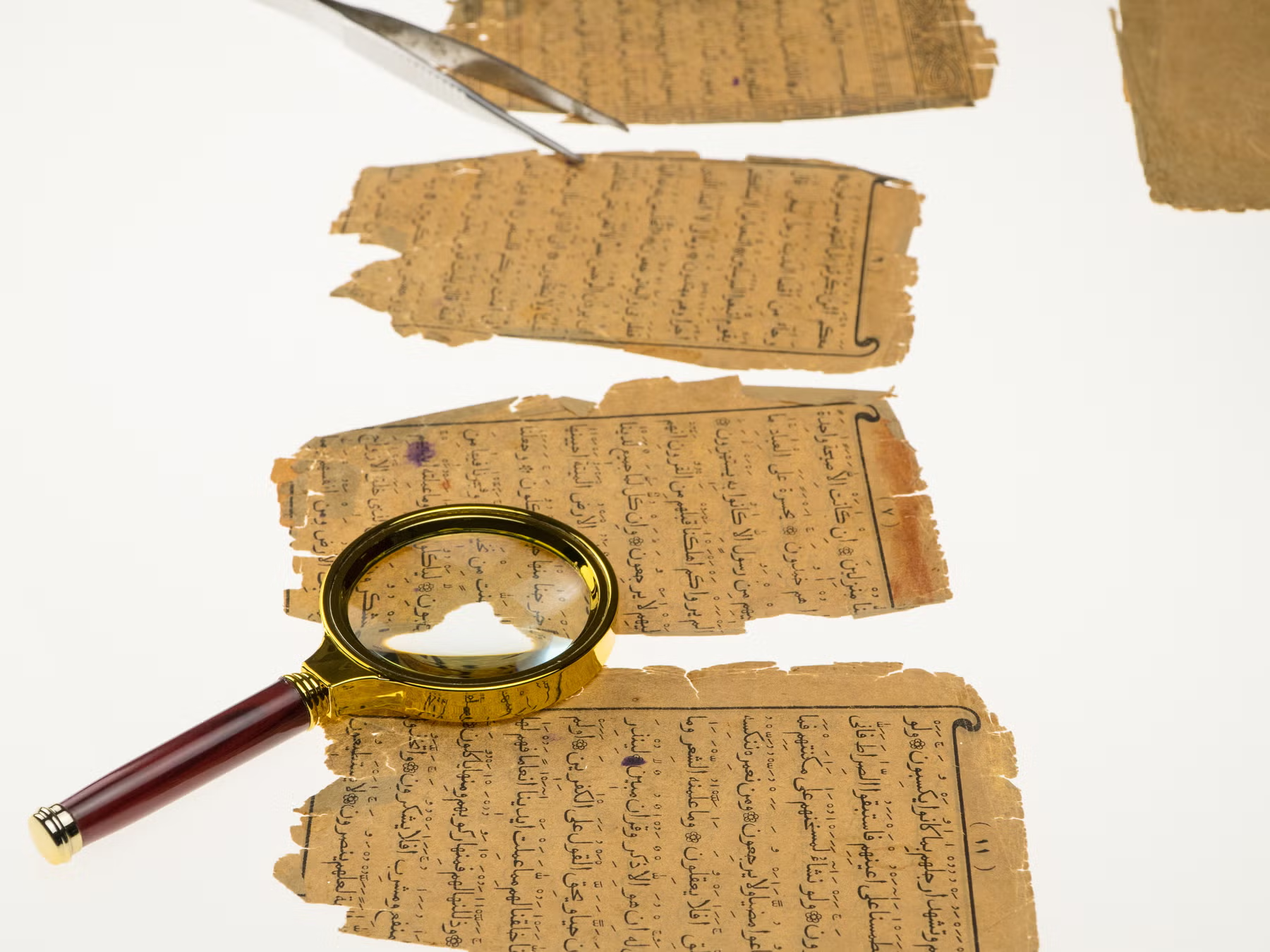
The letter, dating to the 16th or 17th century, contained an order from King Qashqash, a Nubian ruler whose historicity was previously uncertain.
Ancient Document Confirms the Existence of Nubian King Qashqash
A Small Fragment With Major Historical Importance
A small piece of paper discovered in northern Sudan has helped solve a long-standing historical mystery. Archaeologists found more than 20 paper fragments dating from the 16th or 17th centuries, including a document issued by King Qashqash.
For years, historians debated whether Qashqash was a real ruler or simply a figure mentioned in legends and later religious writings. This newly discovered document now provides direct physical evidence that the king truly existed.
Discovery at the Ruins of Old Dongola
The fragments were uncovered during excavations at Old Dongola, an important historical city in medieval Nubia.
Old Dongola once served as the capital of the Kingdom of Makuria, a powerful Christian state that dominated parts of the Nile Valley for centuries.
Archaeologists discovered the papers inside the ruins of what appears to have been the residence of a high-ranking official or elite leader, suggesting that the building once played a role in administration or governance.
A Royal Order Written on Paper
Among the fragments was a particularly significant piece measuring just 4 by 3.5 inches. Despite its small size, the document carries major historical importance.
Written in Arabic, the text contains an administrative order issued by King Qashqash to one of his subordinates. The order instructs the exchange of an ewe for textiles, reflecting a routine transaction within the kingdom’s economic system.
Although the command itself is simple, the document is remarkable because it is issued directly in the king’s name, confirming his authority and presence in the historical record.
Research That Verified the Discovery
The document became the focus of a scholarly study published in the journal Azania: Archaeological Research in Africa.
Researchers used several scientific and historical methods to analyze the find, including:
Radiocarbon dating to determine the age of the paper
Numismatic evidence (study of coins) from the region
Written historical sources connected to the period
Together, these methods helped scholars investigate leadership, social relationships, and the growing influence of Arabic culture in Dongola during the Funj period.
Turning Legend Into History
Before this discovery, references to King Qashqash appeared only in scattered historical mentions and later religious or legendary texts. Because these sources were written long after his supposed reign, historians could not confirm whether he had truly ruled.
The newly discovered document changes that. It transforms a king previously known only from oral traditions and later writings into a verified historical figure who exercised real political authority.
A Glimpse Into Everyday Governance
Interestingly, the document itself does not record a dramatic political event. Instead, it captures something much more ordinary: a routine administrative instruction involving trade goods.
This small detail is precisely what makes the discovery so valuable. It shows that Qashqash was actively involved in the everyday governance of his kingdom, issuing orders that managed economic exchanges and administrative affairs.
Reconstructing Nubia’s Pre-Colonial Past
Finds like this help historians better understand the complex political and cultural history of medieval Nubia. The discovery also sheds light on how Arabic language and administrative practices became increasingly influential in the region during the Funj period.
Even a small fragment of paper can reshape our understanding of the past. In this case, it confirms that King Qashqash was not a legend but a real ruler who governed in Old Dongola roughly 500 years ago, leaving behind a brief yet powerful trace of his authority.