Lost Cold War Bunker Rediscovered Beneath Scarborough Castle
A Hidden Chapter of the Nuclear Age
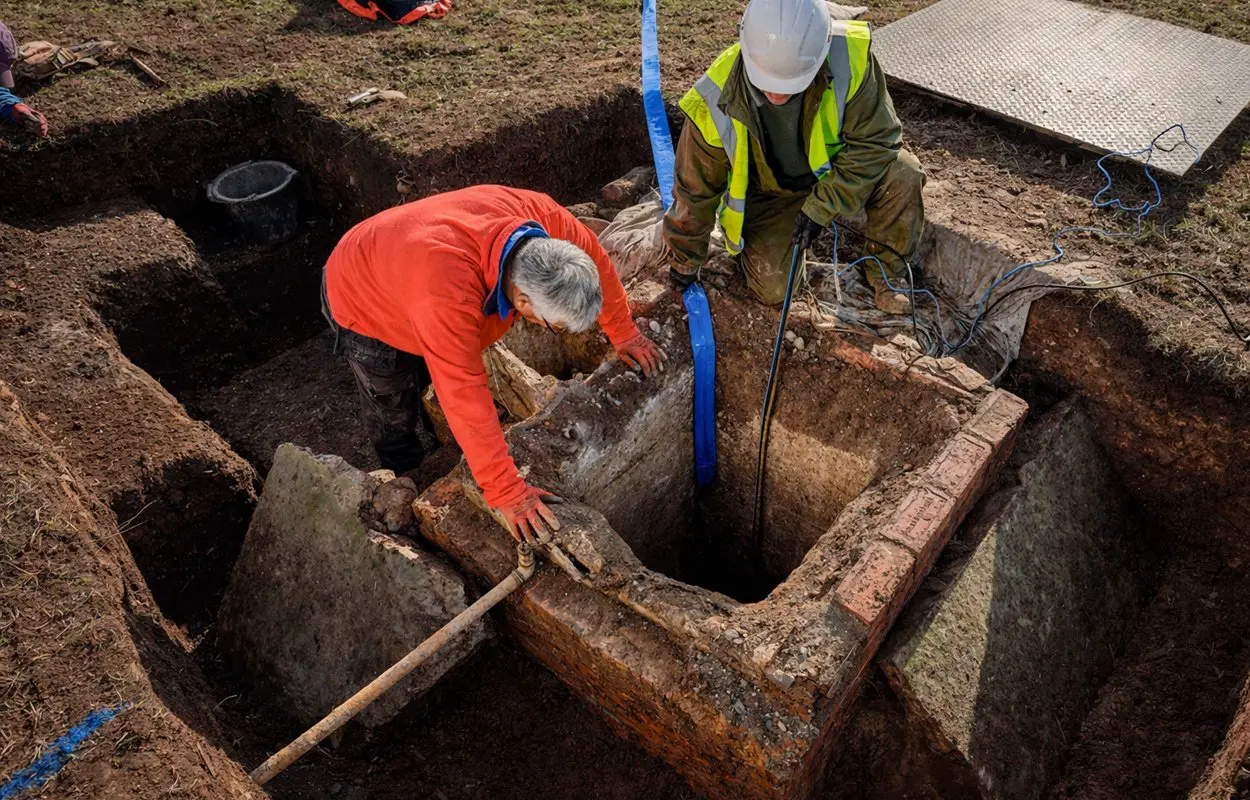
Archaeologists have rediscovered a long-lost Cold War observation post buried within the grounds of Scarborough Castle. The underground structure, recently uncovered during an excavation led by English Heritage, offers new insight into Britain’s civil defense system during the tense decades of the nuclear era.
The bunker was originally constructed between 1963 and 1964 as part of a nationwide monitoring network run by the Royal Observer Corps. At the height of the Cold War, more than 1,500 similar monitoring posts were built across the United Kingdom to track nuclear explosions and radioactive fallout if a nuclear conflict occurred.
Although the Scarborough post was sealed and buried in 1968, its exact location was forgotten over time.
Tracking Down the Lost Structure
The rediscovery followed a careful investigation by heritage experts. Researchers examined historical records and conducted a new ground survey to determine the most likely location of the bunker on the castle headland.
Excavations began on March 7, and archaeologists quickly identified the entrance to the buried structure. After uncovering the sealed hatch, specialists lowered cameras into the chamber to assess its interior condition without disturbing the space.
The discovery marks the first time the bunker has been seen since it was closed and buried more than five decades ago.
Inside a Cold War Monitoring Post
Monitoring posts built by the Royal Observer Corps followed a standardized design. The compact underground chambers were built to protect occupants from the immediate effects of nuclear explosions.
Inside these posts were essential tools used to detect and measure nuclear events, including:
Monitoring instruments for detecting nuclear blasts
Communications equipment to relay information to authorities
Bunk beds for volunteers stationed inside the bunker
These posts formed a crucial part of Britain’s early-warning and damage-assessment system during the Cold War.
A Nationwide Network of Volunteers
During the Cold War’s peak, the Royal Observer Corps relied on a large network of volunteers. More than 20,000 civilian members were responsible for identifying nuclear detonations and reporting data that could help authorities estimate the scale and location of attacks.
Despite their importance, many of these monitoring posts remained largely unknown to the public.
According to Kevin Booth, most people living in Britain were only a few miles from one of these bunkers, yet few realized they existed.
A Strategic Observation Point Through History
The location of the bunker at Scarborough Castle reflects the strategic importance of the headland throughout thousands of years.
The site has served as a lookout point across multiple historical periods, including:
A Bronze Age settlement
A Roman signal station
A medieval fortress
A First World War gun battery
And finally, a Cold War nuclear monitoring post
This long history highlights how the same high ground has repeatedly been used to observe and defend the coastline.
Honoring the Royal Observer Corps
The excavation is part of a larger project marking the centenary of the Royal Observer Corps in 2025. The initiative is supported by the National Lottery Heritage Fund and aims to uncover the stories of the largely volunteer organization.
Researchers are also working to locate former ROC members ahead of a commemorative gathering at the York Cold War Bunker.
According to Helen Featherstone, the rediscovery adds an important piece to the story of Britain’s Cold War defenses while recognizing the critical role played by ROC volunteers in monitoring potential nuclear threats.
A Reminder of a Tense Era
The buried bunker beneath Scarborough Castle serves as a powerful reminder of a time when the threat of nuclear war shaped national security planning. By uncovering and studying these hidden structures, historians are preserving the legacy of the volunteers who quietly stood watch during one of the most uncertain periods of modern history.