A largely intact Iron Age battle trumpet has been uncovered in West Norfolk, making it one of just three known carnyx from Britain and among the most complete examples discovered in Europe.
The bronze instrument, dating to around 2,000 years ago, was found during a routine archaeological investigation carried out by Pre-Construct Archaeology as part of the planning process for new housing. These animal-headed trumpets were used by Celtic groups across Europe to rally and intimidate warriors in battle, and they also captivated the Romans, who often portrayed them as spoils of war.
The hoard also contains elements of a second carnyx, a sheet-bronze boar’s head that once formed part of a military standard, five shield bosses, and an iron object whose purpose is unclear. Together, the objects are exceptionally rare in both Britain and the wider European context.
Historic England is collaborating with Pre-Construct Archaeology, Norfolk Museums Service, and the National Museum of Scotland to oversee the research and conservation of the collection.
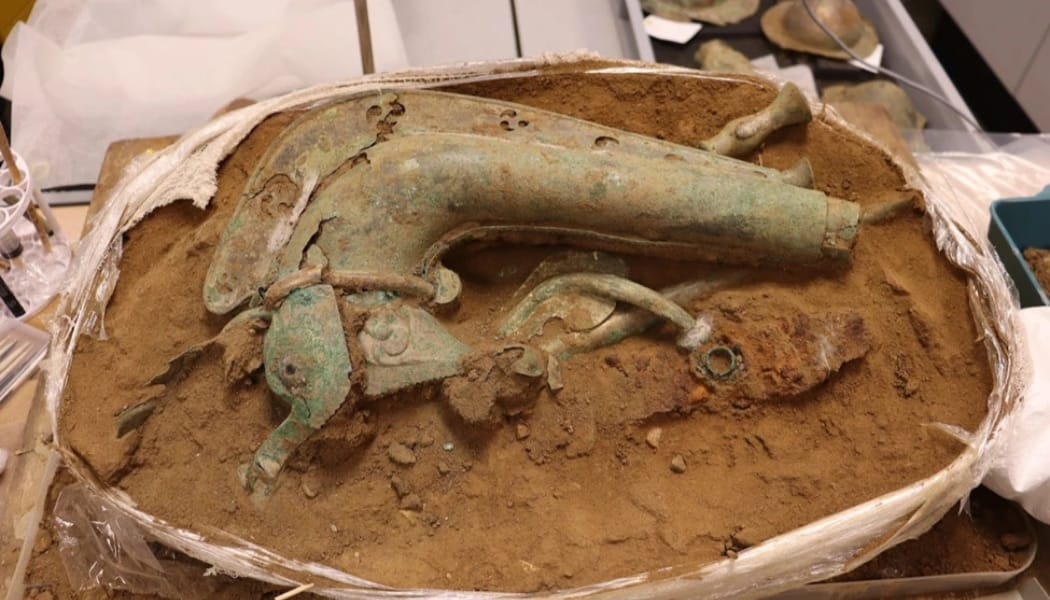
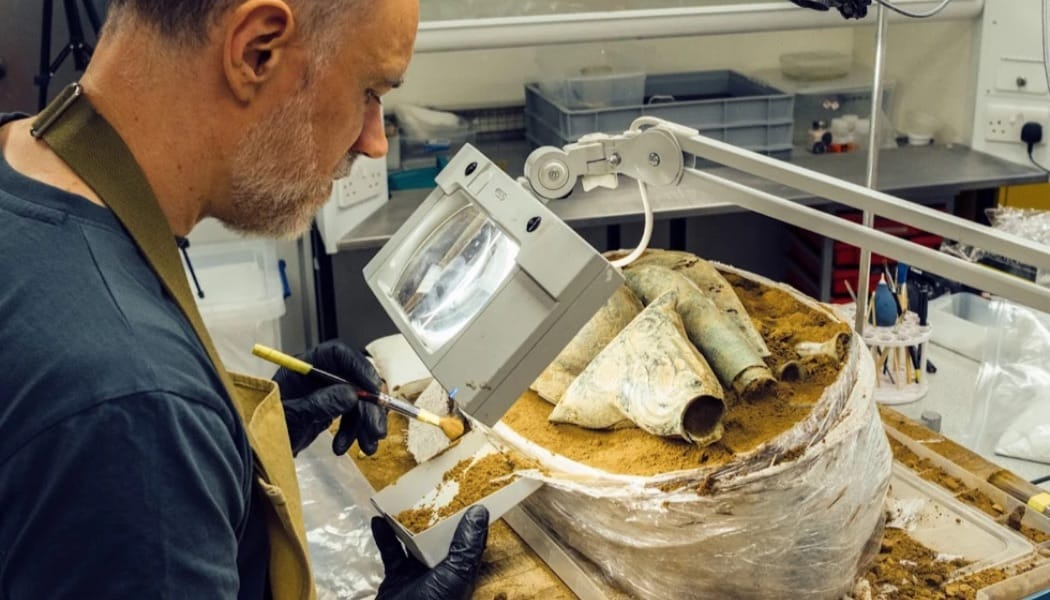
After the discovery, the objects were removed from the site encased within a single block of soil. Initial scans showed how the items were arranged before conservation specialists at Norfolk Museums Service began carefully extracting each piece for preliminary assessment.
Senior conservator Jonathan Clark is carrying out the micro-excavation, methodically freeing the objects from the soil block, stabilising the extremely delicate materials, and recording every stage of the work to ensure no evidence is lost.
Because of their fragile condition, the items will require extensive stabilisation before detailed research can take place.