Introduction
The transition from the Early to the Middle Iron Age in Southern Africa is marked by a profound cultural, economic, and demographic shift known archaeologically as the Leopard's Kopje culture. Originating around 900 CE and extending through the 12th century, this culture represents a vital evolutionary step toward complex state formation, characterized by a major shift in ceramic styles, settlement layouts, and agricultural strategies. A premier regional manifestation of this cultural horizon is found at Pontdrift, a highly strategic archaeological site located along the southern banks of the Limpopo River in South Africa.
For generations, traditional anthropologists debated whether the appearance of Leopard's Kopje material culture marked the peaceful internal development of local populations or a rapid, physical migration wave of new farming groups displacing the older Zhizo-culture communities. The resolution of this historical debate required the precise stratigraphic excavation of Pontdrift’s deep residential middens and the multi-disciplinary analysis of its specialized architectural features.
The Architectural Shift and Regional Hegemony
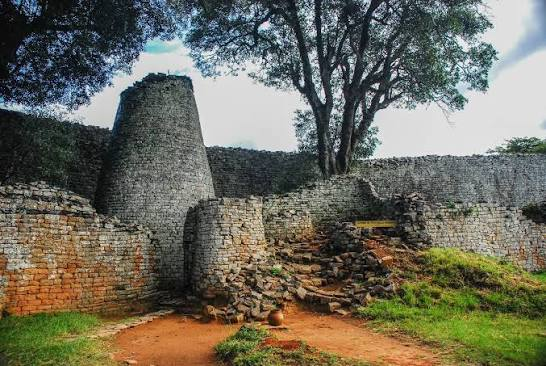
The excavations at Pontdrift unearhed a distinct architectural and spatial layout that diverged sharply from the preceding Early Iron Age traditions. Rather than placing cattle kraals in the exact center of the village surrounded by uniform houses, the Leopard's Kopje settlers at Pontdrift began separating elite residential areas from common spaces. The site features stone walling built along the natural terraces of the kopje (rocky hill), with the primary elite homesteads placed on elevated ground, while the broader agricultural population lived on the flat plains below. This spatial layout provides clear, physical proof of the rise of hereditary social stratification and class distinction.
The material culture recovered from Pontdrift provides vital clues to the political dynamics of this cultural transition. Archaeologists discovered a total break in ceramic typology: the older, intricately stamped Zhizo pots were completely replaced by highly distinctive Leopard's Kopje vessels characterized by incised geometric patterns, triangles, and carinated (sharp-angled) shoulders.
The presence of specialized crucibles and gold droplets within the elite residential layers proves that the rulers of Pontdrift were actively exploiting local gold veins, processing the metal for personal adornment and trade.
Furthermore, the discovery of dense layers of burnt grain and specialized underground storage pits filled with charred sorghum and millet indicates a highly organized agricultural economy that could withstand the volatile, semi-arid climate of the Limpopo valley. The absolute lack of technological mixing between the old Zhizo styles and the incoming Leopard's Kopje package at Pontdrift strongly suggests a rapid, demographic migration wave where a highly organized, socially stratified population pushed into the valley, successfully establishing a new regional hegemony that paved the way for the rise of Mapungubwe.
Conclusion
The scientific breakdown of the Pontdrift site provides an invaluable window into the dynamic cultural landscape of the South African Middle Iron Age. It proves that the Leopard's Kopje culture was not a static style, but a powerful socio-political movement that fundamentally restructured the human geography of the Limpopo valley.
By introducing new forms of elite architecture, specialized gold metallurgy, and a highly stratified social hierarchy, the people of Pontdrift laid down the structural and political blueprints that allowed subsequent African states to flourish. Ultimately, Pontdrift stands as a vital link in the chain of Southern African civilization, revealing how a mobile, technologically advanced population could successfully transform a riverine frontier into a wealthy, highly organized kingdom.