Introduction
During the late 1st millennium CE, the wide floodplain valley where the Shashe and Limpopo rivers meet became the cradle of Southern Africa’s first complex, urbanized states. Long before the rise of Great Zimbabwe or the famous hilltop kingdom of Mapungubwe, an Early Iron Age settlement known as Schroda flourished as the premier geopolitical and economic hub of the region (inhabited roughly between 900 CE and 1000 CE). Situated in what is now the Limpopo Province of South Africa, Schroda marked a revolutionary socio-economic shift from small, self-sufficient agricultural villages to a centralized, stratified society deeply integrated into international maritime trading networks.
For decades, mainstream historical narratives underestimated the depth of pre-colonial African trade with the wider Indian Ocean world. The systematic excavation of Schroda completely overturned these Eurocentric assumptions, unearthing extensive physical proof of specialized craft production and a sophisticated luxury trade economy that laid the structural foundations for the subsequent Mapungubwe state.
The Craft Production and Indian Ocean Luxury Network
The economic power of Schroda has been mapped through meticulous stratigraphic excavations that revealed large-scale, specialized workshop zones completely distinct from standard domestic spaces. The material culture recovered from these areas demonstrates that the inhabitants were expert artisans, mass-producing distinct, highly stylized terracotta figurines depicting both stylized human forms and domestic animals, which likely served a central role in regional initiation ceremonies and political rituals.
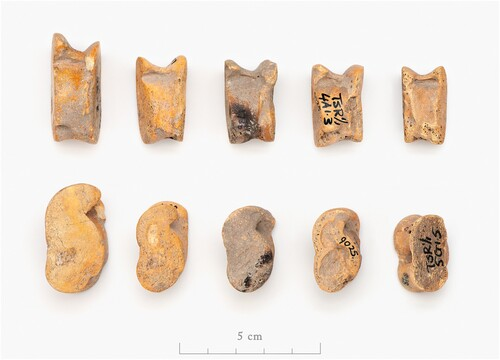
Crucially, the excavations yielded the earliest massive concentrations of imported luxury goods in the interior of Southern Africa. Archaeologists unearhed thousands of exotic glass beads originating from the Persian Gulf and Southeast Asia, alongside fragments of imported Islamic glazed ceramics.
To acquire these high-prestige international commodities, the elites of Schroda organized a massive, highly efficient extraction economy. The site has yielded immense deposits of ivory waste, ivory working tools, and iron slag, proving that the settlement operated as a specialized refinery where local hunters processed elephant tusks and metalsmiths forged iron tools. These items were then transported down the Limpopo River to the East African coast, where they were exchanged for foreign goods.
Furthermore, zooarchaeological analysis of faunal remains revealed large cattle enclosures situated in the center of the village, demonstrating the classic "Central Cattle Pattern" where livestock wealth was controlled by a centralized elite who used their herds alongside the newly acquired glass beads to establish regional political dominance.
Conclusion
The archaeological unmasking of Schroda provides a foundational baseline for understanding the evolution of state society in Southern Africa. It proves that the transition to complex political systems was not an overnight phenomenon sparked by external invaders, but a gradual, internally driven process built upon centuries of masterful economic organization and international trade integration.
By transforming ivory and iron into high-value currencies that connected the Limpopo basin to the markets of Asia and the Middle East, the rulers of Schroda pioneered the socio-economic strategies that would define the subsequent golden age of Southern African kingdoms. Ultimately, Schroda stands as a brilliant testament to African urbanism and economic ingenuity, showing that a millennium ago, the deep interior of the continent was already a vital player in the global economy.