Introduction
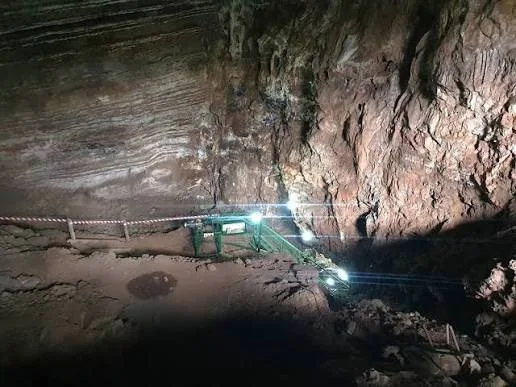
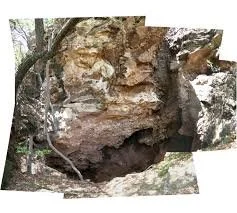
The vast, semi-arid expanse of the Kalahari basin, stretching across parts of South Africa, Botswana, and Namibia, is often historically stereotyped as a barren wilderness incapable of supporting dense or complex human populations. However, nestled within the rugged sandstone outcrops along the transitional margins of the northern Kalahari, Skutwater stands as one of the most structurally complex and spiritually significant rock art sanctuaries in Southern Africa. For thousands of years, this isolated site served as a vital aggregation locale for indigenous San hunter-gatherer bands, who gathered during seasonal moisture cycles to perform intensive rituals, exchange gifts, and record their complex spiritual worldview on the stone walls of natural rock shelters.
Despite its extraordinary density of paintings and engravings, Skutwater remained long forgotten by mainstream archaeology, overshadowed by more accessible sites. Modern multi-disciplinary investigations, utilizing digital imaging enhancement, micro-stratigraphic analysis of pigment binders, and landscape spatial mapping, have finally unmasked the deep history of this Kalahari sanctuary.
Pigment Chemistry and the Shamanic Canvas
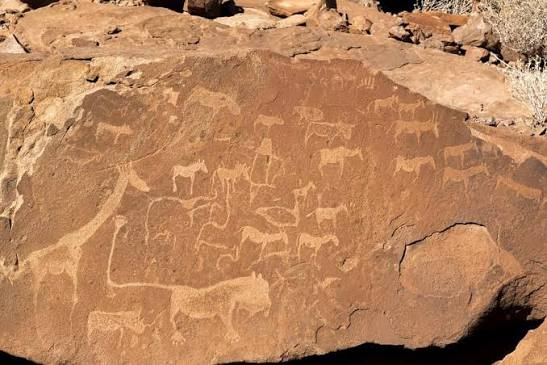
The physical feat of preserving intricate paintings on the friable, wind-eroded sandstone of the Kalahari required a highly sophisticated understanding of material chemistry by the ancient San artists. To map the chronology and composition of the art, researchers applied portable X-ray fluorescence and digital color enhancement (DStretch) to the fading rock panels. The results revealed a multi-layered palimpsest of thousands of individual figures, spanning from the Late Stone Age through the turbulent arrival of the first Iron Age pastoralists. The artists utilized a complex palette composed of locally sourced red and yellow ochres, manganese oxides for black lines, and white clays mixed with specialized organic binders such as blood, egg whites, and plant saps to ensure long-term adhesion to the stone.
The iconographic analysis of the Skutwater rock panels provides an intimate look into the shamanic and ritual life of the Kalahari hunter-gatherers. The art is overwhelmingly dominated by highly detailed depictions of the eland—the largest African antelope, which held supreme spiritual significance as the primary reservoir of supernatural potency (n/om) in San cosmology.
Archaeologists identified numerous therianthropes—complex figures displaying a fusion of human and animal characteristics—alongside long, wavy lines painted with small white dots that represent the somatic sensations experienced by shamans during altered states of consciousness in the trance dance.
Furthermore, excavations of the occupational floors beneath the painted panels unearhed specialized toolkit items, including bone arrow points, ostrich eggshell beads in various stages of manufacture, and small stone scrapers. The absolute continuity of these hunter-gatherer occupational layers over millennia proves that Skutwater was not a temporary campsite, but a highly revered, permanent spiritual anchor where generations of San bands returned to maintain their cosmic relationships and navigate the changing demographic pressures of the Southern African landscape.
Conclusion
The systematic unmasking of the Skutwater rock art site fundamentally reorders our understanding of hunter-gatherer landscape use and cultural preservation in the Kalahari. It proves that these arid environments were not empty spaces, but highly mapped, culturally rich landscapes connected by deep spiritual geography.
The intricate pigment chemistry and profound shamanic imagery preserved on the sandstone walls demonstrate a sophisticated, long-term cultural stability that successfully endured for millennia. Ultimately, Skutwater stands as a powerful monument to the artistic and spiritual heritage of the San people, serving as a permanent material record of a resilient civilization that could transform the stark rock shelters of the desert into an immortal canvas of human consciousness.