Introduction
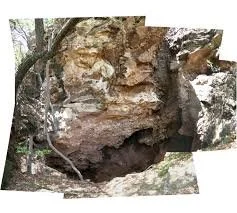
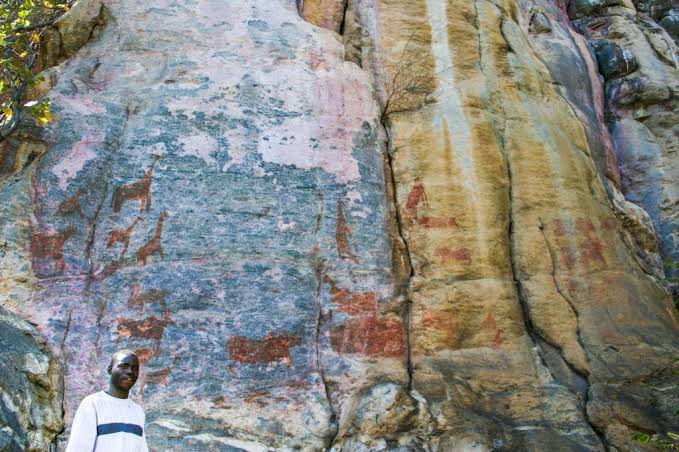
Rising like a collection of massive, abruptly vertical islands out of the flat, arid sands of the northwestern Kalahari Desert in Botswana, the Tsodilo Hills are hailed as the "Louvre of the Desert." Comprising four primary quartzitic rock formations—conventionally named Female, Male, Child, and a smaller outcrop—this sacred landscape holds one of the highest concentrations of rock art in the world, featuring over 4,500 individual paintings scattered across hundreds of distinct sites. However, the most profound and globally significant aspect of Tsodilo lies not in its painted surfaces, but in its deep, revolutionary subterranean record of human behavioral modernity, highlighted by a sensational cache of macro-engravings and ritual interventions that stretch back an astonishing 100,000 years.
For generations, the origin of complex human symbolic thought, ritual behavior, and artistic creation was believed to be an exclusively European phenomenon that emerged around 40,000 years ago. The systematic excavation and scientific dating of Tsodilo's isolated cave chambers completely shattered this Eurocentric model, providing absolute, physical proof that advanced symbolic thought was well underway in Africa tens of thousands of years earlier.
The Python Cave and Prehistoric Symbolic Engineering
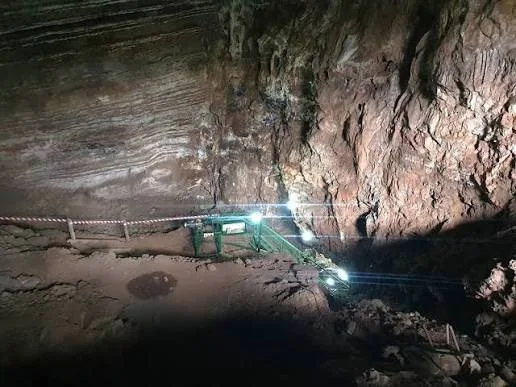
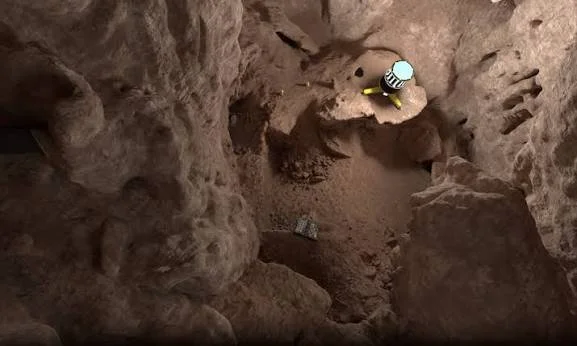
The most revolutionary insights into the deep antiquity of Tsodilo emerged from the systematic excavation of a hidden, elevated cave chamber on the Male Hill, known popularly as the "Python Cave." The focal point of this natural sanctuary is a massive, 20-foot-long, two-meter-high quartzite outcrop that naturally resembles the body of a giant rock python. Archaeologists conducting micro-stratigraphic excavations around this feature discovered that the rock was not entirely natural; instead, ancient human hands had deliberately and painstakingly engineered the stone surface, using heavy quartz hammerstones to peck out hundreds of distinct, circular cupules and geometric grooves that intentionally mimic the textured scales of a snake.
To determine the age of these symbolic interventions, scientists utilized Optically Stimulated Luminescence (OSL) dating on the deep sand layers directly covering the discarded stone tools used to carve the snake rock. The results yielded an extraordinary date: the primary ritual modifications were completed approximately 70,000 to 100,000 years ago, corresponding to the Middle Stone Age.
Excavations within these deep layers unearhed thousands of specialized, highly stylized Middle Stone Age points crafted from exotic, colorful silcretes brought from over 200 kilometers away, which had been intentionally broken and burned in front of the python rock—evidence of an ancient, formalized offering ritual.
Furthermore, the discovery of worked red ochre crayons with extensive grind-marks proves that these early humans were processing paint pigments at the site. This material record provides the earliest concrete, physical evidence of large-scale, organized human ritual behavior and structural symbolic art ever identified, proving that the Tsodilo Hills functioned as a major, pan-continental spiritual anchor where early Homo sapiens developed the cognitive and cultural tools that define modern humanity.
Conclusion
The paleolithic and archaeological unmasking of the Tsodilo Hills fundamentally redefines the narrative of human cognitive evolution. It proves that the deep roots of human spirituality, artistic manipulation, and symbolic expression are firmly anchored in the African continent, developing long before the expansion of our species into the rest of the world.
The masterfully engineered python rock and its associated stone tool offerings demonstrate a profound, long-term continuity of sacred geography that has been maintained by indigenous San and Hambukushu communities into the modern era. Ultimately, Tsodilo Hills stand as a timeless, invaluable monument to the birth of human consciousness, revealing a deeply creative, resilient early population whose spiritual legacy continues to echo across the desert sands after one hundred millennia.