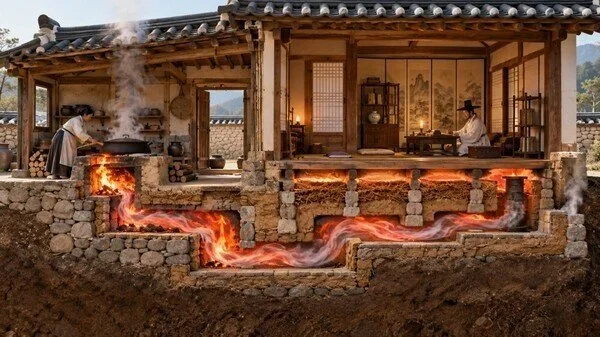
In cold-climate environments, maintaining warmth was essential for survival, comfort, and everyday domestic activity. Ancient communities developed a variety of heating methods using locally available materials, including wood, charcoal, animal products, and stone. While large hearths and permanent fireplaces are well documented in many archaeological settings, smaller heating devices and heat-retaining stones offer another perspective on how people managed temperature within their homes, temporary shelters, and working spaces. The study of portable stone heaters provides an opportunity to examine the relationship between material technology, fuel consumption, mobility, and adaptation to cold environments.
Stone has several properties that make it useful for retaining heat. When heated, certain stones absorb thermal energy and release it gradually as they cool. This characteristic, known as thermal mass, allows stone to function as a temporary heat reservoir. The effectiveness of a stone depends on its mineral composition, density, moisture content, size, and exposure to heat. Not every rock is suitable for repeated heating, because some stones contain moisture or mineral structures that cause them to crack or fragment when exposed to sudden temperature changes.
Ancient people could have taken advantage of these properties in several ways. Heated stones might have been placed near sleeping areas, used to warm food or containers, or incorporated into temporary heating arrangements. In some circumstances, stones could have been heated in a fire and moved to another location where their retained warmth was useful. Such practices would have been particularly valuable in settings where constructing a permanent fireplace was impractical or where people needed to move between temporary camps.
However, the phrase portable stone heater should not automatically be applied to every heated stone recovered from an archaeological site. Stones found near hearths may have been used for cooking, boiling water, processing materials, or lining fire installations. Others may have been damaged by natural fires or geological processes. To identify a stone as a heating device, archaeologists must consider its shape, surface condition, heat-related fractures, position within the site, and association with other artifacts.
Evidence of repeated heating can sometimes be recognized through changes in the stone's surface and internal structure. Thermal cracking, discoloration, and mineral alteration may indicate exposure to high temperatures. Microscopic examination can help researchers distinguish some forms of heat damage from weathering or mechanical breakage. Yet heat-altered stones do not necessarily reveal their intended function, and several different activities can produce similar traces.
The archaeological context is therefore especially important. A cluster of heated stones beside a sleeping area might suggest a domestic heating function if the surrounding deposits support that interpretation. Stones located within a cooking installation would more likely be associated with food preparation, although multiple functions are possible. Researchers may compare the distribution of stones with charcoal, ash, animal bones, pottery, and evidence of indoor activity to reconstruct how the heating arrangement operated.
Experimental archaeology can test the practical performance of candidate stone materials. Researchers can heat stones under controlled conditions, measure how quickly they absorb and release warmth, and document the fractures produced by repeated heating and cooling. Experiments can also investigate how stone size and placement affect heat transfer. These results provide useful comparisons with archaeological specimens, although a successful experiment does not establish that ancient people used the same technique.
Portable heating technologies would have been particularly relevant to mobile communities. Hunters, pastoralists, and travelers often occupied temporary shelters that lacked permanent heating structures. A reusable heat-retaining object could potentially supplement a small fire or provide warmth after a hearth had been extinguished. The practicality of such a system would depend on the weight of the stone, the availability of fuel, and the risks involved in handling heated material.
Safety would also have influenced ancient practices, even if people did not describe the risks in modern scientific terms. Stones heated unevenly can fracture unexpectedly, while direct contact with hot surfaces can cause burns. Moving heated stones through enclosed shelters could introduce additional risks, especially if the process involved burning charcoal or other fuels that produced dangerous gases. Archaeological evidence may not preserve the specific precautions people used, but the design and placement of heating arrangements can sometimes reveal efforts to manage fire and heat.
Portable stone heaters also illustrate how technological solutions often emerge from ordinary observations of natural materials. People did not need a formal understanding of thermodynamics to recognize that some stones remained warm after a fire had died down. Repeated experience could have guided their selection of suitable materials and their methods of use. Such practical knowledge would have been passed through observation, teaching, and daily activity.
The study of portable stone heating technologies broadens our understanding of domestic life in antiquity. By examining heat-altered stones alongside hearths, artifacts, and environmental evidence, archaeologists can investigate how ancient communities managed warmth in permanent homes and temporary shelters. Although individual interpretations require caution, the evidence can help reveal the ingenuity with which people adapted available materials to the demands of cold environments.