• MAIN PAGE
  • LATEST NEWS
    • Lost Cities
    • Archaeology's Greatest Finds
    • Underwater Discoveries
    • Greatest Inventions
    • Studies
    • Blog
  • PHILOSOPHY
  • HISTORY
  • RELIGIONS
    • Africa
    • Anatolia
    • Arabian Peninsula
    • Balkan Region
    • China - East Asia
    • Europe
    • Eurasian Steppe
    • Levant
    • Mesopotamia
    • Oceania - SE Asia
    • Pre-Columbian Civilizations of America
    • Iranian Plateau - Central Asia
    • Indus Valley - South Asia
    • Japan
    • The Archaeologist Editor Group
    • Scientific Studies
    • Aegean Prehistory
    • Historical Period
    • Byzantine Middle Ages
    • Predynastic Period
    • Dynastic Period
    • Greco-Roman Egypt
  • Rome
  • PALEONTOLOGY
  • About us
Menu

The Archaeologist

  • MAIN PAGE
  • LATEST NEWS
  • DISCOVERIES
    • Lost Cities
    • Archaeology's Greatest Finds
    • Underwater Discoveries
    • Greatest Inventions
    • Studies
    • Blog
  • PHILOSOPHY
  • HISTORY
  • RELIGIONS
  • World Civilizations
    • Africa
    • Anatolia
    • Arabian Peninsula
    • Balkan Region
    • China - East Asia
    • Europe
    • Eurasian Steppe
    • Levant
    • Mesopotamia
    • Oceania - SE Asia
    • Pre-Columbian Civilizations of America
    • Iranian Plateau - Central Asia
    • Indus Valley - South Asia
    • Japan
    • The Archaeologist Editor Group
    • Scientific Studies
  • GREECE
    • Aegean Prehistory
    • Historical Period
    • Byzantine Middle Ages
  • Egypt
    • Predynastic Period
    • Dynastic Period
    • Greco-Roman Egypt
  • Rome
  • PALEONTOLOGY
  • About us

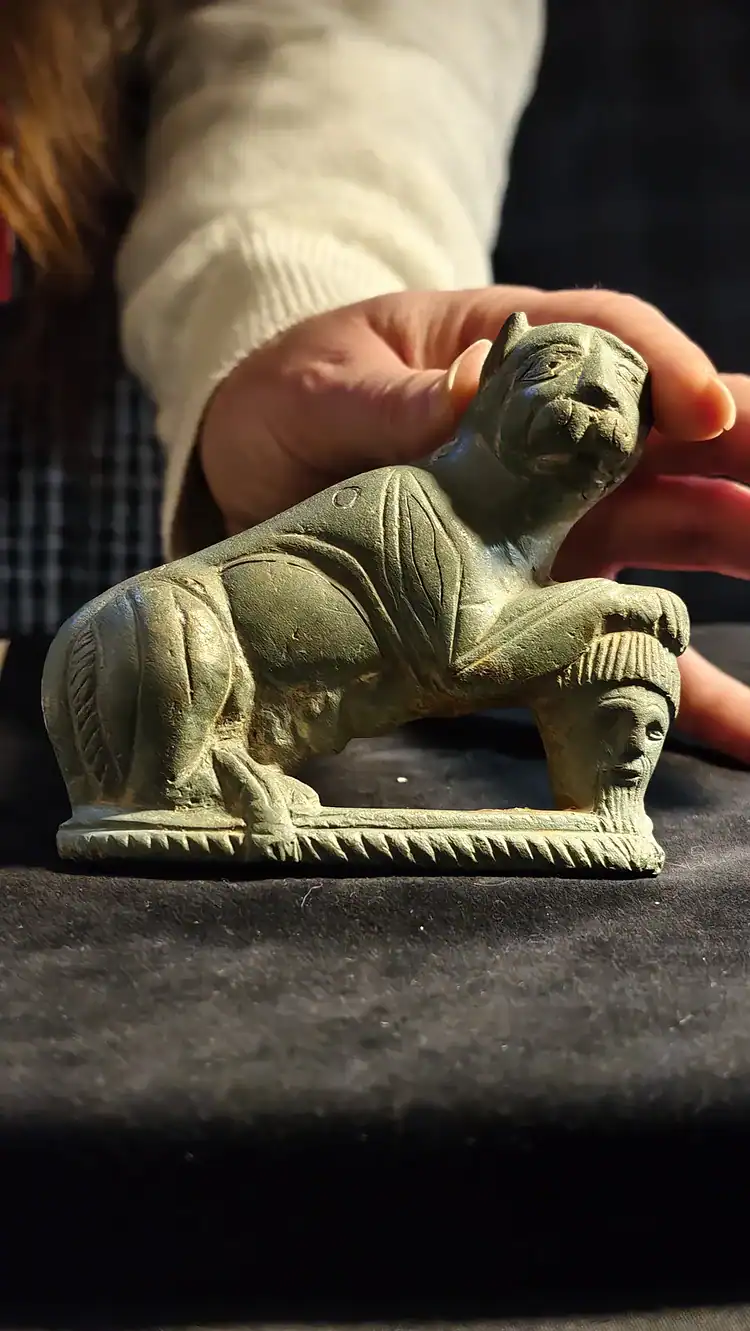
The statue is now oxidized, but would have glowed quite brightly.

Rare Roman Panther Figurine with Its Paws on a Severed Head Is a Propaganda Tool Used in Britain

February 5, 2026

When the Romans expanded into new territories, they sought more than control of the land—they aimed to dominate belief, identity, and loyalty. Their power extended beyond military force to law, culture, and strikingly aggressive symbolism.

One such symbol is a vivid example of that approach: a polished copper figurine depicting a panther overpowering the severed head of a defeated local enemy. The imagery is unapologetically brutal and carefully designed to send a message.

The four-inch figurine was recently discovered by a metal detectorist near Harlow, just outside London, and has become one of the most eye-catching additions to the British Museum’s records this year.

The Roman “BMW”

Unearthed in 2024, the object is a high-status decorative fitting, most likely attached to a Roman carriage. Out of the 79,616 archaeological finds reported that year, this piece stands out for both its craftsmanship and its powerful symbolism.

“This fitting is set to become one of Essex’s most iconic archaeological objects,” said Lori Rogerson, the county’s finds liaison officer, speaking to the BBC.

Far from being simple decoration, the figurine reflects how Rome used visual power and intimidation to reinforce its dominance—turning even everyday objects into statements of conquest and control.
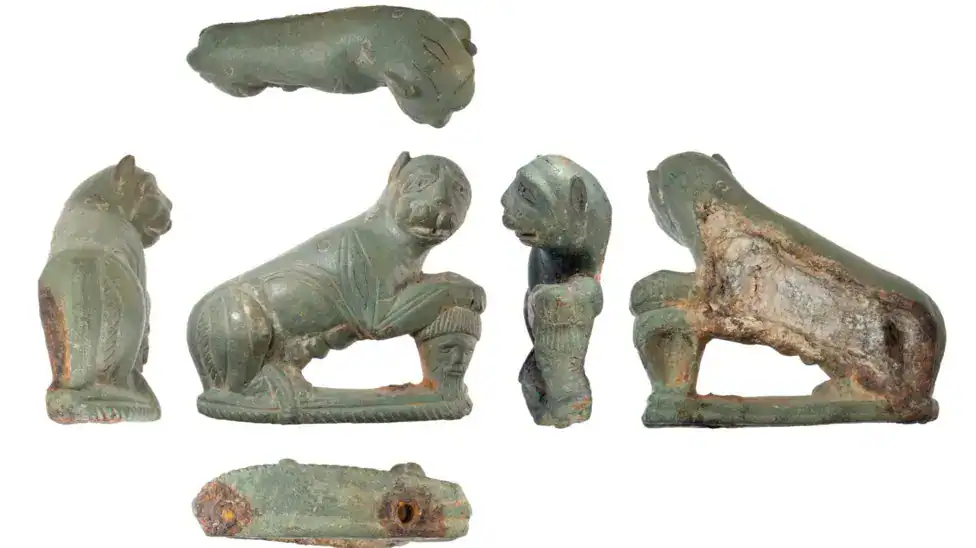
he statue is one of the most impressive examples of psychological warfare deployed in Britain

Today, the object is green and weathered with oxidation, but in its prime it would have shone with a vivid yellow-orange glow, flashing in the sunlight as it moved along Britain’s famously straight Roman roads. It almost certainly belonged to a person of means—likely a prosperous farmer or merchant. In Roman terms, it was the status symbol of its day, comparable to owning a luxury BMW or Mercedes.

“You could see it gleaming and immediately know whose carriage was approaching,” said Dr. John Pearce, an archaeologist at King’s College London, speaking to the BBC.

Yet its true power lies in something deeper—its role in psychological intimidation. Archaeologists point out that the panther figurine represents a distinctly “Romano-British” blend. While it features classic Roman imagery, such as the panther and the defeated enemy, these elements are shaped using the flowing, geometric style typical of Iron Age British art. The message behind the design was unmistakable: this land now belonged to Rome.

← An urgent demand for action on racist and sexist redundancies at Macquarie UniversityMystery Under the Moss: 3,000-Year-Old Rock Carvings Discovered in Norway →
Featured
image_2026-02-05_124043984.png
Feb 5, 2026
Falklands’ Port Louis settlement discoveries shared with Dr. Robert Philpott
Feb 5, 2026
Read More →
Feb 5, 2026
image_2026-02-05_122201600.png
Feb 5, 2026
Treasures worth thousands: homeowners discover vintage items hidden in walls during renovation
Feb 5, 2026
Read More →
Feb 5, 2026
image_2026-02-05_121624777.png
Feb 5, 2026
Egyptian and Indus Valley civilisations ‘were in contact’
Feb 5, 2026
Read More →
Feb 5, 2026
image_2026-02-05_121035022.png
Feb 5, 2026
British Museum Deletes AI-Generated Pictures After Backlash
Feb 5, 2026
Read More →
Feb 5, 2026
image_2026-02-05_120112871.png
Feb 5, 2026
A Subterranean City Of Salt Has Been Preserved Within This Cave-Like Mine For Centuries
Feb 5, 2026
Read More →
Feb 5, 2026
image_2026-02-05_114922757.png
Feb 5, 2026
Archaeologists unearth the buried history of Saint-Pierre
Feb 5, 2026
Read More →
Feb 5, 2026
read more

Powered by The archaeologist