Roman Dodecahedrons: The Enigmatic Objects That Still Baffle Historians
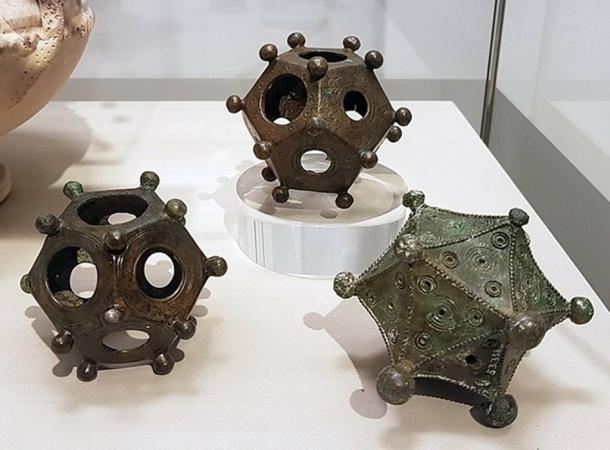
Imagine digging through a rain-soaked field in rural Europe and unearthing a hollow, bronze object that looks like it belongs in a sci-fi film rather than an ancient ruin. It has 12 flat, pentagonal faces, circular holes of varying diameters on each side, and strange little knobs perched at every corner. This is the Roman Dodecahedron, and it is arguably the most delightful—and frustrating—puzzle in the world of archaeology.
Despite finding over a hundred of these artifacts across regions once occupied by the Roman Empire, such as France, Germany, and Britain, historians are still scratching their heads. Why? Because the Romans, who were notoriously meticulous record-keepers and engineers, didn't leave a single sentence explaining what these things actually did.
The Anatomy of a Mystery
What makes the dodecahedron so special isn't just its shape; it's the peculiar design choices that seem to hint at a very specific purpose. Here is why they remain a premier archaeological "cold case":
A Lack of Standard Sizes: While they all share the 12-sided geometry, they aren't uniform. Some are small enough to fit in a palm, while others are significantly larger. Furthermore, the holes on each side are almost always different sizes, ranging from a few millimeters to several centimeters.
The "Gallic" Connection: Curiously, these objects are almost never found in the Mediterranean heart of the Empire—you won't find them in Rome or Greece. They appear almost exclusively in the northern territories, suggesting they were a local cultural phenomenon or a tool specific to colder climates.
Zero Wear and Tear: Most excavated examples show very little physical wear. They aren't scorched like lamps, they don't have residue like cooking pots, and they don't show the mechanical grinding you’d expect from a heavy-duty construction tool.
The Leading Theories: Practicality vs. Magic
Since we don’t have an instruction manual, historians and enthusiasts have spent decades trying to reverse-engineer their purpose. The theories are as diverse as the holes on the objects themselves!
1. The Master Knitter’s Secret
One of the most popular modern theories—thanks to viral videos—is that these were knitting frames. By wrapping yarn around the protruding knobs, one could weave the fingers of woolen gloves. This would explain why they are found in the chilly northern provinces and not the sunny Mediterranean. However, skeptics point out that there is no ancient art or text depicting Romans knitting with bronze geometry.
2. High-Tech Surveying Tools
Given the Roman obsession with infrastructure, many believe the dodecahedrons were optical range-finders. By looking through the holes of different diameters, a Roman engineer might have been able to calculate the distance to a far-off landmark or help level the ground for an aqueduct. It’s a brilliant idea, but math experts have struggled to find a consistent calculation that works across all the differently sized versions discovered so far.
3. An Astronomical Calendar
Could they be ancient computers for the stars? Some researchers suggest that by measuring the light passing through the holes, farmers could determine the exact date of the winter or spring equinox. This would have been vital for knowing exactly when to sow winter grain.
4. Religious or Ritual Artifacts
Perhaps we are overthinking the "tool" aspect. Many dodecahedrons have been found in "hoards" alongside coins or in graves, suggesting they were highly prized. They may have been used by fortune tellers to cast "lots" or functioned as talismans. Some even suggest they were simply decorative mace heads or status symbols for wealthy Gallic families.
The Mystery Deepens
The most recent significant discovery occurred in Norton Disney, England, in 2023. Found in a pit on a high point of land, this particular dodecahedron was in pristine condition. The fact that we are still finding them today—roughly 1,700 years after they were cast—proves that the Roman Dodecahedron isn't just a relic; it’s a living challenge to our understanding of the past.
Each new find provides a tiny bit more context, but until we find a letter from a Roman soldier saying, "I lost my favorite dodecahedron today while I was...", the true purpose of these bronze beauties remains buried in the soil of history.