The Hanging Gardens of Babylon remain one of the greatest mysteries of the ancient world. Listed among the Seven Wonders of the Ancient World, they are the only wonder whose existence is still debated by historians and archaeologists.
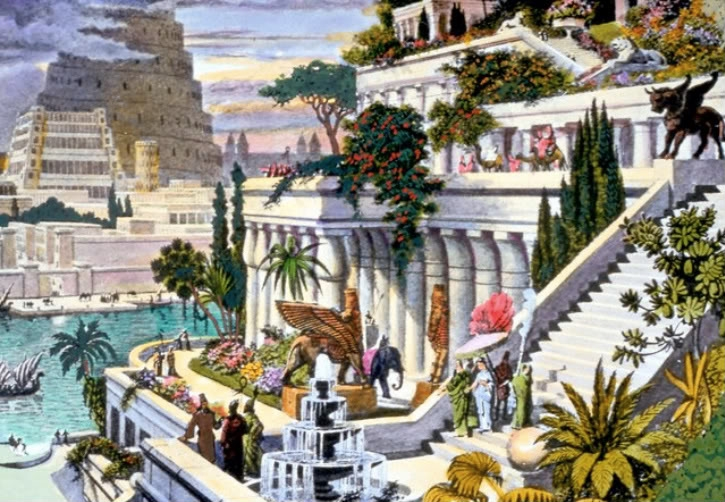
Ancient Greek writers such as Strabo and Diodorus Siculus described the gardens as a lush, elevated paradise filled with exotic plants, trees, and flowing water. According to tradition, the gardens were built in the city of Babylon by King Nebuchadnezzar II around 600 BCE for his wife, Amytis, who missed the green hills of her homeland.
Descriptions portray a series of terraced structures resembling a mountain covered in vegetation. Water was supposedly lifted from the Euphrates River using an advanced irrigation system, possibly involving chain pumps or screw-like mechanisms. If true, this would represent a remarkable engineering achievement for its time.
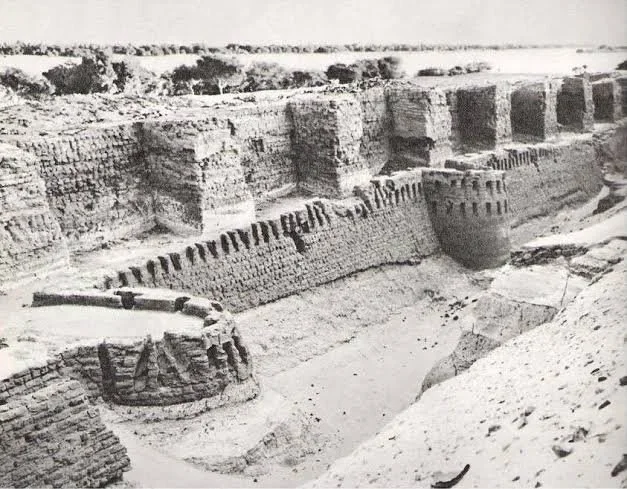
However, despite detailed written accounts, no conclusive archaeological evidence has been found in Babylon to confirm the gardens’ existence. Excavations led by Robert Koldewey in the late 19th century uncovered impressive structures, but none definitively matched the descriptions of the gardens.
This lack of evidence has led some scholars to question whether the Hanging Gardens ever existed at all. One alternative theory suggests that the gardens were actually located in Nineveh, not Babylon. According to this view, the gardens were built by Assyrian king Sennacherib, who described a grand garden with advanced irrigation systems in his inscriptions.
Supporters of the Nineveh theory argue that ancient writers may have confused Babylon with Nineveh, as both were major cities in Mesopotamia. Additionally, Sennacherib’s descriptions closely match the features attributed to the Hanging Gardens, including terraces and water-lifting technology.
Another possibility is that the gardens were a combination of fact and myth. Ancient writers often relied on secondhand accounts, which may have exaggerated or romanticized real structures. Over time, these stories could have evolved into the legend of the Hanging Gardens.
Whether real or mythical, the Hanging Gardens symbolize humanity’s fascination with nature and engineering. If they existed, they would represent one of the earliest examples of landscape architecture and environmental design. Even if they did not, their story reflects the imagination and storytelling traditions of ancient civilizations.
Today, the mystery continues to captivate historians and archaeologists. Advances in technology and ongoing excavations may one day provide clearer answers. Until then, the Hanging Gardens remain a powerful symbol of the unknown, bridging history, legend, and human curiosity.