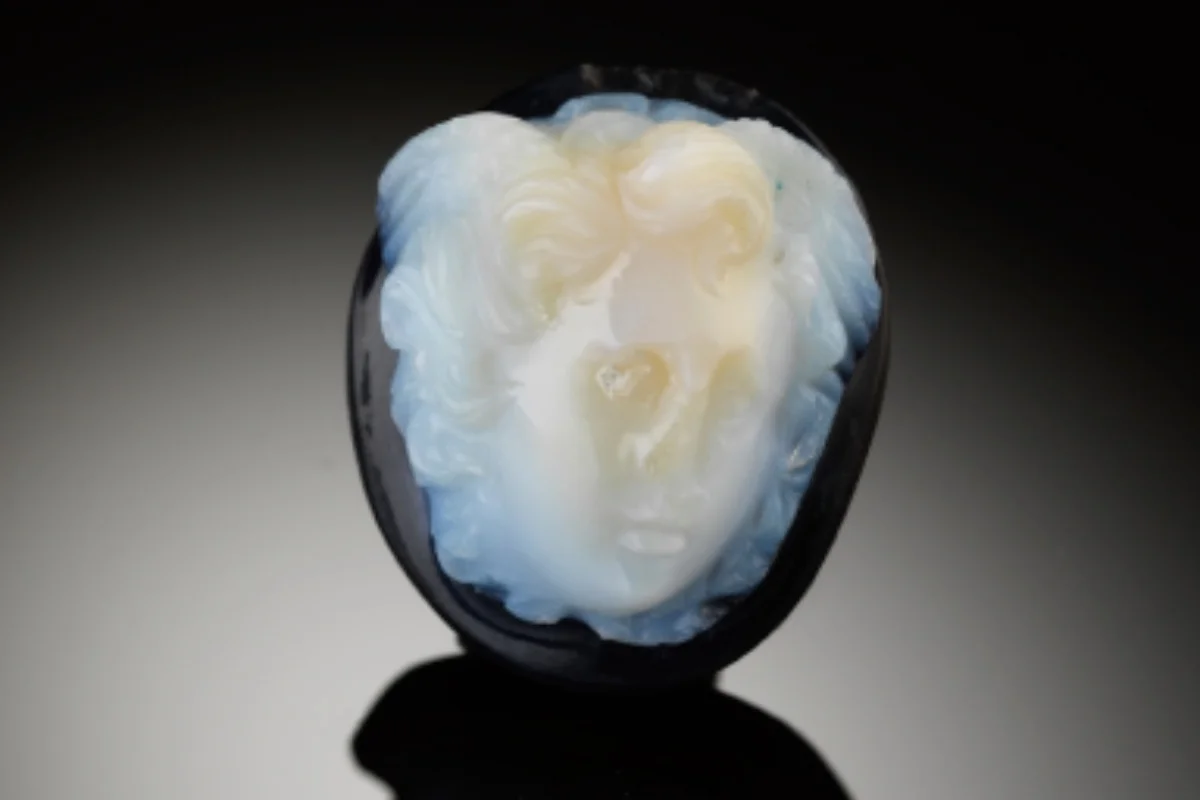
Archaeologists in Hallstatt have unearthed a rare Roman-era cameo that has a carving of Medusa from Ancient Greek mythology.
Once a beautiful maiden, Medusa was transformed into a monster by Athena and later killed by the hero Perseus, who avoided her lethal gaze by using a reflective shield before striking the fatal blow.
The Medusa cameo was uncovered during excavations by ARDIS and the Upper Austrian State Museums at the site of the new funicular railway station. In Roman times, this area was a lively lakeside settlement, though many details about its structure and original name remain unclear. Specialists believe the cameo was created in the 2nd century AD in Aquileia, an Adriatic city known for its craftsmanship, and carved from banded black-and-white agate, also called onyx.
Despite its small size, the piece is remarkable for both its high-quality carving and its excellent condition. It is only the third Roman cameo on public display in Upper Austria, joining a lion-themed ring in the Wels City Museum and a gold ring showing a bound Cupid in the Lauriacum Museum.
Compared with the examples from Wels and Enns, the Hallstatt cameo is noticeably larger and features deeper, more sculptural relief work. Experts suggest the slight tilt in the design reflects the natural shape of the original onyx stone.
The winged head of Medusa surrounded by snakes for hair and known as the Gorgoneion was a widely used design in Greek and Roman art. It served as a protective emblem meant to keep away harm.
Given its relatively large size, researchers think it was probably not intended for a ring. Instead, it was likely once set into a necklace worn by a wealthy Roman woman.