Introduction
Estuaries are coastal environments where freshwater from rivers mixes with seawater. Their changing tides, nutrient-rich sediments, and diverse habitats support many species of fish, shellfish, and aquatic plants. For thousands of years, human communities have depended on these environments for food, transportation, and trade.
Shellfish such as oysters, mussels, and clams have been especially valuable because they can be gathered in large quantities and, under suitable conditions, managed or cultivated. Some coastal societies developed structures to improve shellfish production, regulate harvesting, or protect valuable gathering areas.
Archaeologists investigate these activities through submerged platforms, wooden stakes, stone alignments, shell deposits, and other traces of coastal engineering. Because estuaries are constantly reshaped by tides and sediment movement, identifying the original purpose of these structures can be challenging.
Estuaries as Shellfish Habitats
Estuaries provide favorable conditions for many shellfish species. Freshwater and seawater mix to create changing salinity levels, while rivers transport nutrients that support plankton and other food sources.
Oysters and mussels often attach themselves to hard surfaces, while clams and other species live within sediments. These differences influence how communities might have collected or managed them.
The natural productivity of estuaries made them important food sources long before organized cultivation developed. Early communities could gather shellfish directly from exposed tidal flats, reefs, and shallow channels.
Over time, people may have learned that certain locations consistently produced larger or more abundant shellfish. This knowledge could have encouraged deliberate management, including protecting growing areas, moving young shellfish, or creating structures that provided suitable surfaces for attachment.
Understanding Submerged Platforms
Submerged platforms are structures that may be found beneath modern water levels or buried within coastal sediments. They can consist of stone arrangements, wooden frameworks, stakes, or combinations of materials.
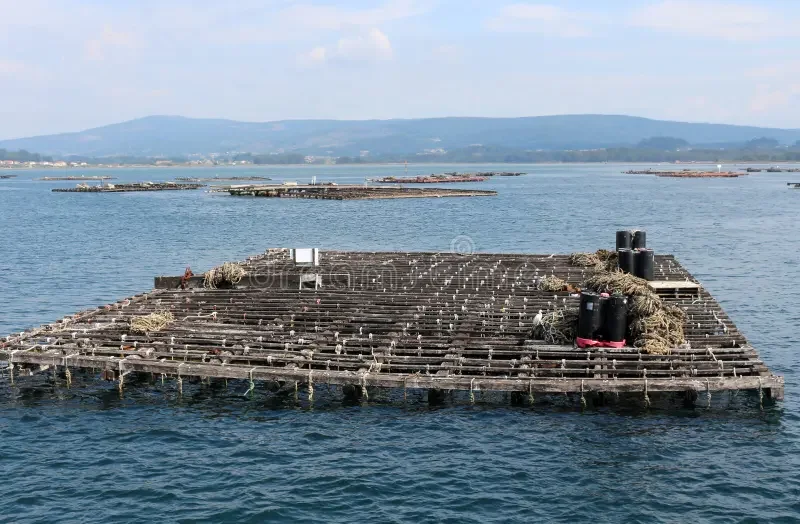
Some structures may have supported baskets, racks, or other devices used to hold shellfish. Others may have created protected enclosures or modified water movement across a tidal area.
Their appearance alone does not establish their function. A line of wooden stakes could have supported a fish trap, marked a channel, stabilized sediment, or formed part of a landing structure.
Archaeologists must examine the structure's dimensions, construction methods, location, and relationship to nearby shell deposits before identifying it as a possible cultivation installation.
Possible Methods of Shellfish Cultivation
Shellfish management can take several forms. Communities may collect young shellfish from natural habitats and transfer them to more favorable growing areas. They may also create surfaces where oysters and mussels can attach and develop.
Stone platforms, wooden stakes, and prepared beds could provide stable surfaces in environments where natural hard surfaces were limited. Enclosures might protect shellfish from disturbance or help control harvesting.
Tidal ponds and channels may also have been used to manage water movement. By controlling the movement of water, people could potentially influence exposure, sediment accumulation, and access to shellfish beds.
Not all of these methods require permanent structures. Some forms of shellfish management may leave little archaeological evidence, especially when they rely on seasonal maintenance or temporary materials.
Archaeological Evidence of Shellfish Management
Shell deposits are among the most visible forms of evidence for human shellfish use. Large accumulations of shells, known as shell middens, may contain remains from repeated harvesting and consumption.
Researchers examine the species present, the size of individual shells, and their age distribution. A pattern of harvesting particular sizes or species over time may provide clues about resource management.
However, shell middens do not automatically demonstrate cultivation. They may represent ordinary gathering, fishing activity, domestic consumption, or the disposal of processing waste.
Evidence becomes more persuasive when shell deposits occur alongside constructed platforms, prepared surfaces, repeated enclosure patterns, or other features that suggest deliberate intervention in the growing environment.
Wooden Stakes, Stone Alignments, and Other Structures
Wooden stakes can preserve evidence of structures that once stood in tidal waters. Their arrangement may reveal whether they supported platforms, barriers, racks, or enclosures.
Stone alignments may have helped define harvesting areas, stabilize surfaces, or redirect water movement. In some cases, stones could have been arranged to create favorable conditions for shellfish attachment.
Archaeologists examine the spacing and orientation of these features. Regular patterns may suggest deliberate construction, while irregular accumulations may reflect natural sediment movement or later disturbance.
Wooden remains can sometimes be dated through radiocarbon analysis or tree-ring studies, depending on their preservation and the availability of suitable samples. Stone structures are more difficult to date directly and often require associated materials or stratigraphic evidence.
Environmental Conditions and Changing Coastlines
Estuaries are dynamic environments. Tides, storms, river flooding, sediment deposition, and sea-level changes continually reshape their shorelines.
A platform that once stood above water may now be submerged because of rising sea levels or land subsidence. In other areas, sediment accumulation may bury former tidal structures beneath several layers of mud.
Salinity is another important factor. Shellfish species have different tolerances to freshwater and seawater conditions. Changes in river flow, rainfall, or coastal circulation can affect which species thrive in a particular location.
Environmental reconstruction helps archaeologists understand whether a suspected cultivation site would have been suitable for shellfish production when it was in use.
Distinguishing Cultivation from Other Coastal Activities
One of the main difficulties in interpreting submerged structures is determining whether they were connected to shellfish cultivation or another activity.
Fish traps, navigation markers, landing platforms, salt-production installations, and defensive barriers may share similar construction materials. Natural reefs and geological formations can also resemble human-built arrangements.
Researchers therefore investigate associated artifacts, sediment patterns, shell species, and evidence of repeated maintenance. They may compare the structure with known examples of coastal engineering from similar periods and environments.
A cultivation interpretation is strongest when the structure's design and surrounding biological remains indicate deliberate support for shellfish growth or management.
Modern Methods of Underwater Investigation
Underwater archaeology uses several techniques to locate and document submerged structures. Side-scan sonar can identify objects and unusual features on the seabed, while sub-bottom profiling may reveal buried structures beneath sediment layers.
Divers and remotely operated vehicles can examine exposed remains in greater detail. Photogrammetry allows researchers to create three-dimensional models from overlapping photographs.
Sediment cores provide information about past environmental conditions and the sequence of deposits. Shells, wood, and other organic materials may be dated to establish when an area was used.
Ancient environmental DNA may also help identify species that once inhabited a location, although it must be interpreted carefully because DNA can move through water and sediment.
The Importance of Coastal Resource Management
Submerged shellfish structures reveal how coastal communities adapted to changing environments and managed valuable food resources. If cultivation is demonstrated, such structures may represent early forms of aquaculture.
They can also provide evidence of social organization. Maintaining a shellfish bed may have required shared labor, rules governing access, seasonal schedules, and knowledge passed between generations.
In some communities, productive shellfish areas may have become economically or politically important. Their management could influence settlement patterns, trade, and relationships between neighboring groups.
Conclusion
Submerged platforms and other coastal structures offer valuable opportunities to investigate ancient shellfish management. Wooden stakes, stone alignments, shell deposits, and environmental evidence can help archaeologists reconstruct how communities interacted with estuarine resources.
However, not every submerged structure was designed for cultivation. Natural formations, fishing installations, landing areas, and other coastal features can produce similar archaeological patterns.
Reliable interpretations depend on combining structural analysis, biological remains, environmental reconstruction, and dating methods. Through this approach, archaeologists can better understand the development of shellfish management and the long history of human adaptation to estuarine environments.