Introduction
A pottery sherd may appear to be an ordinary fragment of broken ceramic, but it can preserve a long history of human activity. Before becoming an archaeological artifact, it may have been part of a vessel used for cooking, storing food, carrying water, serving meals, or conducting ceremonies.
Its life does not necessarily end when the vessel breaks. People in many societies repaired damaged pottery, reused fragments for practical tasks, and incorporated broken ceramics into buildings or other materials. A sherd could pass through several stages of use before being discarded and eventually buried.
Studying this sequence allows archaeologists to investigate not only how pottery was manufactured but also how people valued, maintained, recycled, and disposed of everyday objects.
The Beginning: Manufacturing a Pottery Vessel
The life of a pottery sherd begins with the production of a ceramic vessel. Potters selected clay, prepared it by removing unwanted materials, and shaped it through hand-building, molding, or wheel-throwing techniques.
The vessel was then dried and fired. Firing transformed the clay into a more durable material, although the final strength and properties depended on the clay composition, temperature, atmosphere, and firing duration.
Surface treatments such as burnishing, slipping, painting, or glazing could provide decorative effects and influence the vessel's performance.
A finished pot entered everyday life as a functional object. Its form and material properties influenced how it was used, maintained, and eventually broken.
Everyday Use and Accumulated Wear
Pottery vessels experienced repeated contact with food, water, fire, tools, and other objects. Cooking pots could develop soot deposits, thermal damage, and changes to their surfaces. Storage vessels might show mineral residues or abrasion from repeated handling.
Archaeologists study these traces to understand how vessels were used. Residue analysis can identify preserved organic compounds, while microscopic examination may reveal patterns of wear.
Some vessels were used for several purposes during their lifetime. A container originally made for storing liquids might later be used for dry goods or household waste.
Changes in function can be difficult to identify, especially when the new use leaves few physical traces. Researchers therefore combine wear patterns, residues, vessel shape, and archaeological context.
Breakage and the Decision to Repair
Pottery breaks for many reasons. A vessel may fall, crack under thermal stress, become damaged during transportation, or deteriorate after prolonged use.
Not every broken vessel was immediately discarded. If the object remained valuable or could be repaired easily, its owner might attempt to restore its function.
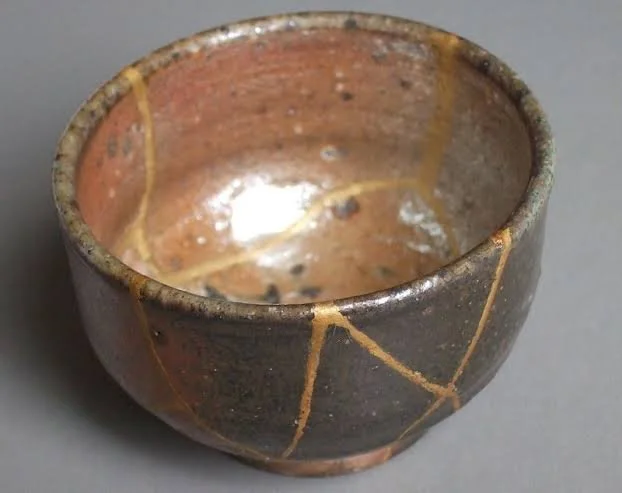
One repair method involved drilling small holes along the edges of a crack. Metal staples, clamps, or other fasteners could then hold the broken sections together.
Other repairs used adhesives such as plant resins, bitumen, or other binding substances, depending on the period and available materials. Some vessels may have been secured through lacing or mechanical fittings.
Repairs did not always make a vessel fully watertight or suitable for its original purpose. A repaired pot might instead be used for a less demanding task.
Evidence of Repair in Archaeological Pottery
Repair marks can provide direct evidence of how people maintained ceramic objects. Small drilled holes, metal fittings, adhesive residues, and carefully aligned fractures may indicate attempts to restore a broken vessel.
Researchers examine the shape, position, and spacing of these features to determine whether they were intentional repairs. They also consider whether the damage occurred before or after the vessel was discarded.
A repaired vessel may reveal economic conditions, access to replacement materials, or the personal importance of an object. It may also indicate that the vessel was difficult to replace because of its size, decoration, contents, or specialized function.
However, not every crack or hole represents repair. Some damage may have occurred during excavation, burial, or later disturbance. Archaeologists must distinguish ancient modifications from post-depositional damage.
Recycling Pottery into New Objects
When a vessel could no longer serve its original function, its fragments might still be useful. Broken pottery could be reshaped into smaller objects or incorporated into new activities.
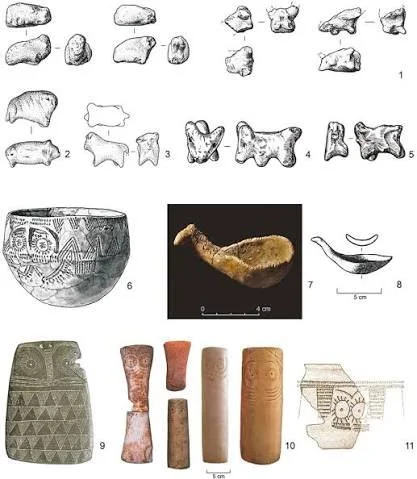
Sherds have been used as scrapers, spindle whorls, counters, weights, lids, scoops, and other practical tools. Their suitability depended on their thickness, shape, hardness, and the ease with which they could be modified.
Some communities also used pottery fragments as tokens or gaming pieces. In other contexts, ceramic fragments served as writing surfaces. Ostraca, for example, are pottery or stone fragments used for writing in several ancient societies.
Identifying these secondary uses requires close examination. A sherd with a deliberately shaped edge or a perforation may have been modified for a particular purpose, although wear analysis and archaeological context are needed to support that interpretation.
Reusing Sherds in Construction and Infrastructure
Broken pottery could also become part of larger building projects. Ceramic fragments were sometimes mixed into construction materials, used as packing, or incorporated into floor and wall preparations.
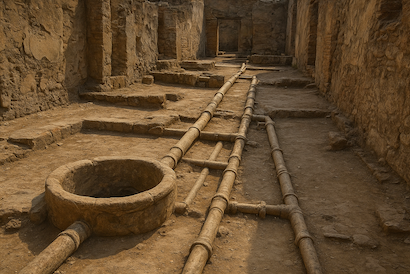
Crushed pottery could contribute to mortar, plaster, or other building mixtures. Larger fragments might be used as drainage material or fill.
In some settings, reused sherds became part of paving surfaces, decorative arrangements, or mosaic-like compositions. Their original identity as pieces of vessels became less important than their usefulness as construction materials.
These practices demonstrate that broken pottery could remain economically valuable even after losing its original function.
Deposition and the Archaeological Record
Eventually, many pottery fragments entered the ground through disposal, accidental loss, building collapse, or abandonment. Their final location may not be where the original vessel was used.
A sherd could be moved from a household to a rubbish pit, from a rubbish pit to construction fill, or from one settlement area to another through soil movement and later building activity.
This process is important because archaeologists cannot always assume that an artifact found in a particular layer was originally used at that location.
A fragment may be residual, meaning that it was produced or used during an earlier period but deposited in a later context. Conversely, later materials may enter older deposits through disturbance.
Understanding these processes is essential for reconstructing the chronology of archaeological sites.
The Modern Life of a Pottery Sherd
The life of a sherd continues after excavation. Archaeologists clean, label, sort, photograph, and analyze fragments to determine their age, origin, technology, and function.
Some fragments are joined together to reconstruct larger portions of vessels. This process, known as refitting, can reveal how an object broke and whether its pieces were scattered across different areas of a site.
Scientific analysis may identify clay sources, temper materials, firing conditions, and traces of vessel contents. These findings can contribute to studies of trade, technological knowledge, diet, and cultural interaction.
Conservation specialists may stabilize fragile fragments and recommend suitable storage conditions. The artifact becomes part of a research collection that can support future investigations.
What a Sherd Reveals About Human Behavior
The life cycle of pottery illustrates how people assign value to objects. A vessel might be carefully maintained because it was expensive, difficult to replace, or personally meaningful.
Repair and reuse can also reflect practical decision-making. In communities where resources were limited, broken materials could be transformed into useful objects rather than discarded.
Patterns of repair and recycling may reveal differences in household wealth, access to specialized craftspeople, or local traditions of resource management.
Yet these interpretations must remain grounded in evidence. A repaired pot does not automatically indicate poverty, and a reused sherd does not necessarily demonstrate scarcity. People may repair or recycle objects for many different reasons.
Conclusion
A pottery sherd is more than the broken remains of a ceramic vessel. It may represent several stages of human activity, from manufacture and everyday use to repair, recycling, disposal, excavation, and scientific study.
By examining repair holes, adhesive residues, modified edges, secondary uses, and depositional context, archaeologists can reconstruct parts of an object's extended history.
The life cycle of a pottery sherd demonstrates that ancient communities did not always treat broken objects as worthless. Materials could be repaired, adapted, and reused in ways that reflected practical needs, economic conditions, and cultural values. Even a small fragment can therefore provide meaningful evidence about how people lived and managed the objects around them.