Tháp Mẫm is one of the most important archaeological and artistic sites associated with the late Champa Kingdom, lending its name to the distinctive Tháp Mẫm artistic style that flourished during the 12th and 13th centuries CE in present-day Bình Định Province. This period represented the final golden age of Cham architecture and sculpture, when royal patronage encouraged the construction of monumental brick temples richly decorated with elaborate stone carvings. Unlike earlier Cham artistic traditions, which emphasized relatively restrained ornamentation, the Tháp Mẫm style became famous for its dramatic sculptural compositions, densely decorated architectural surfaces, and powerful representations of mythological creatures inspired by Hindu beliefs. These temples served not only as sacred places of worship but also as symbols of royal authority, religious devotion, and the artistic maturity achieved by the Champa civilization.
Architectural Features
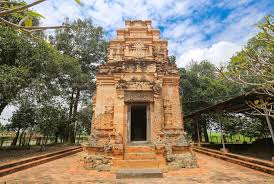
The temples of the Tháp Mẫm style were constructed primarily from fired red bricks, carefully arranged with exceptionally thin mortar joints that remain one of the enduring mysteries of Cham engineering. Their soaring towers featured multiple tiers, richly decorated entrances, ornamental columns, and elaborate roof structures that emphasized verticality and grandeur. Stone architectural elements such as doorframes, lintels, pedestals, and decorative corner ornaments were carved from durable dark gray sandstone, creating a striking visual contrast against the warm red brick walls. The harmonious combination of brick architecture and finely sculpted sandstone decoration produced some of the most visually impressive religious monuments in medieval Southeast Asia.
Sculptural Motifs
The defining characteristic of the Tháp Mẫm style was its extraordinary sculptural program featuring dynamic representations of mythological creatures carved in deep high relief. Skilled Cham artisans employed advanced carving techniques that created dramatic undercut details, giving the sculptures remarkable depth, movement, and realism.
Among the most iconic figures was the Gajasimha, a mythical guardian creature combining the head of an elephant with the body of a lion. This hybrid beast symbolized both immense physical strength and royal authority, serving as a protective guardian for temple entrances and sacred spaces. The careful rendering of muscular limbs, curling trunks, expressive faces, and intricate decorative patterns demonstrated the exceptional skill of Cham sculptors.
Equally important were the majestic Garudas, the mythical bird-like beings associated with the Hindu god Vishnu. These massive sandstone sculptures were frequently positioned beneath heavy architectural lintels, appearing to support the weight of the temple itself. Their broad wings, powerful bodies, and expressive features conveyed divine protection and spiritual authority. Alongside them appeared elaborately carved Nagas, the sacred multi-headed serpents of Hindu mythology, whose flowing forms framed doorways, staircases, and temple corners. The intertwining Garudas and Nagas symbolized cosmic balance, protection, and the interconnected relationship between heaven, earth, and the divine realm.
Conclusion
The Tháp Mẫm style represents the culmination of Cham artistic achievement, showcasing a remarkable fusion of sophisticated brick architecture, advanced stone carving, and richly symbolic Hindu iconography. Its monumental temples, dramatic high-relief sculptures, and powerful mythological guardians reflect the creativity, technical expertise, and religious devotion that characterized the late Champa Kingdom. More than simply decorative monuments, these temples embodied royal power, spiritual belief, and cultural identity during one of the most prosperous periods of Cham history. Today, the surviving Tháp Mẫm sculptures continue to be regarded as masterpieces of Southeast Asian art, preserving the legacy of a civilization whose architectural and sculptural accomplishments remain among the finest in the region.