Introduction
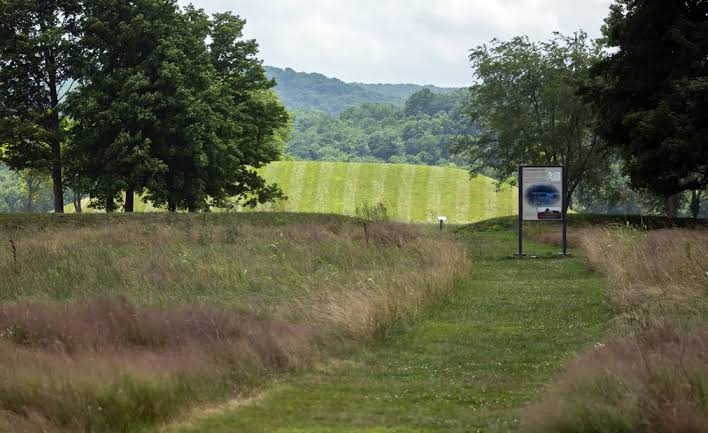
Located in Ross County, Ohio, within the fertile Paint Creek Valley, the Seip Earthworks form one of the largest ceremonial complexes constructed by the Hopewell culture between approximately 100 BCE and 400 CE. The monumental site originally covered more than 120 acres (49 hectares) and consisted of an enormous geometric enclosure, burial mounds, ceremonial plazas, and carefully engineered earthen embankments. As one of the principal Hopewell centers in southern Ohio, Seip served as a regional gathering place where communities met for religious ceremonies, funerals, feasts, and long-distance exchange.
Geometric Earthwork Engineering
Seip Earthworks featured a massive combination of circular and rectangular embankments laid out with remarkable geometric precision. Builders transported thousands of basket loads of earth to construct broad walls that enclosed sacred ceremonial spaces while leaving carefully planned entrances aligned with important pathways.
The site's design reflects advanced knowledge of surveying, landscape planning, and communal engineering. Although not defensive structures, the embankments clearly defined ceremonial areas reserved for ritual activities.
Burial Mounds and Ritual Life
Several burial mounds stood within the enclosure, containing elaborate tombs filled with finely crafted ceremonial objects. Archaeologists recovered copper ornaments, mica cutouts, obsidian blades, marine shell jewelry, carved stone pipes, and decorative pottery, many originating from distant regions through the Hopewell trade network.
Large public ceremonies likely included funerary rituals, communal feasting, gift exchange, music, dancing, and religious observances centered on ancestor veneration and cosmological beliefs.
Astronomical and Cultural Significance
Many researchers believe that portions of the Seip Earthworks were aligned with important celestial events, including seasonal sunrises and sunsets. These alignments may have helped determine the timing of agricultural festivals and ceremonial gatherings while reinforcing Hopewell cosmological traditions.
The site's monumental scale reflects the cooperative efforts of numerous communities working together over several generations.
Archaeological Importance
Excavations have revealed burial structures, ceremonial buildings, artifact caches, and construction phases that continue to expand knowledge of Hopewell engineering, religion, trade, and social organization. Seip Earthworks remains one of the best-preserved examples of Hopewell monumental architecture in North America.
Conclusion
The Seip Earthworks represent one of the greatest achievements of the Hopewell culture, demonstrating exceptional engineering, geometric planning, ceremonial complexity, and long-distance interaction. Their monumental earthworks and richly furnished burials illustrate the sophistication of one of prehistoric North America's most influential ceremonial traditions.