It’s surprising to think that Puglia was once overshadowed by regions like Tuscany.
Today, however, this southeastern “heel” of Italy boasts some of the country’s most charming villages, fascinating architecture, and stunning beaches. From rugged, forested headlands to ornate baroque cities and unique Hellenic-influenced towns, Puglia offers a variety of destinations that deserve a spot on any travel itinerary. Here are some of our top picks, along with helpful tips to keep in mind before your visit.
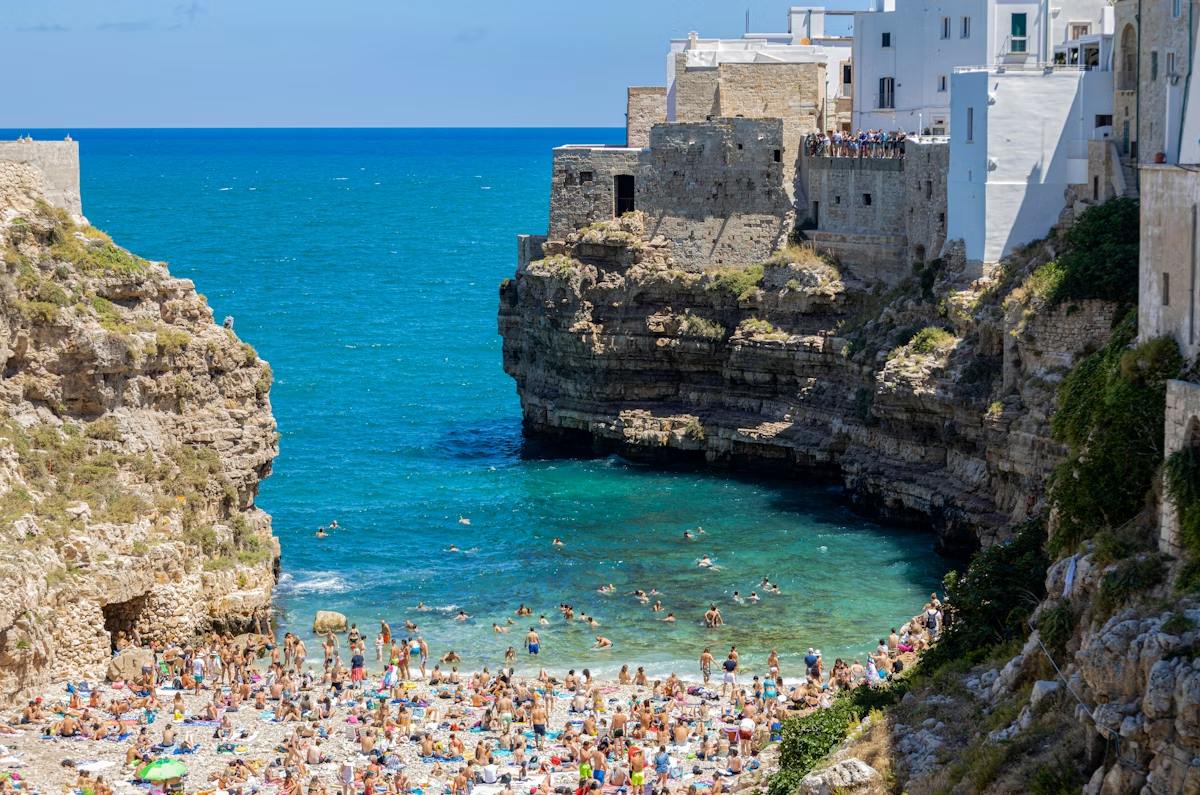
Polignano a Mare beach.
1. Polignano a Mare – Best for Clifftop Views
In Polignano a Mare, flat-roofed, cube-like buildings cling dramatically to cliffs above the turquoise Adriatic, creating a sun-soaked, postcard-perfect scene. Its stunning location and timeless charm attract thousands of visitors every summer, who wander through the narrow streets of the historic center.
A must-do for many is a swim at the Instagram-famous Cala Porto beach, while others aim for a meal at Grotta Palazzese, a fine-dining restaurant set inside a cave right above the sea—be warned, the views come with a hefty price tag.
To enjoy the town with fewer crowds, consider visiting outside of July and August. Don’t miss the Museo Pino Pascali, a former abattoir turned contemporary art gallery celebrating the iconic Puglian artist.
Local tip: Sample the town’s signature caffè speciale, a unique coffee blended with sugar, cream, lemon zest, and amaretto, said to have originated at Mario Campanella Il Super Mago del Gelo.

The lighthouse of Punta Palascia in Otranto.
2. Otranto – Best for History
Otranto’s history is as dramatic as it is tragic. In 1480, over 800 locals were killed during an Ottoman invasion, and their skulls now form a striking welcome display inside the city’s Romanesque cathedral. Yet the cathedral’s true highlight is its intricate, action-packed mosaic floor, one of medieval Europe’s largest and most fascinating.
Thanks to its proximity to the Balkan coast just 72 km (45 miles) away Otranto’s past is layered with Greek, Roman, Turkish, and Napoleonic influences. Exploring the compact old quarter allows visitors to uncover these historical layers. In summer, the town’s beaches provide an inviting spot to cool off.
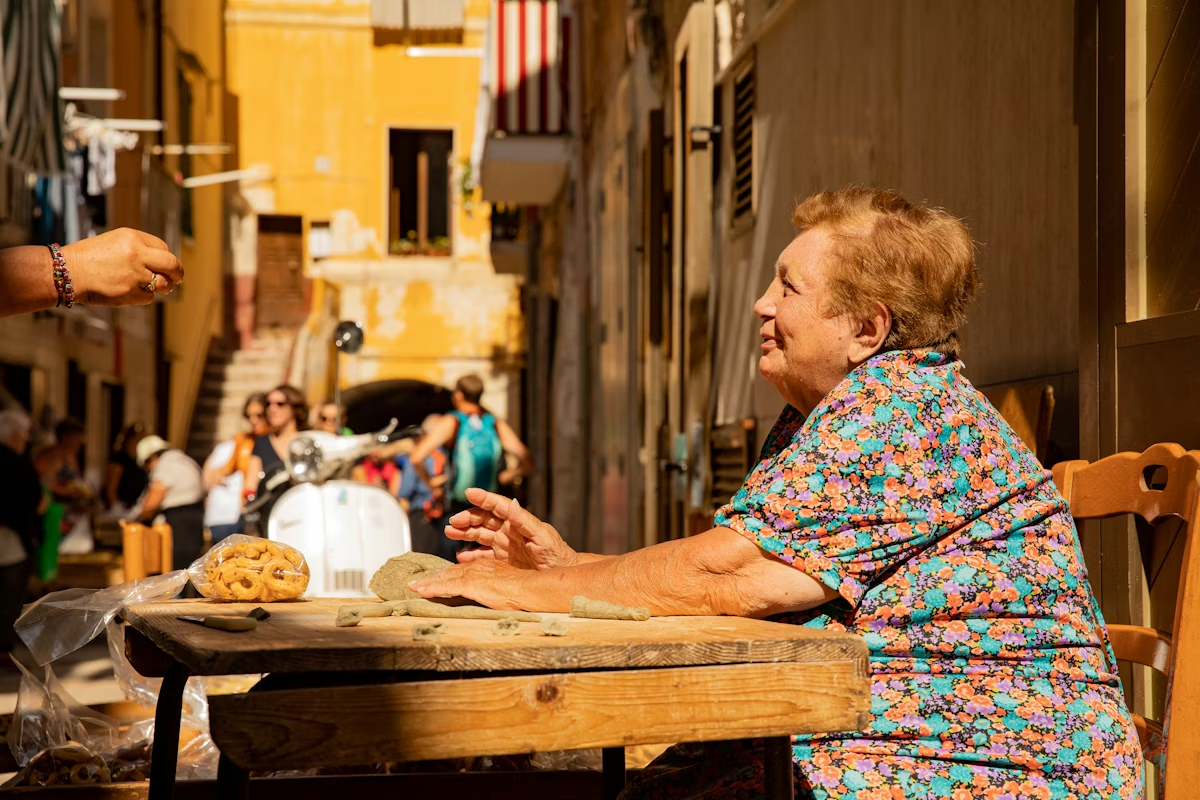
Orecchiette-making in Viadelle Orecchiette.
3. Bari – Best for Street Food (and Street-Made Food)
Bari is the real home of St. Nicholas, whose relics reside in the enormous Basilica di San Nicola. In Bari Vecchia, the city’s charming old town, visitors can explore the 12th-century Norman cathedral and the excellent archaeological museum.
The true stars of the neighborhood, however, are the women of Arco Basso, who make fresh orecchiette pasta each morning on wooden boards set up along narrow streets. Bari also tempts the taste buds with local treats like focaccia barese, sgagliozze (polenta fritters), and panzerotti (deep-fried calzones), perfect for a street-food tour.
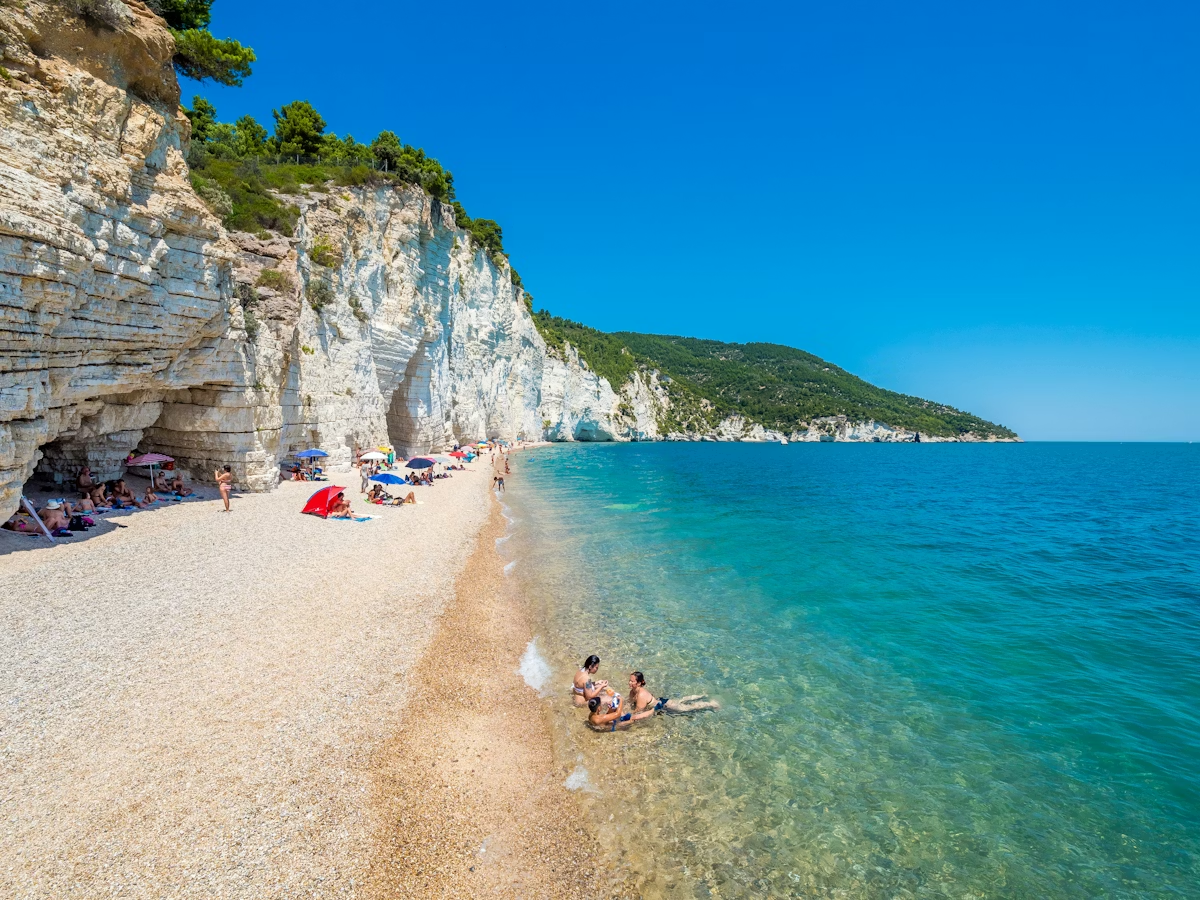
The coast of Baia delle Zagare, Vieste Gargano.
4. Promontorio del Gargano – Best for Town-Nature Balance
The Gargano Promontory combines picturesque towns with stunning natural scenery. Clifftop Vieste and Peschici offer colorful streets lined with geraniums, seafood trattorie, and summer boat tours to nearby sea caves, coves, and stacks.
Both towns serve as gateways to the Tremiti Islands, where visitors can enjoy clear waters, hiking trails, and a medieval abbey. Inland, trails wind through the Parco Nazionale del Gargano, dotted with ancient forests and mountain villages. Monte Sant’Angelo, the most scenic of these, is famed for the 5th-century apparitions of the Archangel Michael.
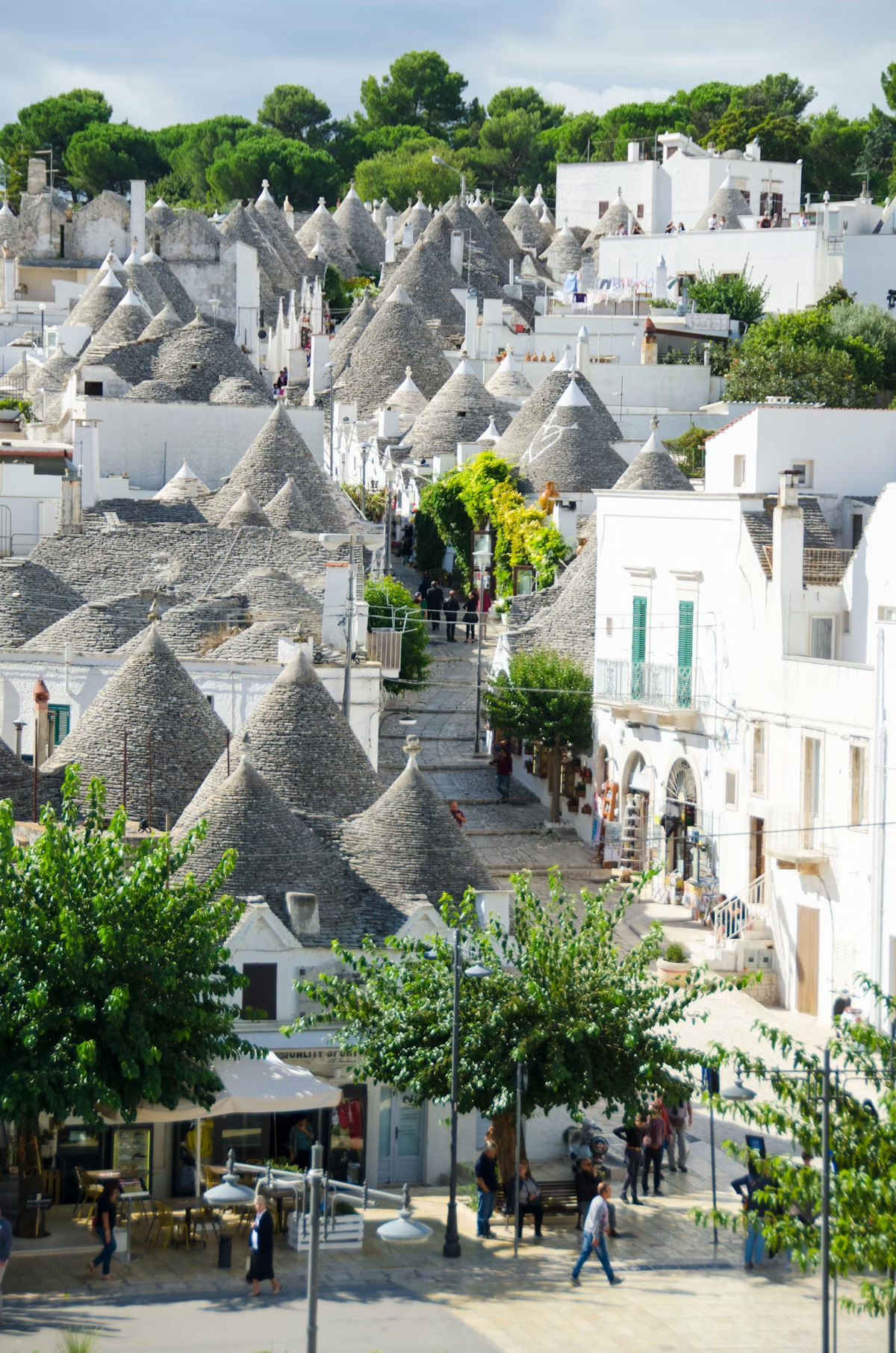
Alberobello, the cultural capital of Valle d'Itria.
5. Valle d’Itria – Best for One-of-a-Kind Dwellings
Alberobello, a World Heritage town in the vine-covered Valle d’Itria, is famed for its trulli limestone houses with conical roofs that look straight out of a fairy tale. Visitors can dine, shop, or explore trulli like Trullo Sovrano, a living museum recreating 19th-century life.
While Alberobello is worth a day trip, consider staying in nearby gems such as Ostuni, Cisternino, or the baroque Martina Franca, known for its capocollo, a prized cured meat. Between mid-July and early August, Martina Franca hosts the Festa della Valle d’Itria, a celebrated opera music festival.
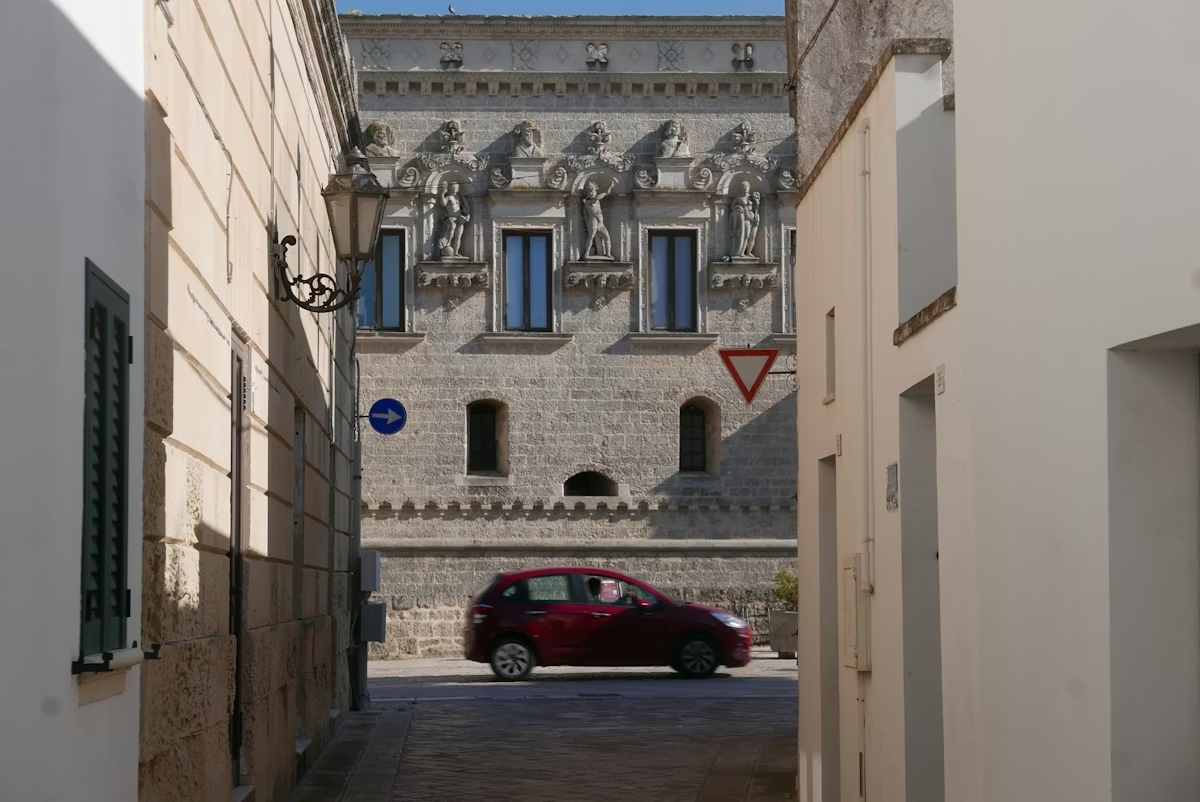
A baroque castle facade with a car in front of it in Corigliano d'Otranto.
6. Grecìa Salentina – Best for Hellenic Connections
The Grecìa Salentina region preserves the influence of Byzantine-era Greeks in southern Italy. Its 12 towns, including Calimera, Martano, and Melpignano, still feature Greek-speaking locals and signage in Greek characters. Corigliano d’Otranto is notable for its impressive castle, while Martano and Melpignano appear on Italy’s Borghi Autentici d’Italia list.
In August, the Notte della Taranta festival celebrates the area’s traditional pizzica folk dance, and several private courtyards open to the public during Cortili Aperti.
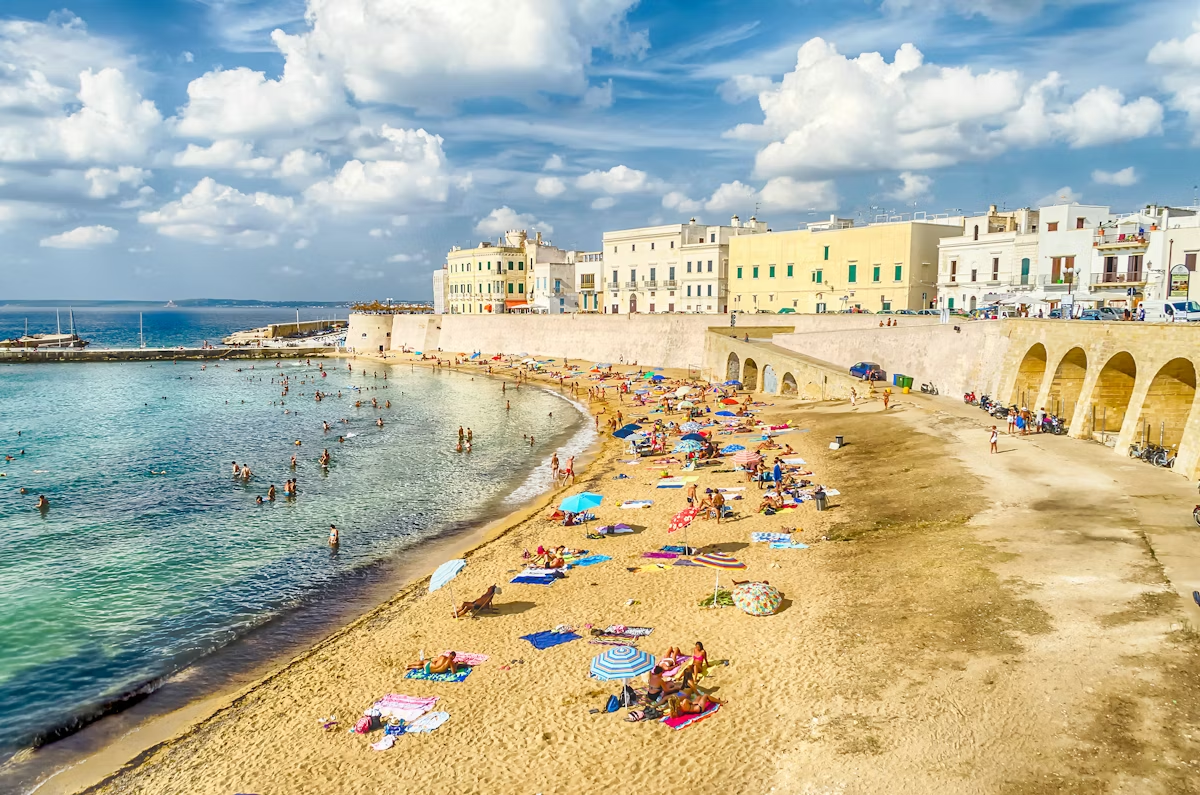
The Gallipoli waterfront.
7. Gallipoli – Best for Sun and Nightlife
Gallipoli combines sun-soaked beaches with a vibrant Old Town on a tiny island connected by a causeway. Narrow squares and bar-lined alleys attract summer crowds seeking sun, sea, and nightlife.
Beyond beach life, highlights include the Cattedrale di Sant’Agata, the underground Frantoio Ipogeo olive press, and the mysterious Fontana Greca, a Greek fountain of uncertain origin. Visiting in June or September allows for enjoyment of the town without the peak-season crush.
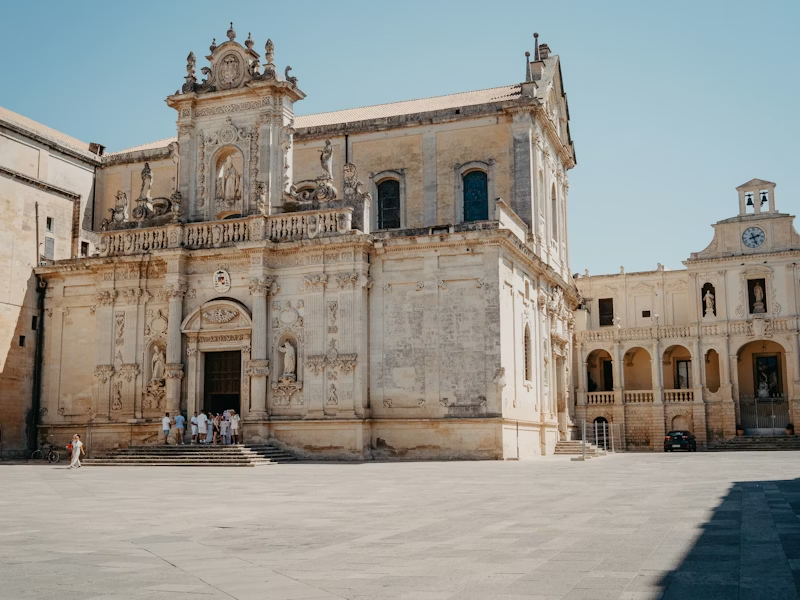
Piazza del Duomo. Martina De Pascali for Lonely Planet
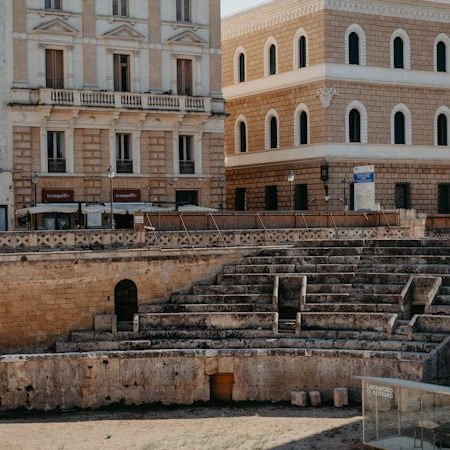
A Roman amphitheatre
8. Lecce – Best for Baroque Splendor
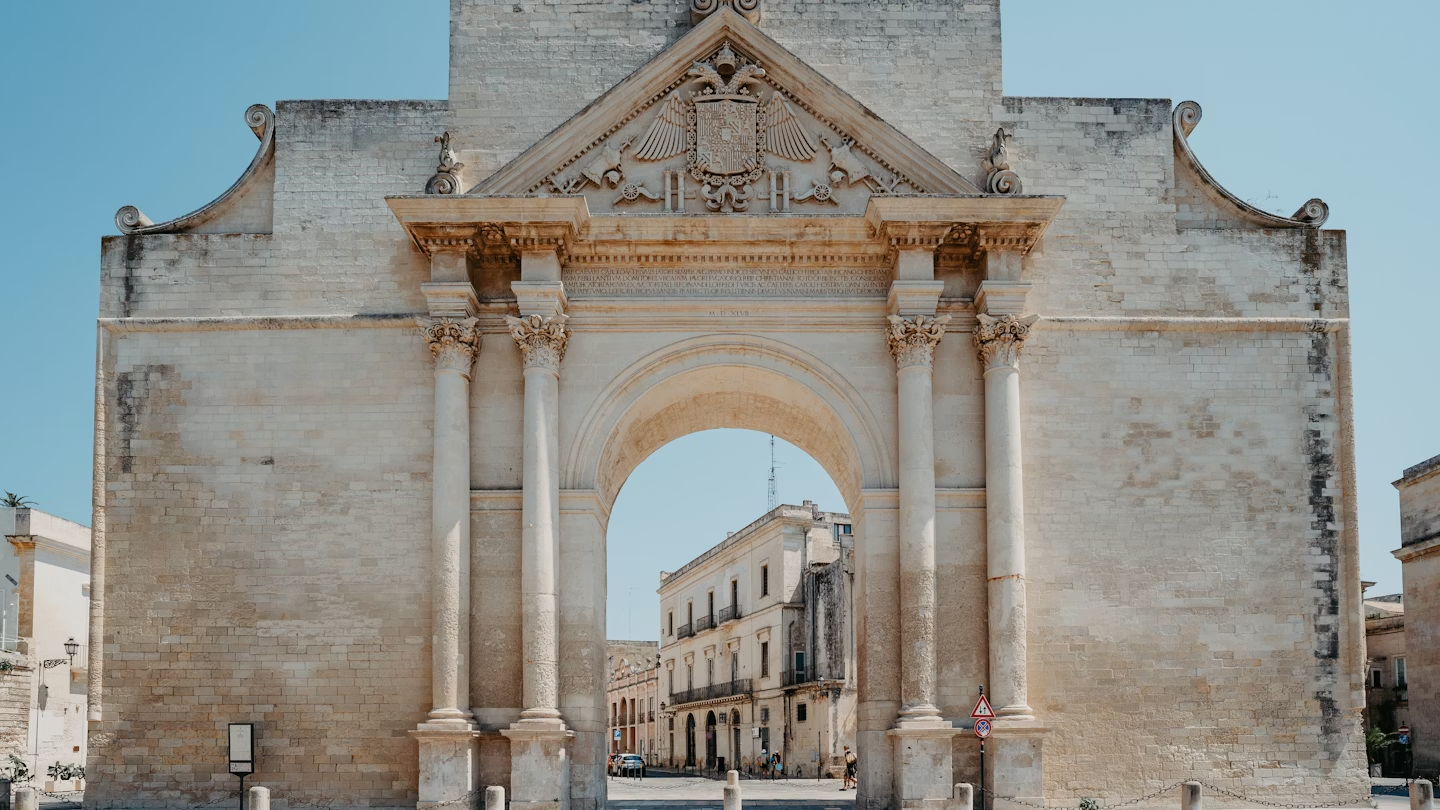
Lecce is a Baroque masterpiece, with 17th- and 18th-century architecture showcasing the extravagant barocco leccese style. Key landmarks include the Duomo, Palazzo Vescovile, and the Basilica di Santa Croce, whose elaborate facade is a must-see.
The city’s history predates its Baroque glory. At Piazzetta Castromediano Sigismondo, glass floors reveal a Renaissance oil store, while Museo Faggiano uncovered ancient subterranean relics, including a pre-Christian Messapian tomb and a Roman granary.