The meeting comes against the backdrop of the November 10 Red Fort car blast that killed 15 people and injured more than two dozen.
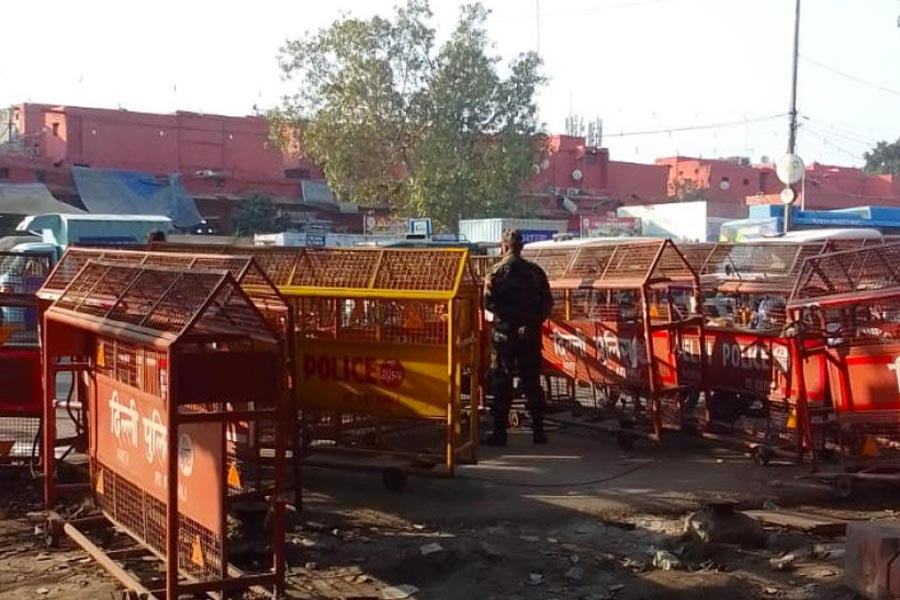
A security official stands guard a heavily-barricaded roadside near the Red Fort complex, in New Delhi.
Delegates entering Delhi’s Red Fort from the Chandni Chowk side must navigate a series of tightly arranged security barricades before reaching the heavily guarded Lahori Gate to access the venue for a major UNESCO event, being hosted in India for the first time. Security personnel from the Delhi Police and paramilitary forces are maintaining strict surveillance both around the monument’s perimeter and within the historic Mughal-era complex, a UNESCO World Heritage Site.
India is hosting the 20th session of the Intergovernmental Committee for the Safeguarding of the Intangible Cultural Heritage from December 8 to 13 at the Red Fort. This gathering comes in the aftermath of the November 10 Red Fort blast, which killed 15 people and injured over two dozen others.
Managed by the Archaeological Survey of India (ASI), the 17th-century fort has been closed to the public since December 5 for the event and is expected to remain shut until December 14. A series of barricades labeled 'Delhi Police' have been installed in a winding pattern near the blast site. One police officer noted that soot is still visible on the road near the Lal Quila Metro Station gate, marking the blast’s location. He emphasized that security is stringent day and night due to the significance of the international gathering.
Access to the Red Fort is limited to delegates and accredited media, all of whom must carry badges issued jointly by UNESCO and the Indian government. Armed CISF personnel guard the Delhi Gate entrance, while inside the fort, security teams constantly monitor the movement of attendees. After dark, police patrols on motorcycles cover the area from Lahori Gate to Delhi Gate.
The event officially opened on December 7, with External Affairs Minister S. Jaishankar attending as chief guest. Other dignitaries present included Union Minister Gajendra Singh Shekhawat, UNESCO Director-General Khaled El-Enany, Delhi Chief Minister Rekha Gupta, and India’s Permanent Delegate to UNESCO, Vishal V. Sharma. On Wednesday, Deepavali was added to the UNESCO Representative List of the Intangible Cultural Heritage of Humanity.
Delegates also attended a cultural program on the lawns facing the historic Diwan-i-Aam, followed by a gala dinner under heightened security. Walid Al Halani of the UAE delegation expressed his pleasure at visiting India for the first time, appreciating the country and its people. Meanwhile, traders at Old Lajpat Rai Market quietly recalled the blast while trying to resume normal life, acknowledging the lasting impact of the incident.
The Red Fort continues to be one of India’s most visited landmarks. Commissioned by Mughal emperor Shah Jahan as the palace complex of Shahjahanabad, its construction spanned from 1638 to 1648. The fort is famous for its massive defensive walls and also hosted the inaugural India Art, Architecture, and Design Biennale (IAADB) in 2023.