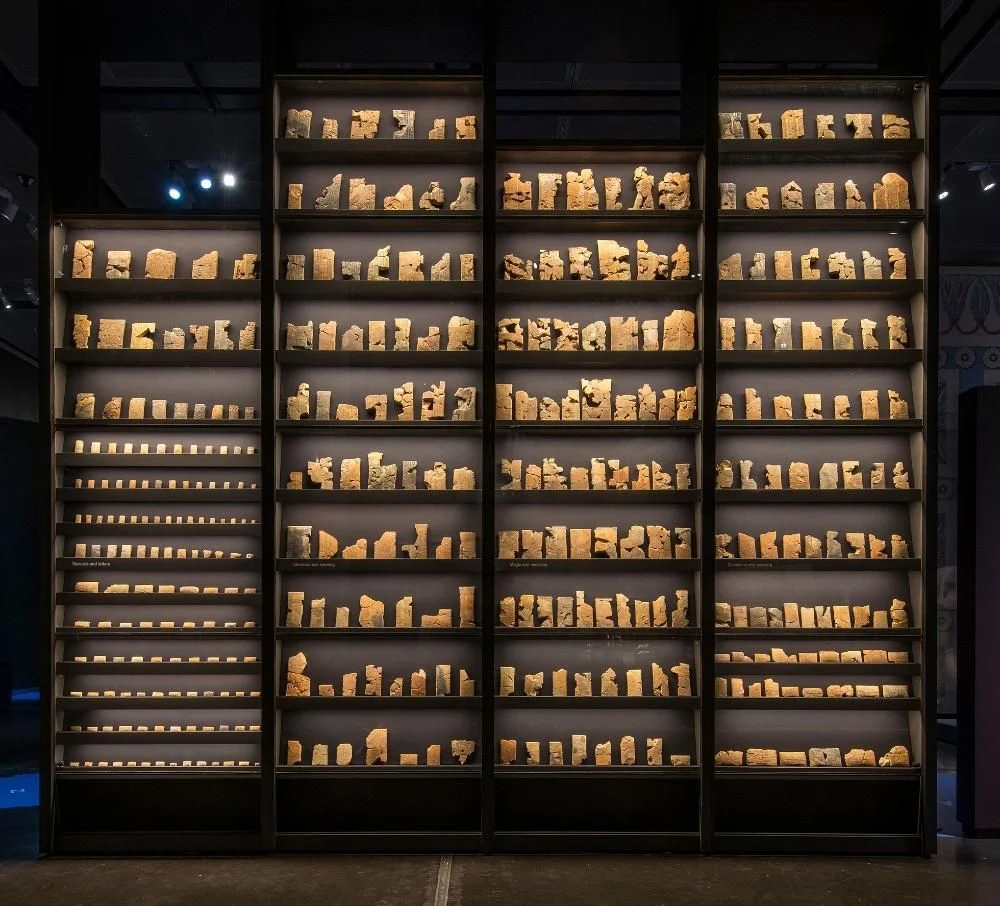
The library of Ashurbanipal in Nineveh, dating to the 7th century BCE, housed tens of thousands of clay tablets inscribed in cuneiform, preserving literature, legal codes, and scholarly texts.
Scope and Content
The library included epic tales like the Gilgamesh Epic, medical texts, astronomical records, and administrative documents. It offered insight into the intellectual life of the Assyrian Empire.
Organization and Access
Tablets were carefully catalogued and stored, illustrating early methods of information management. Scholars accessed the library to study law, religion, and science, ensuring continuity of knowledge.
Legacy
Ashurbanipal’s library represents one of the earliest attempts to preserve human knowledge systematically, influencing later traditions of scholarship and education in the ancient world.