The immense and frozen landscapes of Siberia have shaped human culture for millennia. Winters in this region can last for many months, with temperatures dropping far below freezing and snow covering the ground in deep layers.
Despite these harsh conditions, ancient Siberian societies developed vibrant traditions that celebrated the seasonal rhythms of their environment. Among the most fascinating were winter festivals centered around snow, ice, and the spiritual forces believed to govern the natural world.
These festivals often occurred during the darkest periods of winter, when communities gathered to mark the gradual return of sunlight after the long polar nights. Firelight, music, and ritual performances helped transform the cold darkness into a time of communal celebration.
Participants in these ceremonies sometimes constructed elaborate snow sculptures representing animals, spirits, or mythological beings. Reindeer, bears, and birds frequently appeared in these designs because they held important symbolic roles in Siberian cosmology.
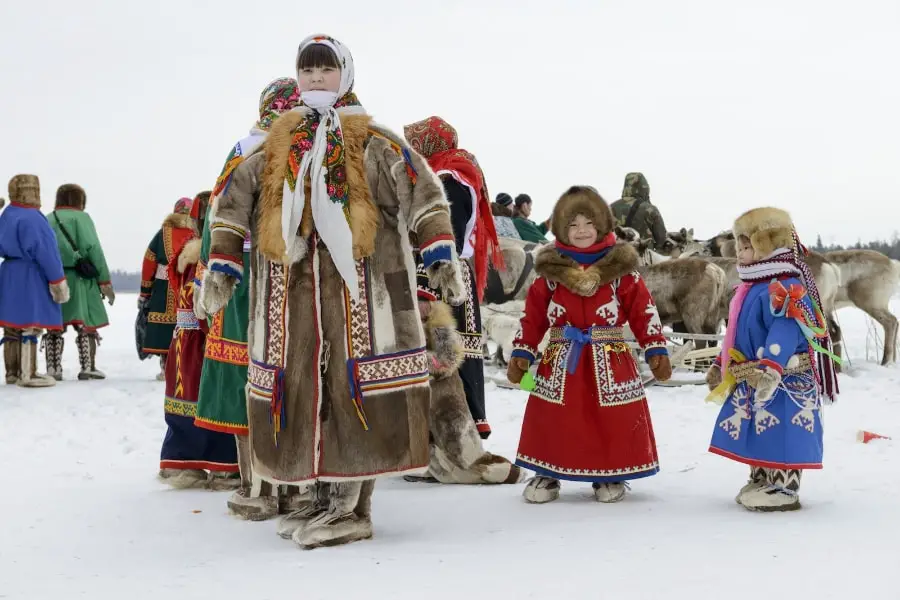
Costumes made from fur, bone ornaments, and carved masks were also used during ritual dances. Performers embodied animals or spirits, reenacting mythological stories that explained the origins of the world and humanity’s relationship with nature.
Central to many of these festivals were shamans—spiritual specialists who served as intermediaries between humans and the spirit realm. Using drums, chants, and trance rituals, shamans attempted to communicate with supernatural forces believed to control weather, animal migrations, and the success of hunts.
These ceremonies were not only religious events but also crucial social gatherings. During long winters when travel was difficult, festivals allowed scattered families and clans to meet, exchange stories, arrange marriages, and reinforce communal bonds.
The rituals also reflected deep ecological knowledge. Many ceremonies honored the spirits of animals hunted for food, acknowledging the balance between human survival and respect for the natural world.
In this way, winter festivals served as both spiritual expressions and practical cultural traditions that helped ancient Siberian communities endure some of the most extreme environments on Earth.