Long before alphabetic writing systems spread across Europe, mysterious symbols appeared on artifacts created by prehistoric communities. These marks have puzzled archaeologists for decades because they resemble writing but cannot yet be deciphered.
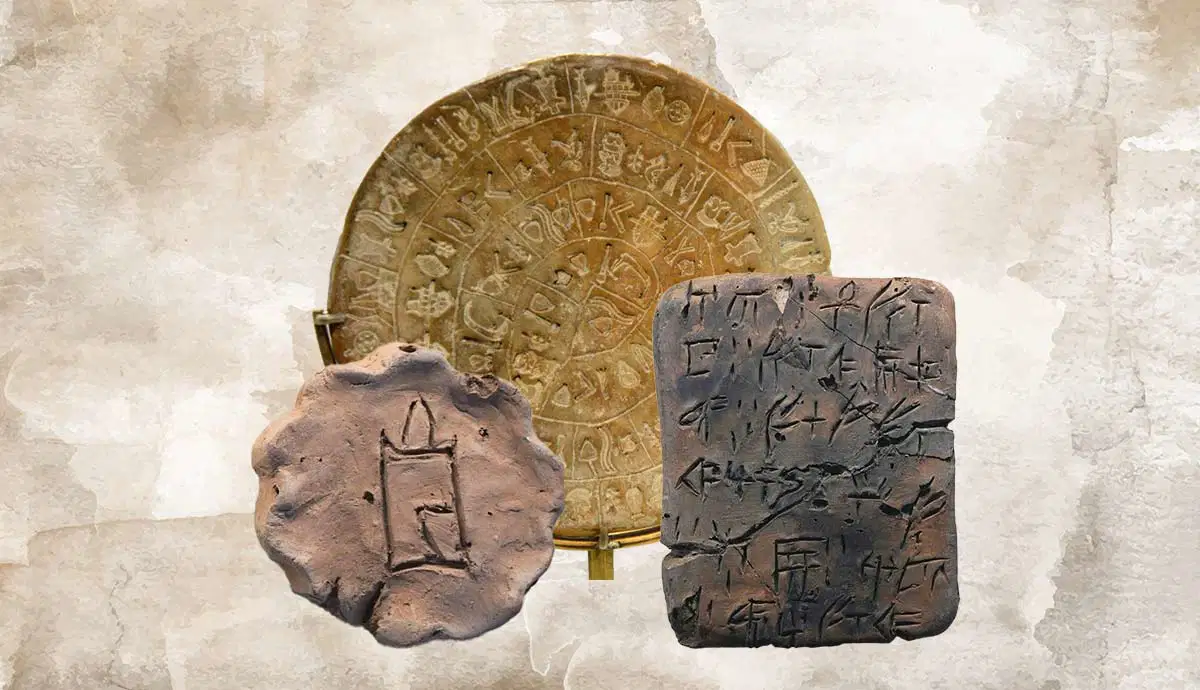
One of the most intriguing examples involves the Tărtăria Tablets, discovered in the 1960s in what is now Romania. These small clay tablets bear incised symbols arranged in deliberate patterns. Some of the signs resemble simple pictographs—crosses, lines, and geometric shapes—while others appear more abstract.
The tablets are believed by some researchers to date to around 5000 BCE, which would make them older than the earliest known writing systems of Mesopotamia. If this dating is accurate, they could represent one of the earliest attempts at symbolic recording in human history.
However, the interpretation of these tablets remains controversial. Some scholars argue that the markings represent a proto-writing system—a form of communication that conveyed information but may not yet have represented full language. Others believe the symbols were purely ritual or decorative marks used in religious ceremonies.
Similar symbols appear on artifacts from several prehistoric cultures in southeastern Europe, particularly within the Vinča cultural complex. Pottery fragments, figurines, and ritual objects often display repeated signs that resemble those on the Tărtăria Tablets.
Because these artifacts were not found alongside longer inscriptions or translations, deciphering them has proven extremely difficult. In other ancient writing systems, such as Egyptian hieroglyphs or cuneiform, scholars relied on bilingual texts like the Rosetta Stone to unlock their meanings. For the prehistoric European symbols, no such key exists.
Despite this uncertainty, the presence of repeated signs across different objects suggests that they carried shared meanings within those societies. They may have marked ownership, identified religious concepts, or symbolized clan affiliations.
If these symbols indeed represent an early form of writing, they would challenge long-standing assumptions about the origins of literacy in Europe. Traditionally, historians believed writing entered Europe much later through contact with Near Eastern civilizations that used alphabets derived from Phoenician scripts.
The mysterious symbols of prehistoric Europe therefore raise fascinating questions about early communication systems. They hint that ancient communities may have experimented with symbolic recording thousands of years before writing became widespread.