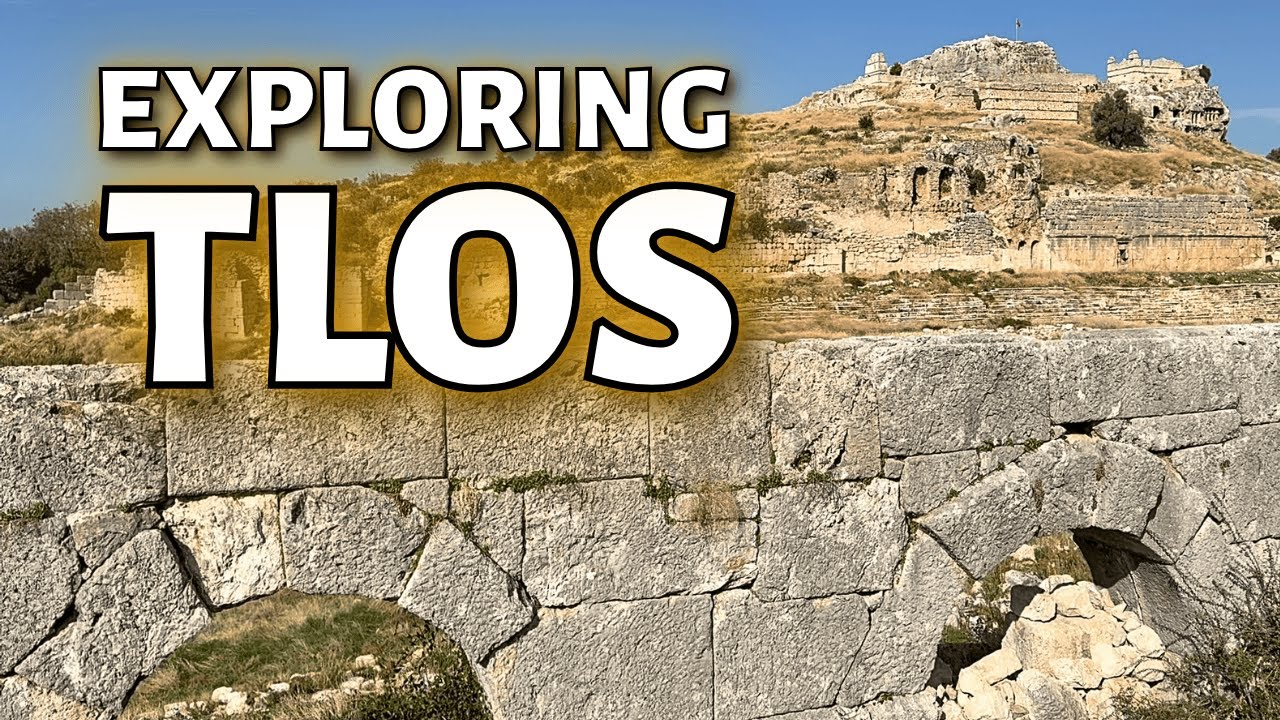
The Ancient Lycian City of Tlos: 4,000 Years of History in One Hidden Site
Established over 4,000 years ago, the ancient city of Tlos stands as one of the oldest continuously inhabited settlements in the region of Lycia — in modern-day Türkiye.
And somehow, it remains one of the most underrated archaeological sites you can visit today.
Join us as we explore the ruins of Tlos without the crowds — walking through layers of history that stretch from the Bronze Age to the Ottoman era.
A City Before History Books
Archaeological evidence suggests settlement at Tlos began as early as 2000 BC during the Bronze Age. Even more fascinating, Hittite texts from the 15th–14th century BC reference a place called “Dalawa,” believed to be ancient Tlos — centuries before the classical Lycian period.
That means this city was thriving long before the Greeks, long before Rome, and long before the world most people associate with “ancient ruins.”
The Lycian Powerhouse
During the Lycian era, Tlos became one of the leading cities of the Lycian League — a federation of city-states known for its unique political structure.
The city is also deeply tied to myth. Tlos was associated with the hero Bellerophon, the legendary slayer of the Chimera, adding a layer of mythological prestige to its already impressive history.
High above the city, rock-cut tombs carved into towering cliffs dominate the skyline — a signature feature of Lycian architecture that still stuns visitors today.
Empires Rise, Tlos Adapts
Tlos didn’t fade when new powers arrived — it adapted.
Persian Rule: Incorporated into the Achaemenid Empire during the mid-1st millennium BC.
Hellenistic & Roman Periods: The city flourished under Roman control, gaining monumental architecture including a theater, stadium, baths, and civic buildings.
Byzantine & Ottoman Eras: Occupation continued well into the medieval and early modern periods, with reuse of the acropolis and structures below.
This isn’t a city frozen in one moment of time.
It’s a living timeline.
A Landscape of Layers
Walking through Tlos feels like stepping through centuries in minutes.
You’ll find:
Dramatic cliffside Lycian tombs
A Roman theater overlooking the valley
Stadium ruins stretching across open ground
Byzantine church remains
Ottoman-era fortifications crowning the acropolis
Each layer reveals how civilizations built upon one another — sometimes respectfully, sometimes aggressively — but always leaving their mark.
Why Tlos Matters
Tlos is a powerful example of endurance.
For over four millennia, people lived, governed, worshipped, traded, and rebuilt here. Empires came and went. Cultures merged. Architecture evolved.
Yet the city remained.
It stands today as a window into Anatolia’s deep and complex past — a reminder that history is not a straight line, but a series of adaptations.
And best of all?
You can explore it without fighting massive tourist crowds.
🎥 Watch the video below to explore the ancient Lycian city of Tlos and discover 4,000 years of history layered across one of Türkiye’s most remarkable archaeological sites: