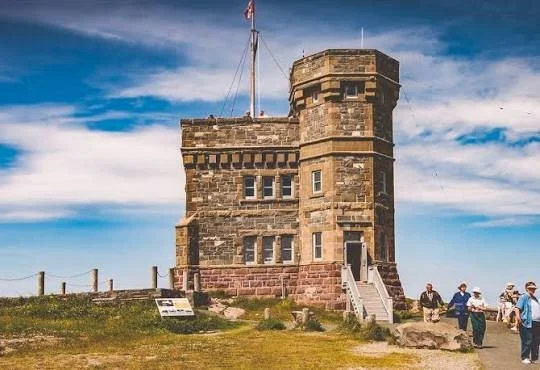
Before the development of radio, telegraphy, and modern telecommunications, communities relied on visual and acoustic signals to communicate across long distances. Elevated locations were especially useful because they offered wide views of the surrounding landscape and allowed signals to be seen from distant settlements or neighboring towers. Cliff-top signal towers represent one possible component of these early communication networks. Their archaeological remains can help researchers investigate how societies transmitted warnings, coordinated movement, and maintained connections across difficult terrain.
Signal towers could take several forms depending on the period, region, and purpose of the network. Some were substantial stone structures incorporated into defensive systems, while others may have consisted of modest platforms, timber constructions, or watch posts positioned on naturally elevated ground. Their effectiveness depended on visibility, weather conditions, and the availability of observers who could recognize and relay a signal. A tower did not necessarily need to be architecturally impressive to perform an important role within a larger communication system.
Fire and smoke were among the most recognizable signaling methods used before modern communications. During daylight, smoke could provide a visible indication of activity, while flames were more useful after dark. Horns, bells, drums, and other sound-producing instruments could supplement visual signals, particularly when visibility was poor or a receiving station was nearby. The precise method depended on the intended message, the distance between stations, and the environmental conditions.
A network of signal towers could allow information to travel farther than a single observer could communicate directly. When one station detected an approaching vessel, an enemy force, or another important event, its operators could transmit a signal to the next station. The receiving station would then repeat the signal or send a different message to another location. With carefully positioned towers, information could move across a coastline, valley, mountain range, or border region relatively quickly.
Archaeologically identifying such a network is challenging. A tower on a cliff may have served as a defensive stronghold, a watch post, a refuge, or a location for controlling movement through a landscape. Its elevated position alone does not establish that it was used for signaling. Researchers must examine the structure's architectural features, its visibility from other sites, its chronology, and its relationship to nearby roads, settlements, ports, and defensive installations.
Line-of-sight analysis is an important tool in investigating possible networks. Digital elevation models can help researchers calculate whether two locations would have been visible to one another under reconstructed landscape conditions. Modern vegetation and buildings may obstruct views that were available in the past, while erosion and changes in terrain can alter the apparent visibility of a site. Researchers therefore use topographic modeling as a guide rather than as definitive proof of historical communication.
The arrangement of towers can also reveal possible network organization. Sites positioned at regular intervals along a coast or near strategic passes may indicate a coordinated system, especially when their construction dates and architectural characteristics are similar. However, geographical convenience can produce similar patterns even when structures were not part of a single network. Establishing a connection between towers requires chronological and contextual evidence as well as spatial analysis.
Excavations may uncover evidence of occupation, maintenance, and signaling activities. Hearths, charcoal, storage vessels, lamps, and domestic artifacts can indicate that people occupied a tower for extended periods or visited it regularly. Metal fittings, architectural fragments, and construction materials may help reconstruct the building's design. Specialized signaling equipment may not survive, particularly if it was made from wood, textiles, or other perishable materials.
Historical sources can sometimes clarify the purpose of a tower system. Written records may describe warning signals, beacon chains, military communications, or the maintenance of watch stations. Yet records from one period should not automatically be applied to structures built centuries earlier. Towers could change function over time, shifting from military signaling to local observation, taxation, or other administrative uses.
The social organization of communication networks is another important subject. Signal towers required people to monitor the surrounding area, interpret incoming messages, maintain equipment, and relay information. Such responsibilities may have been assigned to soldiers, local residents, officials, or specialized personnel. The archaeological record rarely identifies these individuals directly, but the scale of the installation and evidence of repeated occupation may provide clues about how it operated.
Environmental conditions influenced the reliability of the system. Fog, rain, strong winds, and darkness could interrupt visual communication, while rugged terrain could limit the effectiveness of sound signals. Networks might therefore have used alternative routes, additional stations, or different signaling methods to overcome local difficulties. The effectiveness of a network depended not only on the towers themselves but also on the people and procedures that connected them.
The archaeology of cliff-top signal towers offers insight into how societies overcame the limitations of distance before electronic communication. By combining architectural analysis, visibility modeling, historical research, and landscape archaeology, researchers can investigate whether isolated towers formed coordinated networks or served more localized purposes. These structures demonstrate that communication infrastructure was an important part of political organization, defense, and regional connectivity long before the arrival of radio technology.