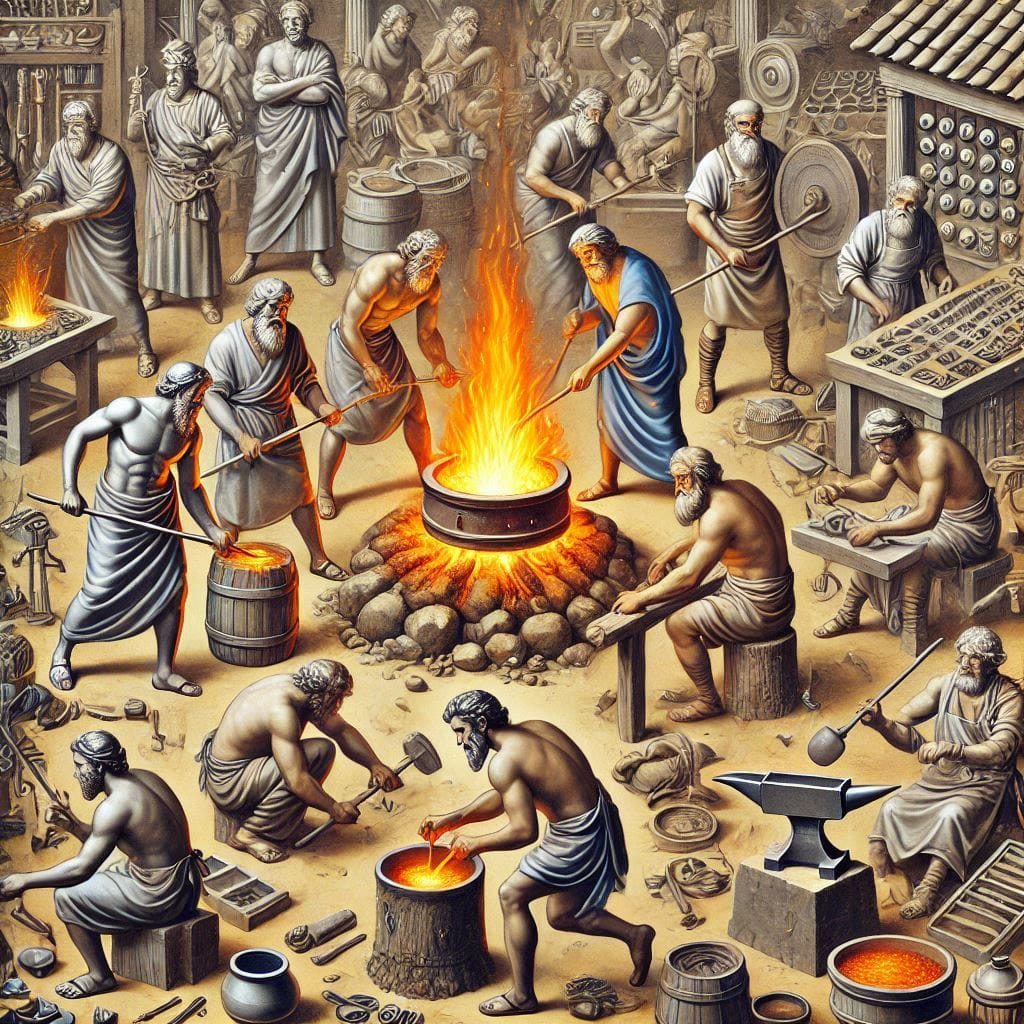
Origins of Metalworking
Anatolia (modern Turkey) was a center for early metallurgy, beginning in the Chalcolithic period (c. 5000–3000 BCE). Early communities learned to extract and shape copper, marking the transition from stone tools to metal implements.
Techniques and Innovations
The first metallurgists employed smelting, casting, and alloying to produce tools, weapons, and ornaments. Hammering and annealing techniques improved durability, while molds allowed standardized production of axes, daggers, and jewelry.
Cultural and Economic Significance
Metal tools increased agricultural efficiency, enabled construction projects, and enhanced warfare capabilities. Ornamentation demonstrated social status and ceremonial importance, while surplus production facilitated trade with neighboring regions.
Archaeological Evidence
Artifacts such as copper axes, bronze ornaments, and slag remnants illustrate the sophistication of Anatolian metalworking. Sites like Çatalhöyük and Alacahöyük provide insight into workshops, trade networks, and early technological knowledge.
Legacy
Anatolian metallurgists influenced neighboring civilizations, including the Hittites, Greeks, and Mesopotamians. Their innovations laid the groundwork for the Bronze Age, transforming economies, warfare, and social hierarchies across the ancient world.