Brown Dwarfs: Failed Stars With a Big Role in Galactic History
What’s smaller than a star but bigger than a planet? The answer is a brown dwarf. Formed from the same material as ordinary stars, brown dwarfs never grow massive enough to ignite hydrogen fusion in their cores—the process that makes stars shine. Because of this, they are often called “failed stars.” Yet far from being failures, brown dwarfs are proving to be powerful tools for understanding the history and structure of our galaxy.
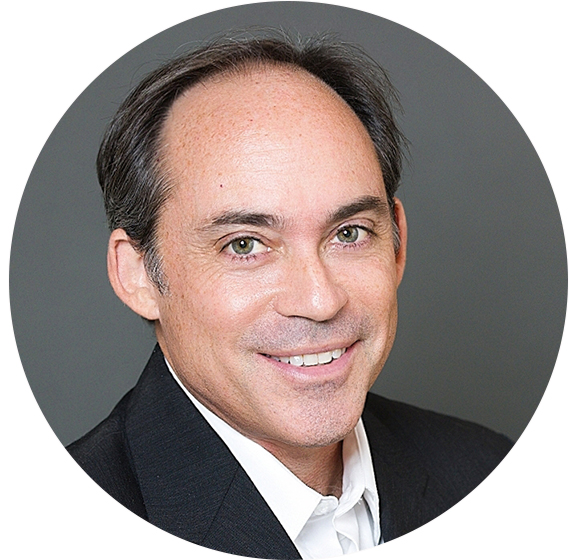
Dr. Adam Burgasser, professor of astrophysics and astronomy and director of the Cool Star Lab at the University of California, San Diego, will highlight this growing field in his Monday plenary talk, “The Brown Dwarf–Milky Way Connection: How Failed Stars Play a Unique Role in Galactic Archaeology.” His recent work shows how these faint objects can reveal the ages, composition, and evolution of different regions of the Milky Way.
The study of brown dwarfs is entering an especially exciting era thanks to new technology. Instruments such as the James Webb Space Telescope (JWST) and the upcoming Roman Space Telescope are transforming what astronomers can observe. Brown dwarfs are cool and faint, emitting most of their light in infrared wavelengths, which made them difficult to detect in the past. Until recently, nearly all known brown dwarfs were located relatively close to the Sun, within a few dozen parsecs.
JWST’s exceptional sensitivity in the infrared has changed that picture. Astronomers are now identifying dozens of brown dwarfs at distances of thousands of parsecs, extending observations into older and more distant regions of the galaxy, including the thick disk and the halo. This expanded view allows scientists to use brown dwarfs not just as individual curiosities, but as tracers of galactic environments.
Burgasser emphasizes that brown dwarfs offer a unique advantage for galactic archaeology. Because they slowly cool over time, their spectra carry age-related signatures that can be decoded by astronomers. For decades, this method has been used to date young star clusters. With JWST data, it can now be applied to much older systems, such as globular clusters. Spectral data also reveal a brown dwarf’s metallicity—the chemical makeup of its atmosphere—which reflects the environment in which it formed. Since brown dwarfs are common, making up roughly 20% of all stars, and extremely long-lived, they provide an abundant and enduring record of the Milky Way’s past.
Beyond their role as galactic probes, brown dwarfs are also valuable laboratories for studying atmospheric chemistry. Similar in size to giant planets, they help bridge the gap between stars and exoplanets. One of the most intriguing recent discoveries from Burgasser’s research is the detection of phosphine in the atmosphere of a brown dwarf. Phosphine is well known in the atmospheres of Jupiter and Saturn, and models predicted it should exist in brown dwarfs as well. Yet until now, it had never been clearly observed.
The new detection raises more questions than it answers. Why does one brown dwarf show phosphine while others do not? What are current atmospheric models missing? The finding also has implications for the search for life beyond Earth, since phosphine has been proposed as a possible biosignature on terrestrial planets. Burgasser cautions that if scientists cannot fully explain phosphine in lifeless environments, they must be careful when interpreting it as evidence of life elsewhere.
In addition to his research, Burgasser is deeply involved in science education, outreach, and equity initiatives. He describes curiosity as the common thread running through all his work. His own career path reflects that mindset. Although fascinated by astronomy from a young age, he once aspired to become an astronaut, inspired by working with Sally Ride while an undergraduate at UC San Diego. Graduate studies in astrophysics eventually led him to realize that research, rather than spaceflight, was his true calling.
For students beginning their own research journeys, Burgasser offers straightforward advice: don’t overthink it. Exploring different topics builds transferable skills, even if interests change over time. Trying—and sometimes rejecting—various directions, he says, is all part of the process. As he puts it, even a “random walk” can turn out to be exactly the right path.