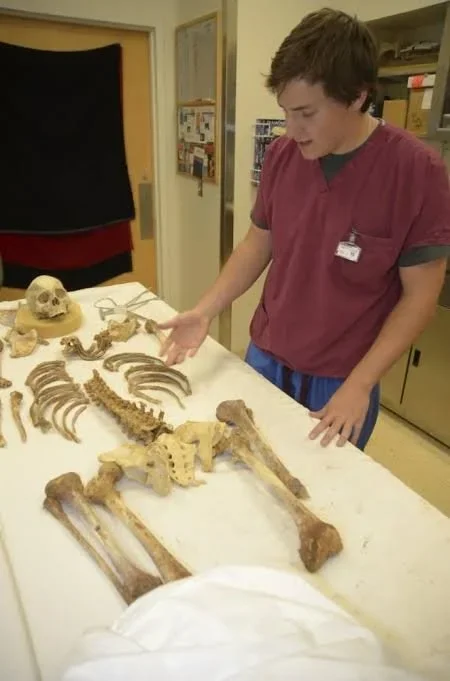
Human skeletal remains preserve evidence of growth, physical activity, disease, injury, and aspects of nutrition during life. In archaeological and forensic investigations, researchers examine these remains to understand the biological experiences of individuals and the conditions affecting past populations. One particularly challenging subject is fasting, a practice that may occur for religious, cultural, medical, economic, or survival-related reasons. Because fasting is a behavior rather than a disease, identifying it from skeletal remains requires careful interpretation and an understanding of the limitations of biological evidence.
Fasting involves a period of reduced or absent food intake, but its effects depend on many factors. Duration, frequency, hydration, physical activity, age, health, and access to food all influence the body's response. A brief fast may leave no identifiable skeletal changes, while prolonged or repeated nutritional deprivation may contribute to changes in growth, bone remodeling, or general health. These changes are not unique to fasting, however, and may also occur under conditions of chronic malnutrition, illness, or other physiological stress.
Bone is living tissue that continually undergoes remodeling. Specialized cells remove older bone material while other cells form new tissue, allowing the skeleton to respond to growth, physical demands, and changes in metabolism. When the body experiences nutritional stress, bone formation and maintenance may be affected, particularly when the deficiency is severe or prolonged. Yet the relationship between food intake and skeletal change is complex. A skeleton does not record every meal or missed meal, and a period of fasting may occur without leaving any distinctive anatomical signature.
Researchers sometimes examine indicators of physiological stress, including changes in bone growth, dental development, and the structure of certain skeletal elements. In children, severe or prolonged nutritional problems may disrupt normal growth, although similar patterns can arise from infection and other health conditions. Dental enamel defects can record episodes of stress during tooth formation, but they cannot identify fasting as the specific cause. In adults, bone loss may be associated with nutritional deficiencies, hormonal changes, reduced physical activity, illness, and aging.
This lack of specificity is central to the forensic identification of fasting. A skeletal feature may indicate that an individual experienced physiological stress, but it rarely reveals the exact behavior responsible. Even when several indicators occur together, researchers must consider alternative explanations. The most scientifically defensible conclusion may be that the individual experienced nutritional or metabolic stress, rather than that the person deliberately fasted.
Population-level research presents additional challenges. Archaeologists may compare skeletal indicators across groups from different periods, social settings, or burial contexts to investigate whether some communities experienced greater nutritional stress than others. Differences between populations can be informative, but they may reflect food availability, disease exposure, social inequality, migration, environmental change, or differences in the preservation of remains. A pattern observed in a burial population cannot automatically be attributed to a particular religious or cultural practice.
Stable isotope analysis can contribute to the investigation of diet, although it does not directly identify individual fasting episodes. The ratios of certain isotopes in bone and tooth tissues can reflect aspects of long-term dietary patterns and, in some cases, geographic origins. Because different tissues form and remodel at different rates, they represent different periods of an individual's life. These measurements can help reconstruct broad dietary histories, but a short fast is unlikely to produce a clear, uniquely identifiable isotopic signature in skeletal tissue.
Historical and archaeological context can sometimes make the investigation more informative. Written sources may describe fasting customs, periods of food scarcity, or religious calendars. Burial locations and material culture may also provide evidence about community practices. When independent historical records indicate that fasting occurred, researchers can investigate whether skeletal patterns are consistent with broader conditions of nutritional stress. Even then, it is difficult to establish whether a particular individual participated in the practice or how frequently it occurred.
Modern forensic investigations require particular caution. Skeletal remains may be discovered in contexts where the cause and circumstances of death are uncertain. Researchers must distinguish evidence of starvation or severe malnutrition from evidence of deliberate fasting, because these conditions have different implications. Starvation caused by deprivation or inability to obtain food is not equivalent to voluntary or ritual fasting. Skeletal findings alone generally cannot establish a person's intentions, beliefs, or access to food.
Ethical considerations also shape the study of human remains. Researchers should avoid making unsupported claims about the behavior or religious identity of deceased individuals. Interpretations should be grounded in validated methods, transparent about uncertainty, and respectful of descendant communities. Where living communities maintain relevant traditions, consultation may help contextualize historical evidence without replacing scientific evaluation.
The forensic identification of fasting therefore remains a difficult problem. Skeletal remains can reveal aspects of nutritional health and physiological stress, but they rarely preserve a specific marker of deliberate food abstention. The most reliable investigations combine skeletal analysis with archaeological context, dietary evidence, historical documentation, and careful consideration of alternative explanations. This approach allows researchers to study the biological consequences of nutritional stress while avoiding conclusions that the physical evidence cannot support.