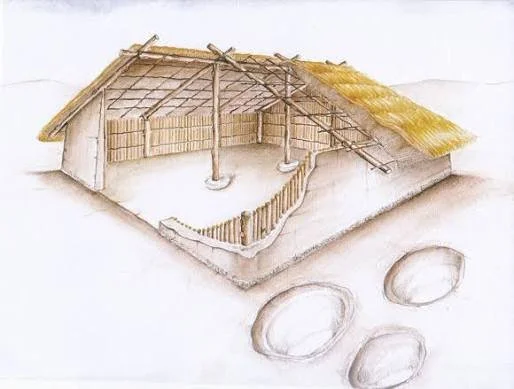
Neolithic villages provide valuable evidence of the transition toward more settled ways of life in many parts of the world. As communities increasingly relied on cultivation, animal management, and permanent or semi-permanent dwellings, houses became important spaces for cooking, sleeping, storing food, making tools, and maintaining family relationships. These buildings were not necessarily static structures. Floors became worn, surfaces accumulated waste, and walls and roofs required maintenance. The repeated replacement of floors offers archaeologists an opportunity to reconstruct the changing life of a house and understand how domestic spaces were maintained over generations.
Micromorphology is the microscopic study of undisturbed soil and sediment samples. Archaeologists collect small blocks of sediment, preserve their original structure, and prepare thin sections that can be examined under a microscope. These sections reveal the arrangement of mineral grains, organic particles, ash, charcoal, plant remains, and other microscopic components. Because many household activities leave traces too small to recognize during ordinary excavation, micromorphology can provide detailed evidence of how a floor was used, cleaned, repaired, and eventually replaced.
A Neolithic floor might consist of compacted earth, clay, plaster, stone, or a combination of materials. The choice depended on local resources, construction traditions, and the intended function of the building. Some floors were deliberately smoothed or coated to create a more comfortable surface, while others were little more than compacted soil. Over time, repeated walking could compress the surface, and domestic activities might introduce small quantities of ash, food remains, plant fibers, and other materials. Water, animals, and changes in humidity could further modify the floor.
When a floor became damaged or dirty, its occupants might clean it, spread fresh material over it, or construct a completely new surface. These actions could produce distinct layers in the archaeological record. A thin deposit of clean clay above a compacted surface, for example, might represent a deliberate resurfacing episode. Several such layers could indicate repeated maintenance. However, similar deposits can form through natural sediment accumulation, flooding, or the gradual buildup of materials within an abandoned building. Microscopic analysis helps distinguish intentional floor replacement from these alternatives.
The composition of a floor can reveal how the space was used. Ash and charcoal particles may indicate nearby burning, while plant fragments could reflect food processing, bedding, thatching, or other domestic activities. Small bone fragments may be associated with food preparation, although they could also have entered the deposit through cleaning or later disturbance. Mineral particles and plaster fragments may reveal the materials used in construction and repair. The interpretation becomes stronger when several indicators occur together in a consistent pattern.
Spatial differences within a house are equally important. A hearth area may contain heat-altered minerals and ash, while a storage corner may preserve residues associated with containers or organic materials. Areas used for walking may show greater compaction than locations protected by furniture or stored goods. By collecting samples from different parts of the same building, researchers can compare activity zones and investigate whether the arrangement of domestic work changed over time.
Floor replacement also provides information about the duration of occupation. A house with several successive floors may have remained in use through multiple episodes of maintenance. In some Neolithic settlements, buildings were occupied, modified, and eventually abandoned before new structures were erected nearby. The sequence of floors can help establish whether the same building was repeatedly used or whether successive layers belong to different structures. This distinction is important when reconstructing the growth and organization of a village.
Dating these sequences requires careful attention to context. Organic materials trapped within a floor layer may sometimes be suitable for radiocarbon dating, but they do not always provide an exact date for the construction of the surface. Charcoal may have come from older wood, and plant remains could have been redeposited from earlier deposits. Researchers therefore combine dating evidence with stratigraphic relationships and other archaeological materials to establish the most reliable chronology possible.
Micromorphology can also reveal the relationship between domestic cleanliness and everyday activity. Some floors may contain evidence of repeated sweeping or the deliberate addition of clean material. Others may preserve thick accumulations of waste, suggesting different maintenance practices or changing patterns of occupation. These differences should not be interpreted automatically as signs of social status or hygiene. They may instead reflect the building's function, the season of occupation, the availability of labor, or the type of activity conducted inside.
The method has limitations. Microscopic samples represent only small portions of a floor, so a single sample cannot necessarily describe an entire room. Processes such as flooding, burrowing animals, root growth, and later construction may disturb the original deposits. Archaeologists must select samples strategically and compare their findings with the visible stratigraphy, artifacts, and building remains.
The micromorphology of floor replacements offers a detailed way to investigate the lives of Neolithic houses. Tiny fragments of ash, plant material, compacted soil, and construction debris can reveal repeated episodes of use and maintenance that would otherwise remain invisible. By connecting microscopic evidence with architectural remains and settlement chronology, researchers can reconstruct how households adapted their living spaces and how ordinary acts of repair contributed to the long-term development of Neolithic villages.