Advanced Urban Planning and Mysterious Disappearance
Urban Design and Architecture
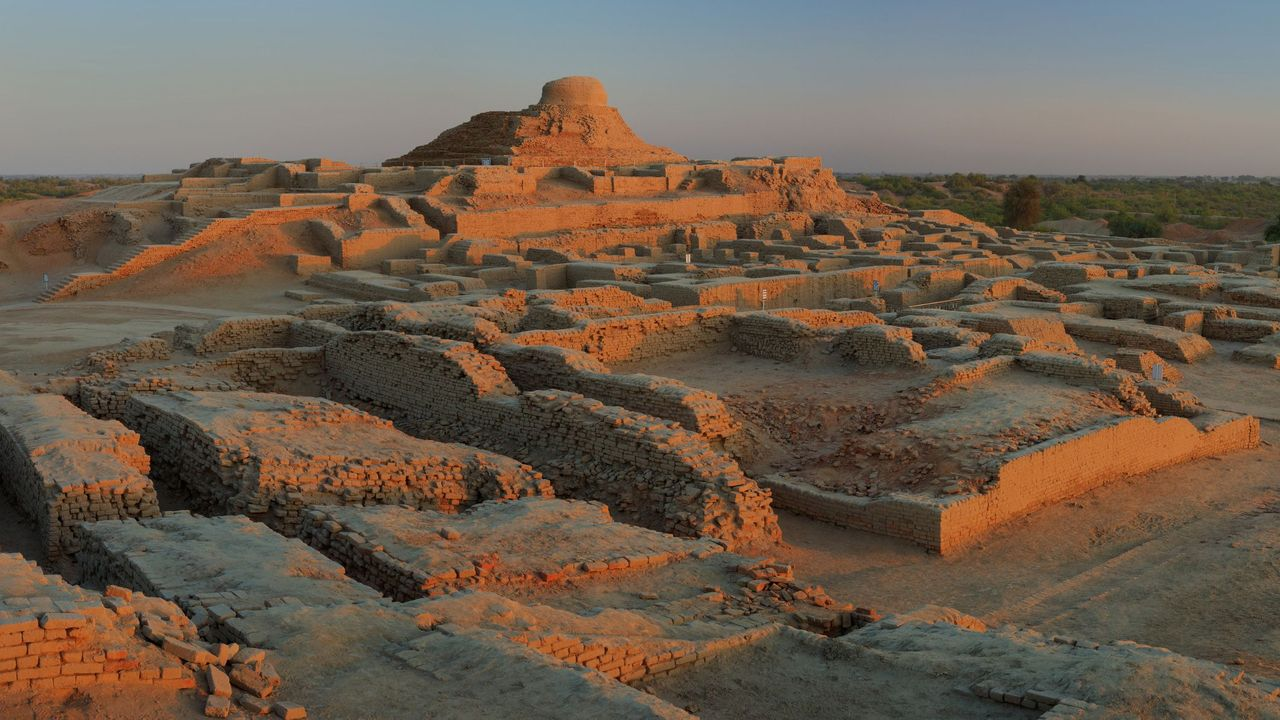
Mohenjo-Daro, built around 2500 BCE, showcased advanced city planning with grid-like streets, fortified citadels, and sophisticated drainage systems. Houses featured private baths, granaries, and workshops, indicating a highly organized society with standardized measures and civic management.
Society and Economy
The city’s residents engaged in agriculture, trade, and crafts. Artifacts such as pottery, jewelry, and seals suggest cultural sophistication, commerce with neighboring regions, and a complex economic system. Social hierarchy and communal organization are evident in the layout of residential and administrative areas.
Religion and Culture
Mohenjo-Daro reveals religious practices focused on fertility, water, and nature deities, though written records remain undeciphered. Figurines, seals, and statues provide clues about rituals, attire, and symbolic expression.
Mysterious Decline
Around 1900 BCE, the city was abandoned, possibly due to climate change, flooding, or socio-political disruption. The sudden decline remains one of the great archaeological mysteries, leaving insights into urban resilience and vulnerability.
Legacy
Mohenjo-Daro’s discoveries inform modern understanding of early urbanism, sanitation, and social organization, highlighting the sophistication of the Indus Valley Civilization.