A Rare Smiling Medusa Emerges in Ancient Amastris
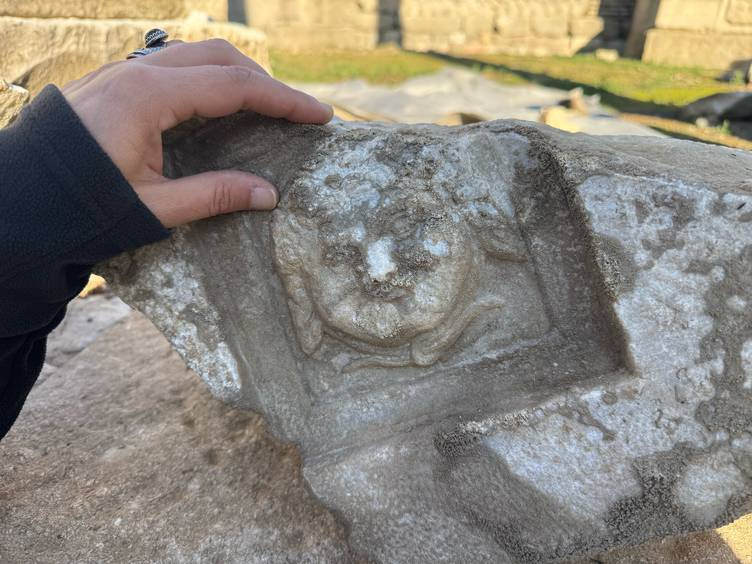
Archaeologists excavating the ancient city of Amastris located in today’s town of Amasra in Türkiye’s Bartın province have uncovered an extraordinary carving of Medusa unlike anything seen before. The figure, discovered in a monumental Roman stoa, shows Medusa with a soft, almost childlike smile. Experts describe her as “Eros-like,” a dramatic departure from the usual fearsome portrayals meant to ward off evil.
This gentle version of Medusa has drawn widespread interest from archaeologists and cultural historians alike. Instead of the traditional snarling Gorgon with serpent hair, this Medusa appears serene and peaceful. Researchers believe this artistic choice may reflect a period of prosperity in Amastris during the Roman era—a time when beauty and harmony were emphasized over intimidation.
A Monumental Stoa Unveils the Grandeur of the City
The excavation, led by Prof. Dr. Fatma Bağdatlı Çam of Bartın University, is centered on a vast 2,850-square-meter area where a massive Roman stoa once stood. This structure, marked by towering Corinthian columns nearly nine meters tall, served as an important public space for trade, gatherings, and daily interaction.
Restoration of the stoa is underway through a meticulous process of anastylosis, using original architectural pieces to reconstruct the building. Three marble columns have already been raised, with more expected to follow. The project—approved by Türkiye’s Ministry of Culture and Tourism and supported by the Turkish Petroleum Corporation—involves experts and students from several universities.
According to Prof. Çam, the stoa may be the most monumental marble building ever found in the Black Sea region. Its scale and craftsmanship offer valuable insight into the cultural sophistication and economic strength of ancient Amastris.
The Smiling Medusa: Beauty as Protection
The most striking find this season appeared on the ceiling coffers above the massive columns: a marble Medusa whose face is calm, youthful, and unexpectedly gentle.
Traditionally, Medusa served as a protective symbol in Greek and Roman architecture. Her horrifying appearance wide eyes, fangs, and coiled snakes was intended to frighten away evil. But the Amastris Medusa tells a different story. Prof. Çam notes that her features closely resemble a young child or Eros, a symbol of harmony and well-being.
This softer portrayal suggests that the artist may have wanted to express prosperity, peace, and beauty rather than aggression. Such an interpretation is extremely rare, making the carving an important contribution to the study of ancient Mediterranean art.
Amastris: A City Shaped by a Queen’s Vision
The significance of this discovery is heightened by the history of the city itself. Amastris was founded by Queen Amastris, a remarkable Hellenistic ruler of Persian noble descent and Greek education. As the niece of King Darius III and former wife of two prominent leaders—including Lysimachus, one of Alexander the Great’s successors—she navigated the turbulent political world of her time with exceptional skill.
In the late 4th century BCE, she united four coastal towns to create the city of Amastris, transforming it into a thriving center of commerce and culture along the Black Sea. Her reign left behind temples, fortifications, and other public works that shaped the city for centuries.
Finding an unusual artistic masterpiece like the smiling Medusa within the city she established highlights the cultural richness and unique identity of Amastris. It reflects a blend of Persian heritage, Hellenistic elegance, and Roman architectural grandeur.
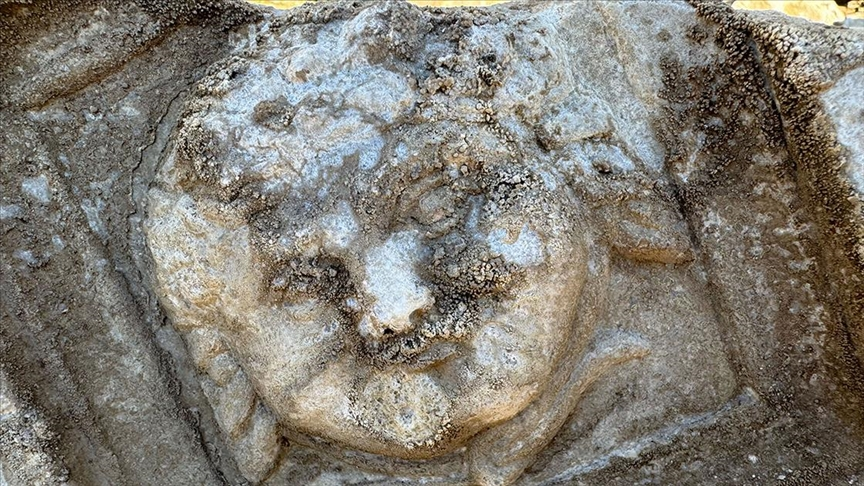
A rare Eros-like smiling Medusa has been discovered in the ancient city founded by Queen Amastris in Amasra.
Previous Discoveries Reveal a Deep and Vibrant Cultural Layer
The newly uncovered smiling Medusa joins an already impressive array of discoveries from past excavation seasons in Amastris. Each find adds another layer to the city’s complex cultural identity, revealing just how connected and influential this ancient settlement once was.
Among the earlier discoveries are:
A finely crafted marble head of Alexander the Great, showcasing the city’s engagement with Hellenistic political symbolism and artistic styles.
Elegant sculptures of Nymphs and household deities (Lares), which reflect the importance of local cults, domestic rituals, and mythological storytelling in daily Roman life.
Amulets, coins, and inscribed fragments spanning several historical periods, offering evidence of trade networks, religious practices, and administrative continuity.
Taken together, these artifacts indicate that Amastris was not an isolated provincial town but a thriving urban hub deeply tied to mythological traditions, regional politics, and long-distance commerce across the Mediterranean and Black Sea.
A Future Tourism Landmark in the Making
With restoration work progressing steadily, plans are underway to open part of the site to visitors by late 2026 or early 2027. Once the towering marble columns stand fully restored and the stoa’s architectural layout becomes visible again, Amastris is expected to become one of the most remarkable archaeological attractions in the Black Sea region.
The combination of monumental architecture, rare artistic masterpieces, and the city’s layered history positions the site as a future centerpiece of cultural tourism. Visitors will be able to walk through spaces once bustling with merchants, philosophers, and citizens—an immersive experience that brings ancient Amastris back to life.
Prof. Çam notes that watching the ancient structure re-emerge piece by piece is inspiring not only for archaeologists but for the broader public as well. Each newly erected column and newly revealed sculpture strengthens the sense that a long-lost Roman metropolis is slowly reclaiming its place in the modern landscape.
A Symbol of Hope for Amasra’s Archaeological Future
The smiling Medusa—bright, gentle, and utterly unexpected has quickly become a symbol of hope and pride for the excavation team. While Medusa is traditionally associated with protection through terror, her peaceful expression in Amastris speaks of a different kind of resilience: one rooted in harmony, prosperity, and artistic refinement.
For archaeologists, the serene face of this Medusa represents not just the uniqueness of Amastris’s artistic traditions but also the promising future of research in the region. Each discovery hints at more stories waiting beneath the soil stories of queens, travelers, craftsmen, and communities whose world shaped the cultural tapestry of the ancient Black Sea.
As the restoration continues and more treasures come to light, Amasra stands on the cusp of rediscovering a heritage that has rested unseen for centuries now rising again, column by column, smile by smile.