Larger Than Life
Prehistoric rock art is one of the earliest forms of human expression, offering a glimpse into the minds of ancient people. Among the many images found on cave walls and rock surfaces, some figures stand out for their unusual size—towering human-like forms often referred to as “giants.”
These figures are striking not only for their scale but also for the mystery surrounding their meaning.
Depictions and Locations
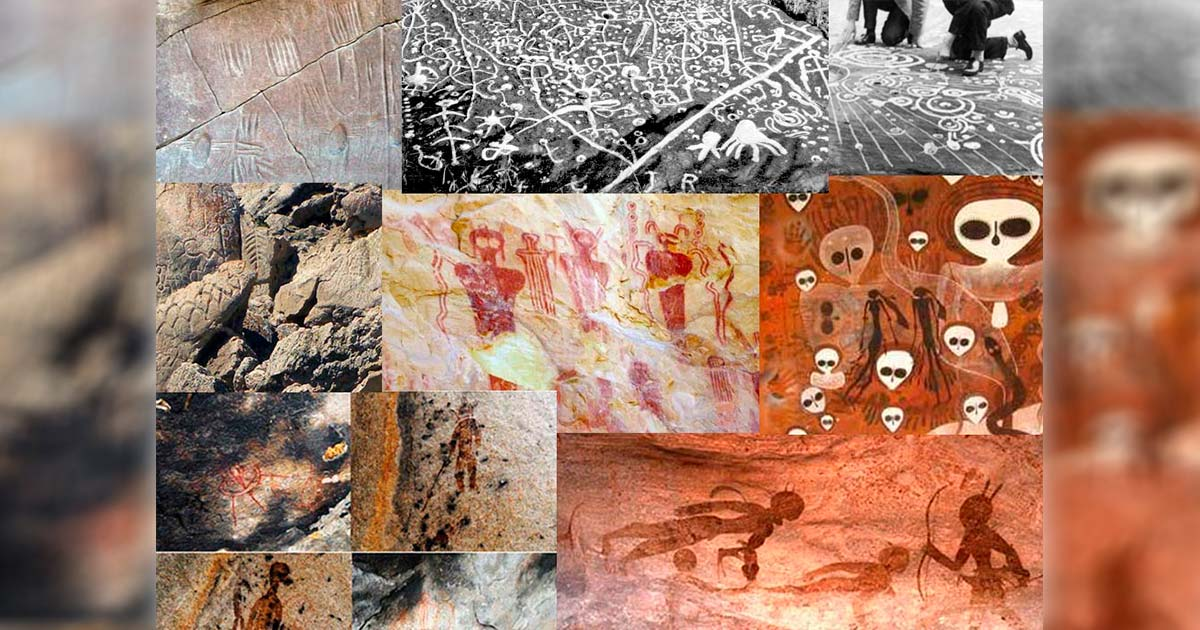
Large human figures appear in rock art across different regions of the world.
In areas such as Sahara Desert and Australia, ancient artists created images of oversized beings alongside animals and smaller human figures.
These depictions often appear in prominent positions, suggesting they held special significance.
Interpretation
Scholars and researchers have proposed several interpretations for these giant figures.
Some believe they represent important individuals, such as leaders or ancestors, depicted at a larger scale to emphasize their importance. Others suggest they symbolize spiritual beings, deities, or mythological figures.
Another theory is that the size is symbolic rather than literal—used to convey power, influence, or a connection to the supernatural.
Cultural Meaning
The exaggerated size of these figures may reflect how ancient people understood authority and significance.
In many cultures, larger size in art is used to indicate importance. By depicting certain figures as giants, artists may have been expressing respect, fear, or reverence.
These images could also represent stories or beliefs that were important to the community, serving as visual narratives passed down through generations.
Artistic Expression
Creating rock art required time, effort, and skill.
Artists used natural pigments and tools to carve or paint images onto stone surfaces. The decision to create large figures suggests intentionality and meaning, rather than random decoration.
These artworks were likely part of a broader system of communication, combining visual storytelling with cultural and spiritual expression.
Mystery and Debate
Despite extensive research, the true meaning of these giant figures remains uncertain.
Without written records, interpretations rely on comparison, context, and analysis. This leaves room for multiple theories and ongoing debate.
A Glimpse Into Ancient Minds
The giants of prehistoric rock art remind us that early humans were not only survivors but also thinkers, storytellers, and artists.
Their work continues to spark curiosity, offering clues about how they understood their world—and their place within it.