• MAIN PAGE
  • LATEST NEWS
    • Lost Cities
    • Archaeology's Greatest Finds
    • Underwater Discoveries
    • Greatest Inventions
    • Studies
    • Blog
  • PHILOSOPHY
  • HISTORY
  • RELIGIONS
    • Africa
    • Anatolia
    • Arabian Peninsula
    • Balkan Region
    • China - East Asia
    • Europe
    • Eurasian Steppe
    • Levant
    • Mesopotamia
    • Oceania - SE Asia
    • Pre-Columbian Civilizations of America
    • Iranian Plateau - Central Asia
    • Indus Valley - South Asia
    • Japan
    • The Archaeologist Editor Group
    • Scientific Studies
    • Aegean Prehistory
    • Historical Period
    • Byzantine Middle Ages
    • Predynastic Period
    • Dynastic Period
    • Greco-Roman Egypt
  • Rome
  • PALEONTOLOGY
  • About us
Menu

The Archaeologist

  • MAIN PAGE
  • LATEST NEWS
  • DISCOVERIES
    • Lost Cities
    • Archaeology's Greatest Finds
    • Underwater Discoveries
    • Greatest Inventions
    • Studies
    • Blog
  • PHILOSOPHY
  • HISTORY
  • RELIGIONS
  • World Civilizations
    • Africa
    • Anatolia
    • Arabian Peninsula
    • Balkan Region
    • China - East Asia
    • Europe
    • Eurasian Steppe
    • Levant
    • Mesopotamia
    • Oceania - SE Asia
    • Pre-Columbian Civilizations of America
    • Iranian Plateau - Central Asia
    • Indus Valley - South Asia
    • Japan
    • The Archaeologist Editor Group
    • Scientific Studies
  • GREECE
    • Aegean Prehistory
    • Historical Period
    • Byzantine Middle Ages
  • Egypt
    • Predynastic Period
    • Dynastic Period
    • Greco-Roman Egypt
  • Rome
  • PALEONTOLOGY
  • About us

The Oldest Stone Tools Ever Discovered

March 25, 2026

The Beginning of Technology

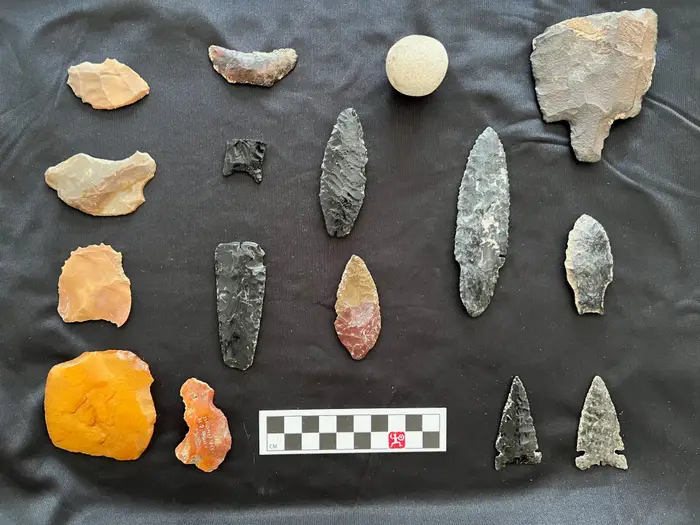
Stone tools are among the earliest and most important evidence of human innovation. Long before metal, writing, or cities, early humans shaped stone into tools that allowed them to survive and adapt.

These tools mark the beginning of technology—the moment when humans began to intentionally modify their environment to meet their needs.

Early Tool Types

The earliest stone tools were simple but effective.

Sharp flakes were used for cutting meat or plants, while larger tools like hand axes were used for chopping, digging, and shaping materials.

These tools were often made by striking one stone against another, creating sharp edges.

Development Over Time

Over thousands of years, tool-making techniques became more advanced.

Early humans learned how to control the shape and sharpness of their tools, producing more specialized and efficient designs.

Different regions developed distinct tool styles, reflecting local needs and resources.

Impact on Survival

Stone tools played a crucial role in survival.

They allowed humans to hunt animals, process food, build shelters, and create clothing. With better tools, early humans could access new food sources and adapt to different environments.

This increased their chances of survival and supported the spread of human populations across the world.

Innovation and Intelligence

The creation of stone tools required planning, skill, and understanding.

Early humans had to select the right materials, shape them carefully, and use them effectively. This process reflects growing intelligence and problem-solving ability.

Tool-making also suggests the ability to teach and learn, as knowledge was passed from one generation to the next.

Cultural Significance

Stone tools were more than practical objects—they were part of culture.

Different groups developed their own techniques and styles, which can still be identified today. These tools provide insight into how early humans lived, worked, and interacted with their environment.

A Lasting Beginning

Stone tools represent the foundation of all human technology.

From these simple beginnings, humanity went on to develop complex machines, advanced materials, and modern innovations.

Echoes of the First Makers

Even today, the legacy of these early tools remains.

They remind us of the ingenuity and determination of our ancestors—and of the long journey from simple stone tools to the advanced world we live in now.

← Well-Preserved Medieval Town Identified in PolandThe Giants of Prehistoric Rock Art →
Featured
image_2026-03-25_231134682.png
Mar 25, 2026
Well-Preserved Medieval Town Identified in Poland
Mar 25, 2026
Read More →
Mar 25, 2026
image_2026-03-24_235637908.png
Mar 25, 2026
The Oldest Stone Tools Ever Discovered
Mar 25, 2026
Read More →
Mar 25, 2026
image_2026-03-24_235552378.png
Mar 25, 2026
The Giants of Prehistoric Rock Art
Mar 25, 2026
Read More →
Mar 25, 2026
image_2026-03-24_235520987.png
Mar 25, 2026
The Secrets of Ancient Herbal Medicine
Mar 25, 2026
Read More →
Mar 25, 2026
image_2026-03-24_235426087.png
Mar 25, 2026
Ancient Temples Dedicated to the Moon
Mar 25, 2026
Read More →
Mar 25, 2026
image_2026-03-24_235355132.png
Mar 25, 2026
Ritual Stones Used in Prehistoric Ceremonies
Mar 25, 2026
Read More →
Mar 25, 2026
read more

Powered by The archaeologist