Introduction: The Serpent in the Earth
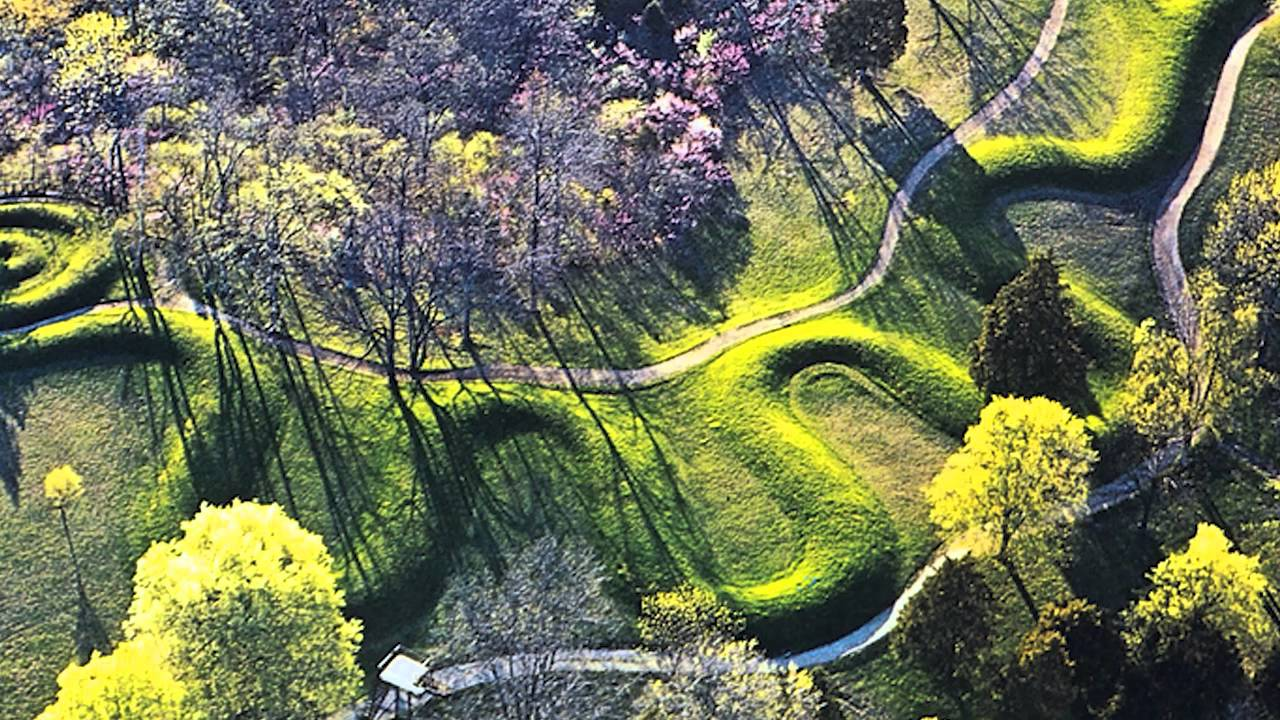
Winding across a high, verdant plateau overlooking Brush Creek Valley in Adams County, Ohio, sits the Great Serpent Mound. Measuring approximately 1,348 feet (411 meters) in length, it is the largest prehistoric effigy mound in the world. Unlike traditional burial mounds found throughout the Ohio Valley, this colossal earthwork was not built to house the dead or hide funerary treasure; it was sculpted as a pure, three-dimensional earth work—a sacred geometric canvas designed to be viewed from the sky.
The monument captures a massive undulating serpent with seven distinct coils, its tail tapering into a tight spiral, and its open jaws wrapping around an unidentified oval shape. Built by a deeply organized indigenous society without the aid of beasts of burden or metal tools, the Great Serpent Mound stands as a profound fusion of landscape architecture, spiritual cosmology, and sophisticated astronomical alignment, serving as an enduring testament to the intellectual achievements of ancient Native American cultures.
1. The Geometry of the Earth: Construction Mechanics
The creation of the Serpent Mound required a massive deployment of communal labor, coordinated planning, and an advanced understanding of soil mechanics.
The Topographical Anchor: The builders chose their site with calculated precision. The mound is situated on the edge of a dramatic, 100-foot-high limestone cliff, created millions of years ago by a meteor impact (the Serpent Mound disturbance). The natural crescent shape of the cliff ridge mimics the natural curvature of a snake, which the builders enhanced.
The Layered Engineering: To construct the snake, laborers first cleared the topsoil down to the bedrock. They then laid out the massive outline using a framework of stones and clay. Over this core, they piled hundreds of thousands of baskets of dark, fertile soil gathered from the surrounding valleys, packing it down firmly by hand and foot.
Dimensions and Scale: The body of the serpent varies between 20 and 25 feet in width and rises to a uniform height of roughly 3 to 4 feet. The precision of the curves suggests the builders utilized a sophisticated layout system—likely employing ropes anchored to central stakes—to plot the complex, repeating mathematics of the coils before a single basket of dirt was moved.
2. The Great Debate: Adena vs. Fort Ancient
For over a century, archaeologists have locked horns over the exact chronological identity of the serpent's creators. Because the mound contains no internal burials or diagnostic artifacts, dating the monument has relied heavily on radiocarbon testing of small charcoal fragments trapped within the soil layers.
The Adena Culture Hypothesis (c. 800 BC – 100 AD): Early investigators, noting the presence of traditional Adena burial mounds nearby, attributed the serpent to this Early Woodland society. Proponents of this theory argue that the serpent was the spiritual anchor of an ancient Adena sacred landscape, pointing to radiocarbon samples dating to roughly 300 BC.
The Fort Ancient Culture Hypothesis (c. 1000 – 1650 AD): In the 1990s, a series of new radiocarbon tests yielded a date of approximately 1070 AD, placing the construction squarely within the Late Mississippian/Fort Ancient period. This era matches a regional renaissance in serpent iconography, often tied to the Mississippian "Great Serpent" or Horned Serpent mythology, which was associated with the underworld and fertility.
The Multilayered Reality: Many modern archaeologists suggest a synthesis: the mound may have been originally surveyed and built by the Adena, and later heavily renovated, rebuilt, or altered by the Fort Ancient people centuries later, reflecting generations of continuous indigenous reverence for the site.
3. The Cosmos Encoded: Astronomical Alignments
The Great Serpent Mound is not just a work of art; it is a giant, functional cosmic calendar. When the geometric axes of the serpent's body are projected across the Ohio landscape, they align flawlessly with critical solar and lunar positions.
The Solstice Head: The head of the serpent and the oval shape it embraces point directly toward the horizon where the sun sets on the Summer Solstice (the longest day of the year). This alignment holds deep agricultural and spiritual significance, marking the turning point of the seasons.
The Equinox Coils: If lines are drawn across the apexes of the snake’s seven undulating coils, they track the changing paths of the sun throughout the year. The central coils point directly to the sunrise on both the Vernal and Autumnal Equinoxes.
The Lunar Standstills: The remaining coils align perfectly with the maximum and minimum moonrise positions during the 18.6-year lunar cycle (lunar standstills), demonstrating that the builders possessed a highly sophisticated, multigenerational tradition of naked-eye astronomy.
4. Iconography and Symbolic Coding
The visual composition at the head of the serpent remains one of the most debated enigmas in North American archaeology. The snake’s jaws are wide open, encircling a large, hollow oval feature.
The Cosmic Egg: The most enduring historical interpretation is that the serpent is swallowing a giant egg. In many global indigenous mythologies, the serpent swallowing an egg represents the creation of life, the renewal of the earth, or the cyclical consumption of the moon or sun during eclipses.
The Frolicking Frog: Some archaeologists view the oval shape differently, suggesting it represents a frog leaping away from the snake’s jaws, or a large hearth where ceremonial fires were lit to illuminate the plateau during nighttime rituals.
The Celestial Impact: A more recent hypothesis links the iconography to the stars. Around 1066 AD (the exact era of the Fort Ancient radiocarbon dates), Halley's Comet blazed across the night sky with unprecedented brightness. It is highly possible that the ancient builders captured this terrifying, spectacular celestial event in earth, representing the comet's bright head and trailing tail as a giant cosmic serpent descending onto the Ohio ridge.
5. Spiritual Landscape: The Underworld and Water
In the worldview of the historic Eastern Woodlands tribes, the universe was divided into a sky world, an earthly world, and a watery underworld. The serpent was the supreme guardian of the lower realm.
The Guardian of Portals: Serpents were deeply associated with caves, deep valleys, and water sources—the physical portals to the underworld. By placing the Great Serpent Mound directly above a steep cliff overlooking a major creek, the builders were marking a physical threshold between the earthly plane and the watery depths below.
The Neutralization of Chaos: While Western cultures often view the serpent as a symbol of evil, Native American traditions see the Horned or Great Serpent as a nuanced force of nature representing raw power, medicine, and fertility. Sculpting the serpent into the earth was an act of sacred geometry meant to balance the chaotic forces of the underworld, ensuring prosperity, rain, and successful harvests for the communities living in the valleys below.
6. Preservation and Modern Legacy
The survival of the Great Serpent Mound is a milestone in the history of American preservation. In the 19th century, intensive colonial farming and amateur treasure hunting began to severely erode the earthwork's contours.
Recognizing its imminent destruction, Frederic Ward Putnam of the Peabody Museum at Harvard University launched a public campaign in the 1880s to purchase the site. Funded largely by a coalition of women's societies in Boston, the land was secured, excavated with scientific care, and restored to its original prehistoric dimensions. Today, managed by the Ohio History Connection, the Great Serpent Mound stands as a globally recognized National Historic Landmark. It remains an active place of pilgrimage for both modern Native Americans and travelers worldwide, preserving an ancient, geometric language written directly into the skin of the American continent.