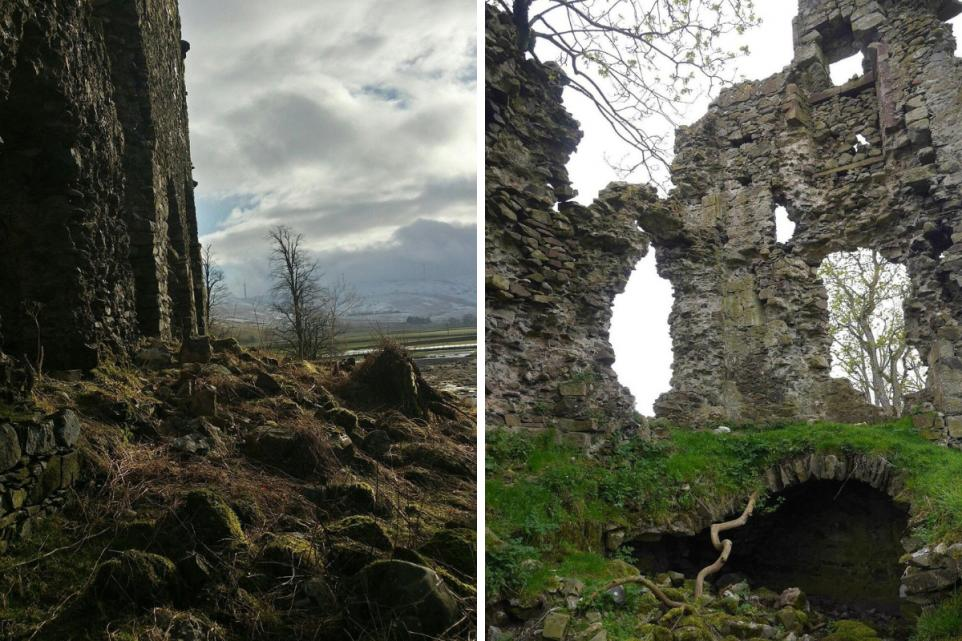
Less than an hour south of Glasgow sits the striking ruins of Crawford Castle a dramatic reminder of the powerful Scottish families who once dominated this stretch of the Clyde Valley.
Perched on the north bank of the River Clyde near the M74, the structure is also known as Lindsay Tower, a nod to one of the noble families who ruled the barony during medieval times.
Archaeological research shows that this landscape had been settled long before the castle was built. A Roman fort once occupied the site between roughly AD 80 and AD 170, guarding a key passage through the Southern Uplands.
Crawford Castle was once held by some of Scotland’s most influential families
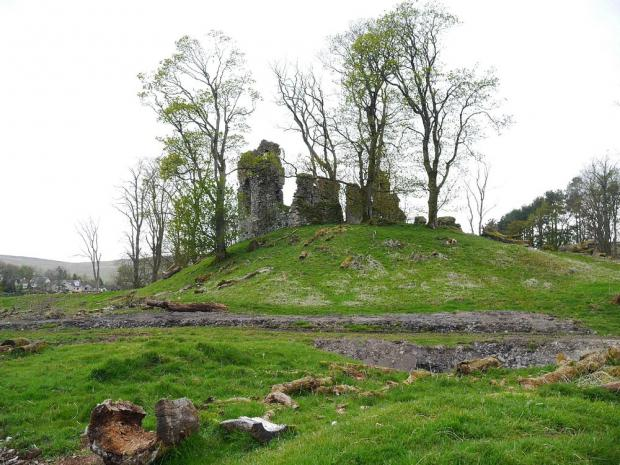
There is evidence of human occupation at Crawford since the Roman times
The barony of Crawford eventually came into the hands of the Lindsay family through marriage in the early 1200s, and they are thought to have been the ones who commissioned the first major stone structures on the site.
After King James IV took the throne in 1488, the barony changed hands again this time granted to Archibald Douglas, the 5th Earl of Angus, as a reward for his loyalty. The Douglas family retained control of Crawford Castle for several decades, until 1528, when their lands were seized by King James V and absorbed back into the crown’s estates.
The historic ruined castle not far from Glasgow with a dramatic past
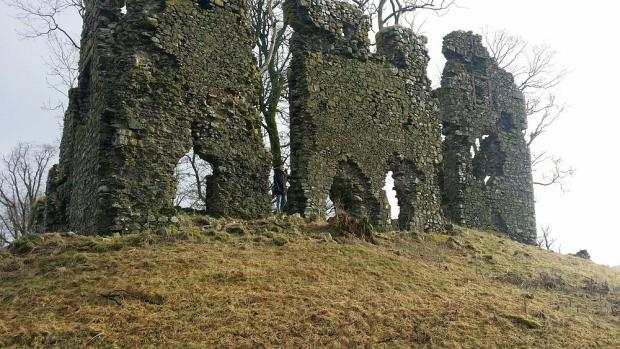
The Castle passed between the Lindsey Family and Earls of Angus
During this chapter of its long history, Crawford Castle even served for a short time as a royal hunting lodge. When the king visited, the rooms were fitted out with tapestries and furnishings brought specially for his stay an evocative reminder of the castle’s brief moment at the heart of royal leisure. After James V died in 1542, the barony reverted once again to the Earls of Angus.
In the years that followed, ownership shifted several more times. The estate was eventually acquired by the Duke of Hamilton, and later, in the 18th century, sold to Sir George Colebrooke. By then, the once-formidable stronghold had begun to decline. It was repurposed as a farmhouse, gradually deteriorating before finally falling into ruin. Much of its stone was later carried away for use in surrounding buildings, including the nearby Castle Crawford House a common fate for many abandoned medieval structures.