The legend of the "Inca Gold" is one of history’s most enduring mysteries, blurring the lines between documented colonial history and feverish folklore. It centers on the Ransom of Atahualpa and the subsequent disappearance of a massive secondary treasure that was allegedly hidden to keep it out of Spanish hands.
1. The Historical Fact: The Ransom Room
In 1532, the Spanish conquistador Francisco Pizarro captured the Inca Emperor Atahualpa in Cajamarca. To buy his freedom, Atahualpa famously offered to fill a room (roughly 6.7 by 5.2 meters) once with gold and twice with silver.
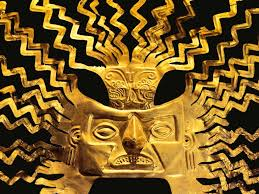
The Melting Pot: Over several months, incredible works of art—golden statues, life-sized llamas, and intricate jewelry—poured in from across the empire.
Destruction of Art: To make the treasure easier to transport and divide, the Spanish melted almost all of it down into standardized ingots. Modern estimates suggest the gold alone would be worth over $1.5 billion today.
The Betrayal: Despite the ransom being paid, the Spanish executed Atahualpa in 1533, fearing he would lead an uprising if released.
2. The Fiction: The "Missing" Second Half
According to legend, when Atahualpa was executed, a massive caravan led by the Inca General Rumiñahui was still on its way to Cajamarca with the remainder of the gold.
The Stashed Hoard: Upon hearing of the Emperor's death, Rumiñahui supposedly turned back and hid the treasure—consisting of thousands of gold objects—somewhere in the Llanganates Mountains of modern-day Ecuador.
The "Curse": Rumiñahui was later captured and tortured by the Spanish, but he died without revealing the location, giving birth to the idea of a "cursed" or "lost" hoard.
3. The Llanganates Legend: The Derrotero de Valverde
The search for this gold was reignited in the 18th century by a document known as the Derrotero de Valverde (Valverde’s Guide).
The Dying Confession: A Spaniard named Valverde allegedly became rich after being shown the secret location by his indigenous bride’s family. On his deathbed, he wrote a set of cryptic directions to the treasure site in the mountains.
The Terrain: The Llanganates are a logistical nightmare. They are a "cloud forest"—perpetually rainy, shrouded in mist, and filled with deep bogs and jagged peaks. Most expeditions have failed not due to lack of effort, but due to the brutal, disorienting environment.
4. The Spruce and Barth Blake Expeditions
In the 19th century, botanist Richard Spruce found Valverde's guide and attempted to follow it. While he didn't find gold, his maps laid the groundwork for future explorers.
Barth Blake (1886): An English treasure hunter named Barth Blake claimed to have actually found the hoard. He wrote letters describing "thousands of gold pieces" and "vases full of emeralds."
The Disappearance: Blake allegedly took what he could carry, sailed for New York to raise funds for a larger expedition, and mysteriously "fell" overboard during the voyage. He took the coordinates of the site to his grave.
5. The Archaeological Reality: Where is the Gold?
Modern archaeology offers a more grounded perspective on why the gold remains "lost."
Systematic Plunder: Most archaeologists believe that if there was a "second half" of the ransom, it wasn't hidden in one giant cave. Instead, it was likely buried in small caches or returned to the temples of Cusco and later looted by the Spanish over decades.
Ceremonial Offerings: The Incas did not view gold as currency; it was the "Sweat of the Sun," a sacred substance. Many "lost" gold items found by archaeologists are actually Capacocha offerings—small, highly symbolic burials found on high Andean peaks.
6. The Treasure of the Coricancha
The real "lost gold" may not be in a mountain cave, but beneath the streets of Cusco. The Coricancha (Temple of the Sun) was once literally covered in gold plates. When the Spanish built the Church of Santo Domingo directly on top of its foundations, much of the sacred architecture was sealed away. Recent GPR (Ground Penetrating Radar) scans have suggested the existence of subterranean tunnels beneath the city that have never been fully excavated.
The Llanganates legend continues to draw explorers, but the "true" gold of the Incas arguably lies in their engineering, their sophisticated khipu record-keeping, and the stone-masonry of sites like Machu Picchu.