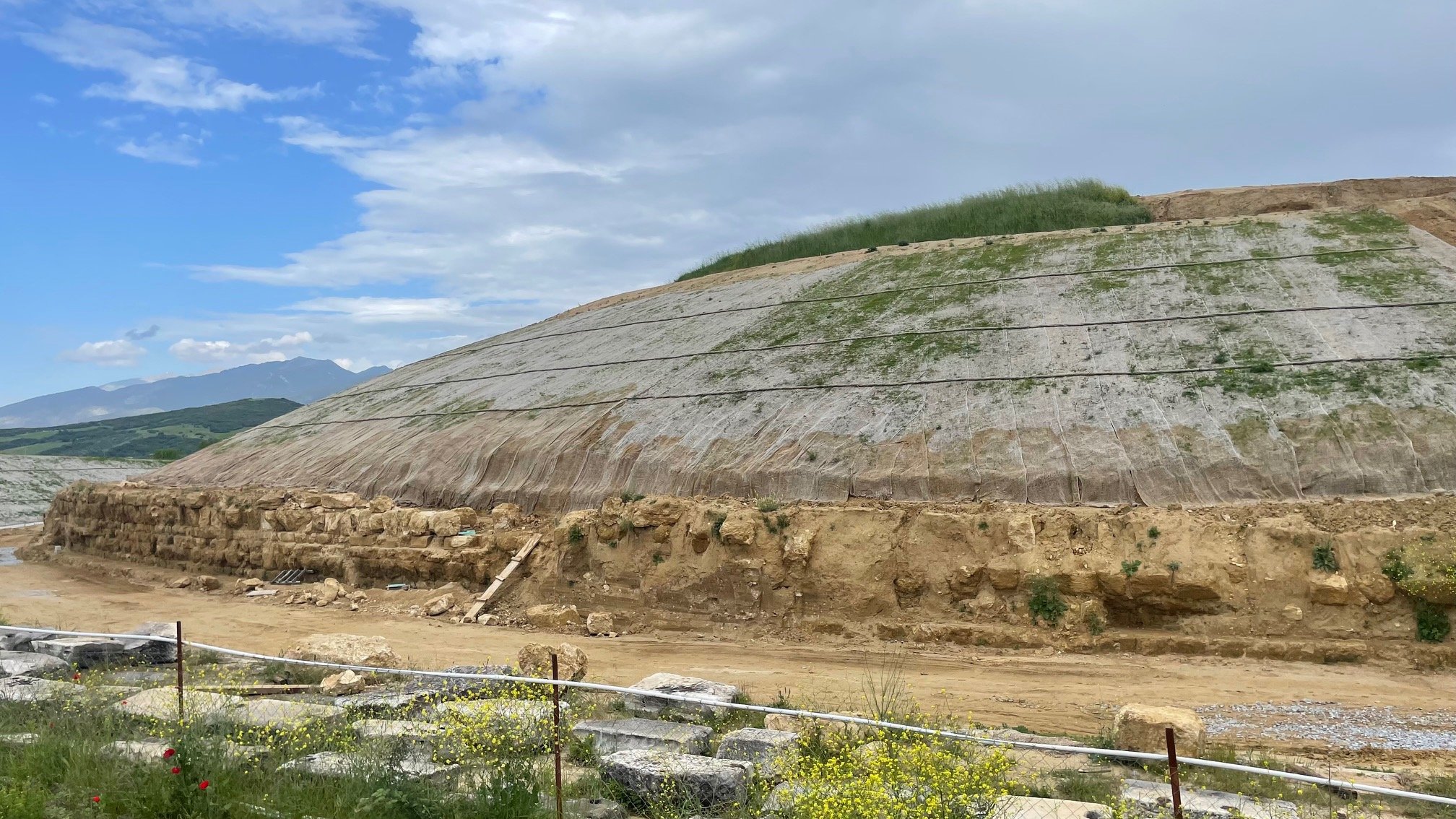
After fourteen years of excavations, conservation work, and large-scale restoration efforts, the monumental enclosure of the Kasta Tumulus at Amphipolis has now been revealed almost in its entirety, offering for the first time a complete sense of the monument’s true scale and geometry. The renewed image of the funerary complex is striking, as visitors can now walk around the circular enclosure and fully appreciate its immense dimensions, architectural precision, and luxurious construction, elements that confirm the monumental character of one of the most important funerary structures of ancient Macedonia. With a diameter exceeding 140 meters, the tumulus is now considered the largest Hellenistic burial mound ever uncovered, while restoration works continue with the contribution of archaeologists, architects, engineers, and major research institutions.
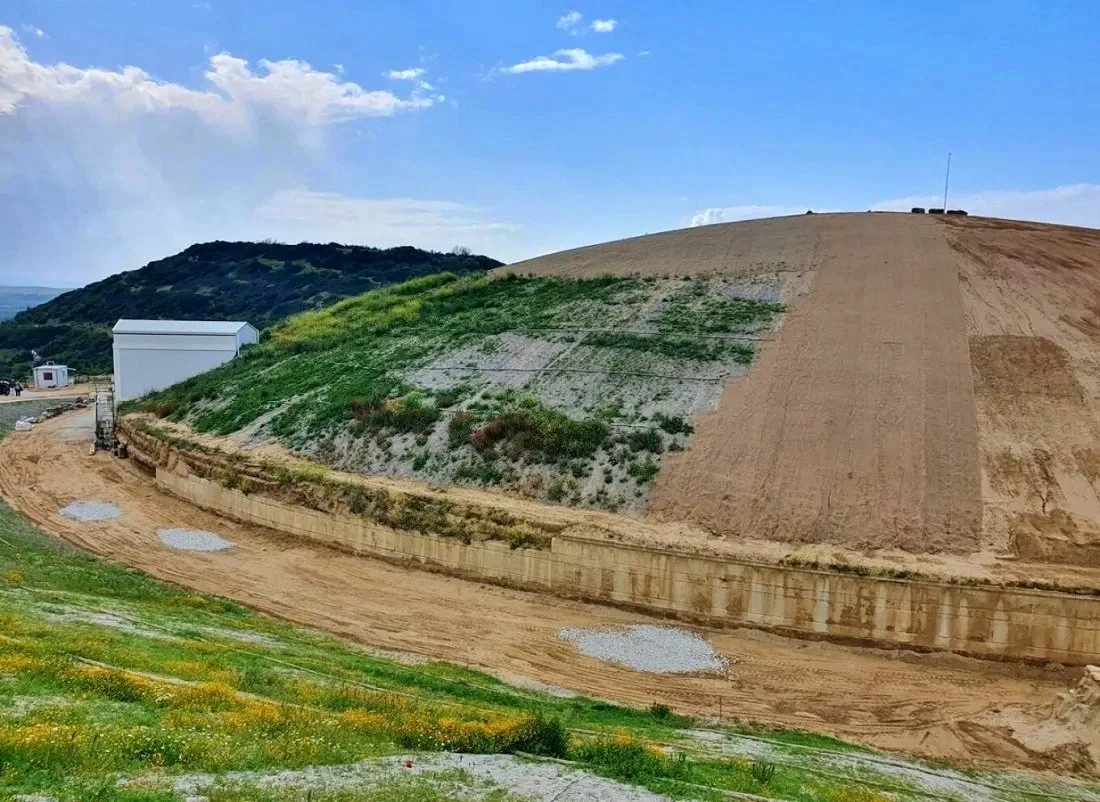
During her on-site inspection, Minister of Culture Lina Mendoni described the monument as “magnificent,” emphasizing that the latest scientific evidence confirms its dating to the last quarter of the 4th century BC, directly linking it to the era of Alexander the Great and the immense wealth flowing into the Macedonian kingdom during that period. At the same time, plans are advancing for the creation of a new museum space and modern visitor infrastructure, with the goal of opening the Kasta Tumulus fully to the public by early 2028. The overall project, with a budget exceeding 15 million euros, aims to establish Amphipolis as one of the leading archaeological destinations in Greece and the wider Mediterranean.