The Mycenaean palaces of Tiryns and Pylos represent the zenith of Bronze Age Greek engineering and administrative power. These sites were not merely royal residences; they were centralized hubs of a complex bureaucracy that managed agricultural production, craft specialization, and regional defense.
1. The Architectural Core: The Megaron
The defining feature of both palaces is the megaron, the ceremonial and administrative heart of the complex. While specific layouts vary, the megaron consistently followed a tripartite design:
Porch (Aithousa): A colonnaded entryway facing an open courtyard.
Vestibule (Prodomos): An anteroom leading to the main hall.
Throne Room (Domos): The central chamber, which featured a large, circular central hearth (eschara) surrounded by four columns supporting the roof. The royal throne was typically positioned against the right-hand wall.
This architectural template provided a dramatic setting for the wanax (the Mycenaean king) to preside over social, religious, and political life.
2. Palace Profiles
While sharing a common "palatial logic," Tiryns and Pylos served different strategic needs:
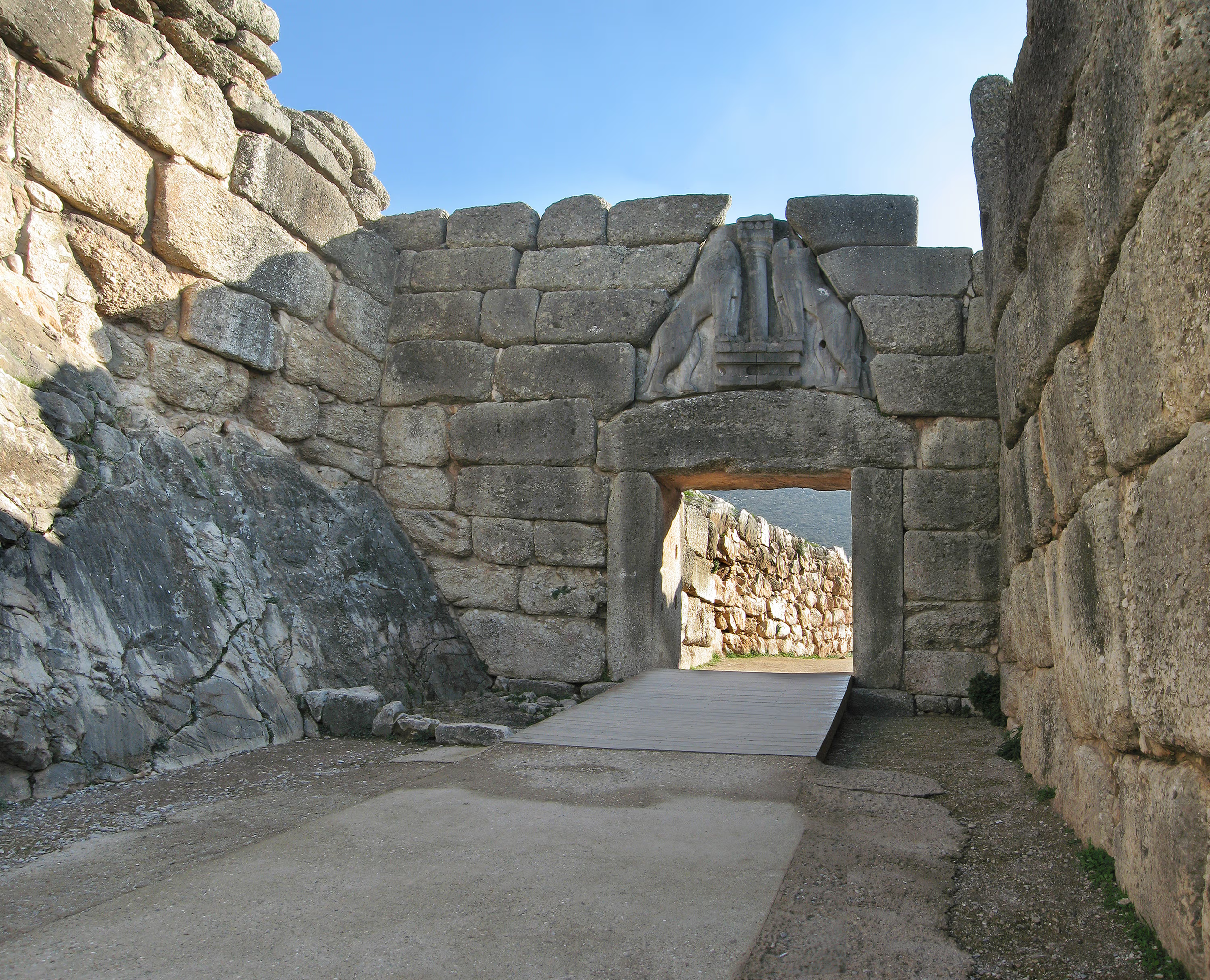
Tiryns ("Mighty-Walled"): Famous for its Cyclopean masonry—walls built from massive, multi-ton limestone boulders without mortar. It was designed as a formidable fortress. Its labyrinthine complex included casemates, galleries for storage within the walls, and sophisticated drainage systems. It served as a major power center in the Argolid, projecting military dominance.
Pylos (The Palace of Nestor): Located on the coast of Messenia, it is the best-preserved Mycenaean palace, largely because it was destroyed by fire rather than dismantled. Unlike the fortified citadels of Tiryns or Mycenae, Pylos was largely unfortified in its final phase. It is renowned for its wealth of archaeological evidence, including thousands of Linear B tablets that provide a direct window into the palace's economy—listing tribute, workshops, and land allotments.
3. The Homeric Connection
The relationship between these archaeological realities and Homeric tradition is complex:
"Fossilized" Memory: Homer wrote during the 8th century BC—hundreds of years after the Mycenaean collapse—yet he describes a world of "rich kingdoms," "majestic walls," and powerful kings that align remarkably well with the 13th-century BC archaeological record.
Poetic Anachronism: The palaces described in the Iliad and the Odyssey are likely an "amalgam" of memories. Homeric singers incorporated elements from the Bronze Age past alongside the social and material realities of their own Early Iron Age present.
The Power of Myth: Heinrich Schliemann’s 19th-century excavations were driven by a literal belief in Homer. While we now know the epics are not historical documentaries, they preserved the "fame" of these sites, transforming them into the legendary landscape of the Greek heroic age.
The Mycenaean palace system eventually collapsed around 1100 BC, but its legacy survived through the oral traditions that Homer later immortalized, grounding his poems in a physical reality that remained visible in the ruins of the Peloponnese long after the wanax had vanished.