Introduction: The Fabric of Ancient Greek Society
To understand the "Greek Miracle" is to recognize that it was not a sudden burst of genius, but the result of a highly specific, interconnected set of social, environmental, and structural conditions. The Greek world was a complex ecosystem where the sacred and the profane were inseparable, and where the loftiest philosophical inquiries were supported by a base of rigorous—and often exploitative—economic systems. By examining these six pillars, we uncover the true nature of a civilization that balanced intense internal rivalry with a shared cultural language, turning a rugged, fragmented landscape into the foundation of the Western tradition.
1. Sacred Topography: The Anchoring of Power
The Greek landscape was fundamentally shaped by the concept of sacred topography, where specific physical sites were consecrated to bridge the gap between the mortal and divine realms. Sanctuaries like Olympia were not just collections of temples; they were meticulously engineered environments designed to funnel the competitive energy of the Greek world into a singular space of religious and athletic observance. By integrating the stadium, the altar, and the administrative council house into one precinct, these sites ensured that every act of athletic achievement or political discourse was performed under the watchful eye of the gods, effectively grounding the disparate Greek city-states in a shared, visible religious reality.
2. Labor Systems: The Foundation of Citizen Leisure
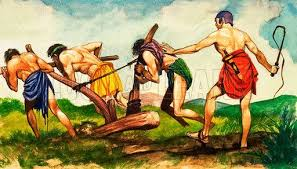
The structure of Ancient Greek society was underpinned by an extensive and varied system of forced labor that acted as the invisible engine of the economy. In democratic Athens, this primarily took the form of chattel slavery, where people were treated as alienable property to be utilized in mines, workshops, and domestic settings, while in places like Sparta, state-controlled serfs known as helots provided the agricultural surplus necessary to sustain the warrior class. This widespread reliance on enslaved labor offloaded the essential work of subsistence, creating the "leisure" required for the citizen-body to focus on the civic duties of politics, warfare, and philosophical inquiry, thereby anchoring the Greek "miracle" in a reality of profound human exploitation.
3. Mycenaean Palaces: The Template for Bureaucratic Control
Long before the rise of the classical polis, the Mycenaean palaces of Tiryns and Pylos established the early blueprint for centralized administrative power in the Greek world. These monumental complexes were organized around the megaron, a central throne room that served as the focal point for ritual and political legitimacy, supported by a sophisticated bureaucracy that tracked agricultural yields and craft production through Linear B tablets. Although these palatial centers collapsed around 1100 BC, their massive "Cyclopean" architecture and the memory of their powerful kings became fossilized in the later Homeric tradition, serving as the legendary bedrock upon which subsequent generations of Greeks built their own identity.
4. The Symposium: The Intellectual Laboratory
While the public square served as the stage for political life, the symposium—a private, ritualized drinking party for men—acted as the true laboratory for Greek intellectual and cultural development. Governed by strict social protocols and led by a chosen master of ceremonies, these gatherings provided the secluded environment necessary for the performance of lyric poetry and the rigorous testing of political alliances. It was within the informal yet highly disciplined atmosphere of the symposium that many of the core philosophical debates, rhetorical strategies, and artistic innovations of antiquity were first developed and refined away from the scrutiny of the public gaze.
5. Thalassocracy: The Maritime Network
The meteoric rise of the Greek city-states was inextricably linked to their identity as a thalassocracy, or a power rooted in naval dominance. By treating the Mediterranean as a vast, navigable highway rather than a geographic barrier, maritime hubs like Athens and Corinth were able to project their influence far beyond their immediate borders. This maritime connectivity facilitated a rapid, networked exchange of goods, coinage, and civic institutions, turning the Greek world into a competitive ecosystem where the necessity of controlling vital trade routes drove constant innovation in naval architecture, colonial administration, and economic policy.
6. The Delphic Oracle: The Geopolitical Compass
The Sanctuary of Apollo at Delphi functioned as the ultimate "soft power" authority of the ancient world, providing a centralized moral and political compass that transcended local rivalries. Because leaders from all over the Mediterranean sought the Oracle’s guidance on matters ranging from warfare to the founding of new colonies, the priests at Delphi became the most well-informed political consultants of antiquity. By curating their prophecies based on a vast reservoir of collected geopolitical intelligence, they managed to act as a stabilizing influence, subtly guiding the trajectory of Greek history through a system of interpretation that balanced divine mystery with pragmatic, real-world insight.