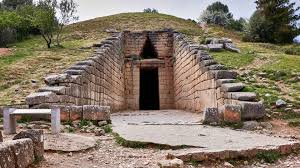
The Treasury of Atreus, also known as the "Tomb of Agamemnon," stands as the supreme architectural achievement of the Mycenaean civilization. Built between 1350 and 1250 BCE at the site of Mycenae in Greece, this monumental tholos (beehive) tomb represents the pinnacle of Bronze Age engineering and the political ambition of Mycenaean royalty.
Architectural Innovations
The structure is a masterclass in corbelled masonry, a technique where each successive horizontal layer of stone projects slightly further inward than the one below, eventually meeting at a central capstone.
The Dome (Thalamos): Measuring nearly 14.5 meters in diameter and 13.2 meters in height, this space held the title of the world’s largest and tallest dome for over a millennium, until the construction of the Roman Pantheon.
The Entrance (Dromos & Stomion): A 36-meter-long ceremonial passageway (dromos) leads to a massive doorway (stomion). Above this doorway sits a "relieving triangle"—a triangular space designed to divert the immense weight of the masonry above away from the lintel.
The Lintel: The inner lintel stone is a monolithic giant, weighing approximately 120 tons. It remains one of the largest single pieces of masonry ever moved and placed by ancient human labor.
Aesthetic Detail: Originally, the façade was far more opulent than today's bare stone. It was flanked by green marble half-columns decorated with zigzag patterns, and the entrance was accented with red marble friezes and rosettes, reflecting the wealth and international trade connections of the Mycenaean elite.
Cultural & Political Significance
While its name links it to the mythological King Atreus (father of Agamemnon), there is no archaeological evidence identifying the specific person buried within. The name is a 19th-century construction intended to connect the site to Homeric legend.
Projection of Power: The tomb’s size, refinement, and strategic placement—visible from the palace and the main roads leading to the city—served as an explicit "dynastic propaganda" tool. It signaled to visitors that the ruler of Mycenae commanded unparalleled labor resources and divine favor.
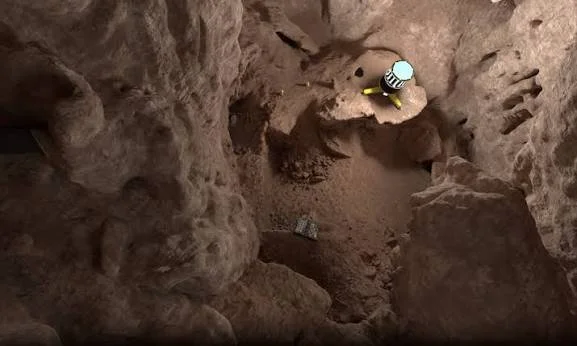
Funerary Function: Unlike the "Treasury" suggested by its name, the building was exclusively a tomb. It likely housed the remains of a significant royal figure, while a smaller side chamber carved into the rock served as a secondary space for grave goods or earlier burials.
Engineering Legacy: The tomb showcases the high-level bureaucratic organization of the Mycenaean state. Constructing such a monument required thousands of worker-days, specialized craftsmen to dress the limestone, and immense logistical effort to transport materials from local quarries.
Why It Fascinates Modern Architects
The Treasury of Atreus remains a subject of study because it is essentially a "fossilized" demonstration of perfect structural stability. Built without mortar, the precision of the stone-cutting is so high that after more than 3,300 years, the joints between the blocks remain so tight that a pen-knife can barely penetrate them. It stands today as one of the few surviving monuments that conveys the raw scale and sophistication of the Late Bronze Age Greek world.