• MAIN PAGE
  • LATEST NEWS
    • Lost Cities
    • Archaeology's Greatest Finds
    • Underwater Discoveries
    • Greatest Inventions
    • Studies
    • Blog
  • PHILOSOPHY
  • HISTORY
  • RELIGIONS
    • Africa
    • Anatolia
    • Arabian Peninsula
    • Balkan Region
    • China - East Asia
    • Europe
    • Eurasian Steppe
    • Levant
    • Mesopotamia
    • Oceania - SE Asia
    • Pre-Columbian Civilizations of America
    • Iranian Plateau - Central Asia
    • Indus Valley - South Asia
    • Japan
    • The Archaeologist Editor Group
    • Scientific Studies
    • Aegean Prehistory
    • Historical Period
    • Byzantine Middle Ages
    • Predynastic Period
    • Dynastic Period
    • Greco-Roman Egypt
  • Rome
  • PALEONTOLOGY
  • About us
Menu

The Archaeologist

  • MAIN PAGE
  • LATEST NEWS
  • DISCOVERIES
    • Lost Cities
    • Archaeology's Greatest Finds
    • Underwater Discoveries
    • Greatest Inventions
    • Studies
    • Blog
  • PHILOSOPHY
  • HISTORY
  • RELIGIONS
  • World Civilizations
    • Africa
    • Anatolia
    • Arabian Peninsula
    • Balkan Region
    • China - East Asia
    • Europe
    • Eurasian Steppe
    • Levant
    • Mesopotamia
    • Oceania - SE Asia
    • Pre-Columbian Civilizations of America
    • Iranian Plateau - Central Asia
    • Indus Valley - South Asia
    • Japan
    • The Archaeologist Editor Group
    • Scientific Studies
  • GREECE
    • Aegean Prehistory
    • Historical Period
    • Byzantine Middle Ages
  • Egypt
    • Predynastic Period
    • Dynastic Period
    • Greco-Roman Egypt
  • Rome
  • PALEONTOLOGY
  • About us

The Secret Ingredients of Roman Concrete

November 29, 2025

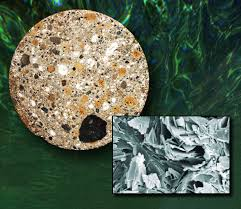
Roman concrete has fascinated engineers and historians for centuries. Unlike modern Portland cement, Roman concrete (opus caementicium) used natural volcanic ash, lime, and seawater, creating a remarkably durable material.

How It Was Made

The Romans mixed volcanic ash with lime and rubble to form a binding mortar. When combined with seawater, chemical reactions produced crystals that strengthened the structure over time.

Applications and Longevity

This durable mixture allowed Romans to build structures like the Pantheon, aqueducts, and harbors that survive today. Even underwater, Roman concrete resisted erosion far better than modern equivalents.

Lessons for Modern Construction

Researchers study Roman concrete to create sustainable, long-lasting building materials. Its success demonstrates how ancient ingenuity can inspire modern engineering.

← The Role of Dreams and Visions in Ancient PropheciesThe Role of Slavery in Ancient Civilizatio →
Featured
image_2026-01-13_145551915.png
Jan 13, 2026
Archaeologists Say They’ve Unearthed a Massive Medieval Cargo Ship That’s the Largest Vessel of Its Kind Ever Found
Jan 13, 2026
Read More →
Jan 13, 2026
image_2026-01-13_142940648.png
Jan 13, 2026
600-year-old Viking shipwreck is the largest of its kind
Jan 13, 2026
Read More →
Jan 13, 2026
image_2026-01-13_141554876.png
Jan 13, 2026
The wild reason ancient statues always have tiny p*nises, because I bet you’ve wondered
Jan 13, 2026
Read More →
Jan 13, 2026
image_2026-01-13_135852029.png
Jan 13, 2026
Carnoustie Stone Age hall challenges view of Scotland’s early people
Jan 13, 2026
Read More →
Jan 13, 2026
image_2026-01-13_135115162.png
Jan 13, 2026
Archaeologists Found an Entirely New Language Among the Ruins of an Ancient Empire
Jan 13, 2026
Read More →
Jan 13, 2026
image_2026-01-13_134311101.png
Jan 13, 2026
Poison Detected on 60,000-Year-Old Arrowheads
Jan 13, 2026
Read More →
Jan 13, 2026
read more

Powered by The archaeologist