Locations and Archaeological Importance
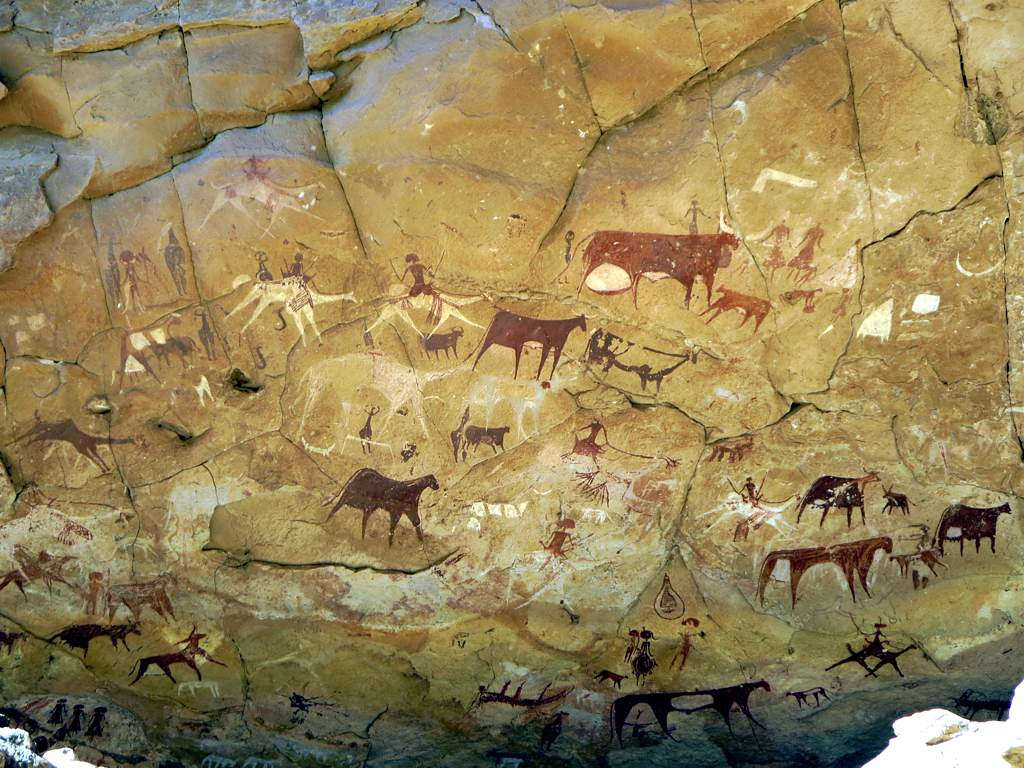
The Sahara’s vast petroglyphs stretch across Algeria, Libya, Niger, and Chad, with Tassili n’Ajjer being the most famous site. These carvings date back 8,000–12,000 years, created when the Sahara was green and fertile. Archaeologists believe the artwork offers one of the most detailed visual records of prehistoric African societies. Layers of carvings from different time periods reveal shifting environments, cultures, and spiritual beliefs as the desert slowly formed.
Common Motifs and Artistic Styles
Figures depict everyday life such as cattle herding, fishing, dancing, and hunting—alongside unusual beings with exaggerated shapes or mask-like faces. Animals like crocodiles, giraffes, elephants, and hippos reflect the region’s ancient wetlands. The “Round Head” figures, with their spherical heads and floating poses, are some of the most mysterious; scholars suggest they may represent shamans, gods, or beings from visionary states. The carvings vary from simple outlines to deeply engraved scenes showing advanced artistic skill.
Interpretations and Cultural Significance
Some researchers believe the carvings acted as teaching tools for rituals, navigation, or storytelling. Others argue they marked sacred spaces or served as offerings to nature spirits. The frequent depiction of cattle suggests early religious reverence for pastoral animals. Theories propose that some images document spiritual journeys or shamanic transformations. Because no written explanations exist, each petroglyph holds layers of meaning that remain open to interpretation.