• MAIN PAGE
  • LATEST NEWS
    • Lost Cities
    • Archaeology's Greatest Finds
    • Underwater Discoveries
    • Greatest Inventions
    • Studies
    • Blog
  • PHILOSOPHY
  • HISTORY
  • RELIGIONS
    • Africa
    • Anatolia
    • Arabian Peninsula
    • Balkan Region
    • China - East Asia
    • Europe
    • Eurasian Steppe
    • Levant
    • Mesopotamia
    • Oceania - SE Asia
    • Pre-Columbian Civilizations of America
    • Iranian Plateau - Central Asia
    • Indus Valley - South Asia
    • Japan
    • The Archaeologist Editor Group
    • Scientific Studies
    • Aegean Prehistory
    • Historical Period
    • Byzantine Middle Ages
    • Predynastic Period
    • Dynastic Period
    • Greco-Roman Egypt
  • Rome
  • PALEONTOLOGY
  • About us
Menu

The Archaeologist

  • MAIN PAGE
  • LATEST NEWS
  • DISCOVERIES
    • Lost Cities
    • Archaeology's Greatest Finds
    • Underwater Discoveries
    • Greatest Inventions
    • Studies
    • Blog
  • PHILOSOPHY
  • HISTORY
  • RELIGIONS
  • World Civilizations
    • Africa
    • Anatolia
    • Arabian Peninsula
    • Balkan Region
    • China - East Asia
    • Europe
    • Eurasian Steppe
    • Levant
    • Mesopotamia
    • Oceania - SE Asia
    • Pre-Columbian Civilizations of America
    • Iranian Plateau - Central Asia
    • Indus Valley - South Asia
    • Japan
    • The Archaeologist Editor Group
    • Scientific Studies
  • GREECE
    • Aegean Prehistory
    • Historical Period
    • Byzantine Middle Ages
  • Egypt
    • Predynastic Period
    • Dynastic Period
    • Greco-Roman Egypt
  • Rome
  • PALEONTOLOGY
  • About us

The Mystery of the Phaistos Disc

December 26, 2025

Discovery and Description
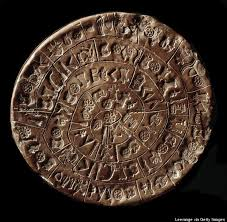
The Phaistos Disc, unearthed in 1908 at the Minoan palace of Phaistos on Crete, remains one of archaeology’s most intriguing enigmas. Made from fired clay, it dates to approximately 1700 BCE and features symbols arranged in a spiral, stamped into the surface rather than carved. Its symbols depict human figures, animals, plants, and tools, and the disc is remarkably uniform, suggesting a standardized script or code.

Theories of Function
Scholars have proposed various purposes for the disc. Some suggest it was a religious or ritual object, possibly used in ceremonies or as a talisman. Others argue it could represent an early form of writing, recording events, inventories, or prayers. Its unique production method distinguishes it from typical Linear A inscriptions, adding to the mystery.

Decipherment Attempts
Despite extensive study, no definitive translation exists. Linguists and cryptographers have proposed links to Minoan, Greek, or Anatolian languages, while some consider it an ideographic or mnemonic system. Each hypothesis remains speculative, as the disc’s symbols appear nowhere else in the archaeological record.

Cultural and Historical Significance
The Phaistos Disc highlights the sophistication of Minoan civilization and its mastery of symbolic communication. It reflects the Minoans’ complex social, religious, and administrative structures, suggesting that their society valued record-keeping and ritual in equally intricate ways.

Legacy and Modern Interpretation
Today, the Phaistos Disc continues to captivate researchers, historians, and enthusiasts worldwide. Its undeciphered nature makes it a symbol of the enduring mysteries of ancient civilizations and a testament to the intellectual achievements of the Minoans. The disc serves as a bridge between the ancient past and modern scholarly curiosity.
← The Ancient Kingdom of AxumThe Role of Spices in the Ancient World →
Featured
image_2025-12-26_142742324.png
Dec 26, 2025
The Influence of the Vedas on Hindu Civilization
Dec 26, 2025
Read More →
Dec 26, 2025
image_2025-12-26_142623633.png
Dec 26, 2025
The Trade Routes of the Phoenicians
Dec 26, 2025
Read More →
Dec 26, 2025
image_2025-12-26_141148626.png
Dec 26, 2025
The Sacred Geometry of Ancient Temples
Dec 26, 2025
Read More →
Dec 26, 2025
image_2025-12-26_140534254.png
Dec 26, 2025
The Siege Warfare of the Assyrians
Dec 26, 2025
Read More →
Dec 26, 2025
image_2025-12-26_140331631.png
Dec 26, 2025
The Oracle Bones of Shang China
Dec 26, 2025
Read More →
Dec 26, 2025
image_2025-12-26_134900603.png
Dec 26, 2025
The Ancient Kingdom of Axum
Dec 26, 2025
Read More →
Dec 26, 2025
read more

Powered by The archaeologist