Origins and Early Trade
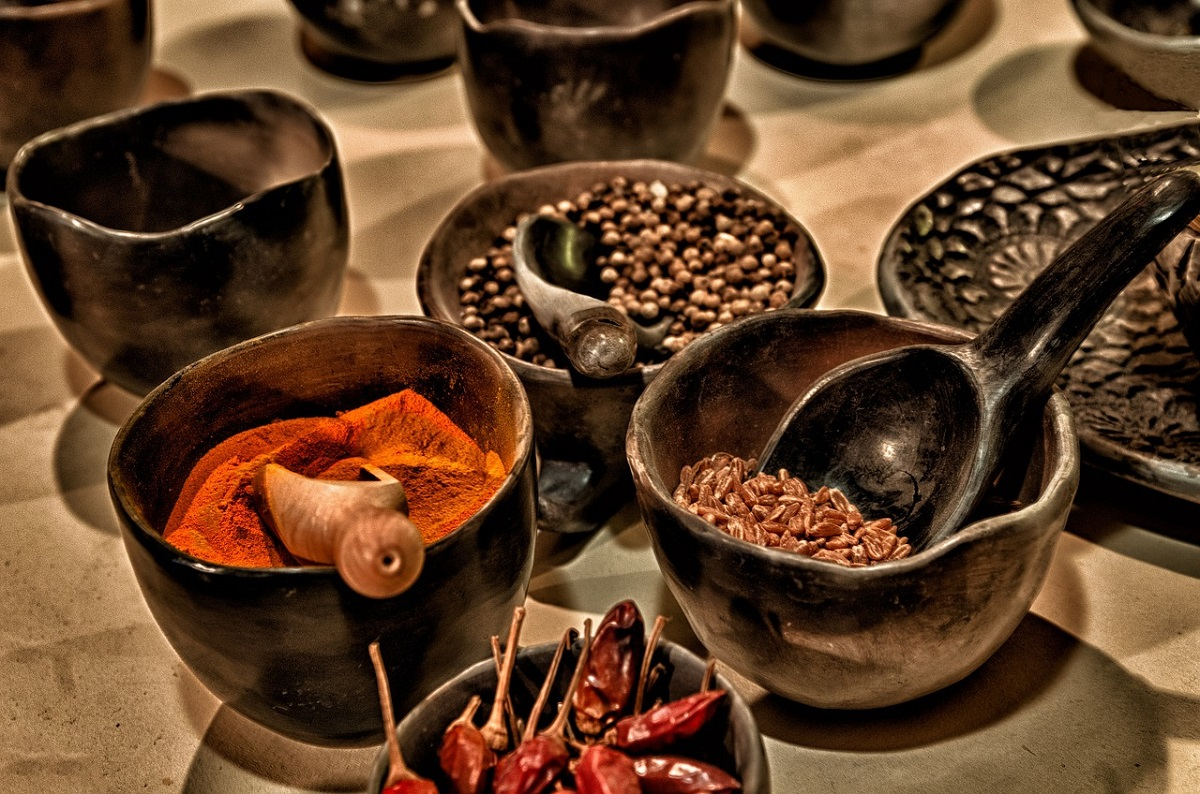
Spices such as cinnamon, frankincense, myrrh, and black pepper were highly prized in the ancient world. These aromatic substances were not only culinary flavorings but also symbols of wealth, medicine, and religious devotion. Early trade routes connected India, Arabia, Africa, and the Mediterranean, allowing spices to reach Egypt, Mesopotamia, and Rome. Merchants who controlled these routes wielded significant economic and political power.
Culinary and Medicinal Uses
Spices were valued for their culinary properties, enhancing food with flavor, aroma, and preservation qualities. They also played a vital role in ancient medicine. Ayurvedic, Egyptian, and Greco-Roman texts describe the use of spices to treat digestive, respiratory, and skin ailments. Herbs and resins such as frankincense and myrrh were incorporated into ointments, incense, and embalming practices, demonstrating their practical and symbolic importance.
Religious and Ritual Significance
In many cultures, spices were associated with divine offerings. Frankincense and myrrh were burned in temples to honor gods, ward off evil spirits, and purify sacred spaces. Spices often accompanied ceremonial feasts, coronations, and funerary rituals, signifying both wealth and spiritual devotion. In Mesopotamia, priests used aromatic resins in elaborate rituals, reinforcing their connection to the divine.
Economic Impact
The spice trade fueled the growth of empires and urban centers. Merchants established colonies, negotiated treaties, and navigated perilous seas to secure valuable cargoes. The immense demand for spices drove exploration and even warfare, illustrating the economic leverage of commodities in the ancient world.
Legacy
The importance of spices shaped trade, culture, religion, and medicine for millennia. Ancient routes established during this era laid the foundation for later global trade networks. Today, the fascination with exotic spices echoes their enduring influence on human civilization, connecting ancient practices to modern culinary and cultural traditions.