Origins and Discovery
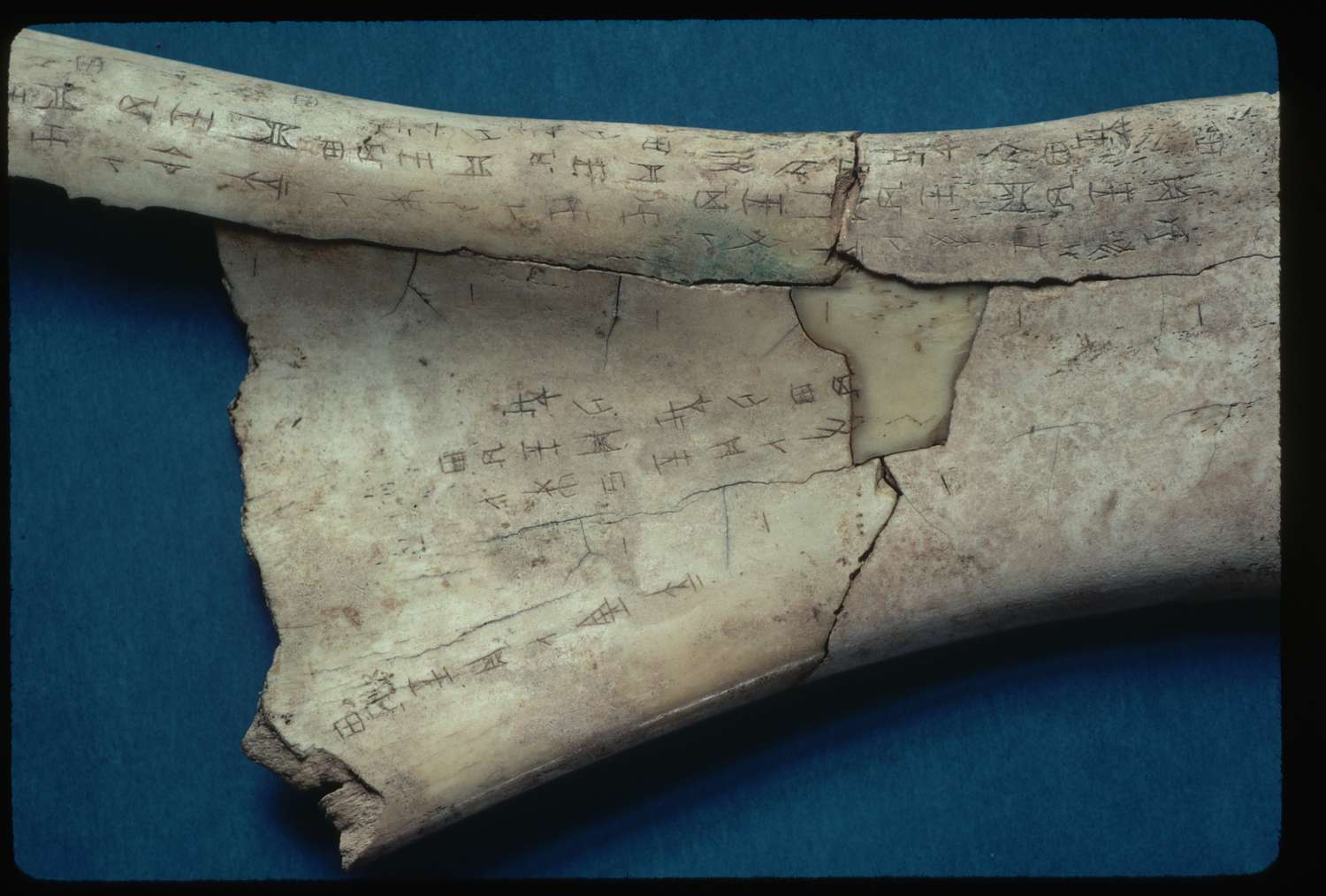
Oracle bones are among the earliest surviving examples of Chinese writing, dating to the late Shang Dynasty (c. 1250–1046 BCE). These artifacts, usually ox scapulae or turtle plastrons, were used by kings and diviners to communicate with ancestors and deities. Archaeologists first uncovered thousands of these bones in the early 20th century at Anyang, the last Shang capital.
Divination Practices
The Shang kings used oracle bones for questions concerning warfare, agriculture, weather, and the royal family. A diviner would carve a question onto the bone, apply heat until it cracked, and then interpret the patterns as answers from ancestors or gods. This practice highlights the deeply spiritual and ritualistic nature of Shang governance, where decisions were legitimized through divine guidance.
Development of Chinese Writing
The inscriptions on oracle bones reveal the evolution of Chinese characters, including early forms of logograms that would later become standard in written Chinese. These inscriptions recorded questions, prognostications, and outcomes, providing scholars with invaluable insight into the early language, culture, and social hierarchy of the Shang Dynasty.
Political and Social Significance
Oracle bones were not merely tools of communication but instruments of political authority. Kings reinforced their legitimacy by demonstrating divine approval of decisions and military campaigns. The bones also reflect social structure, showing the hierarchical relationships between kings, nobles, and diviners, as well as the Shang emphasis on ritual propriety.
Legacy
The oracle bones are crucial for understanding ancient Chinese civilization, including religion, governance, and writing. They represent a fusion of practical governance and spiritual belief and laid the foundation for millennia of Chinese literacy and bureaucratic tradition.