Exploring the Purpose and Creation of One of Egypt’s Most Iconic Monuments
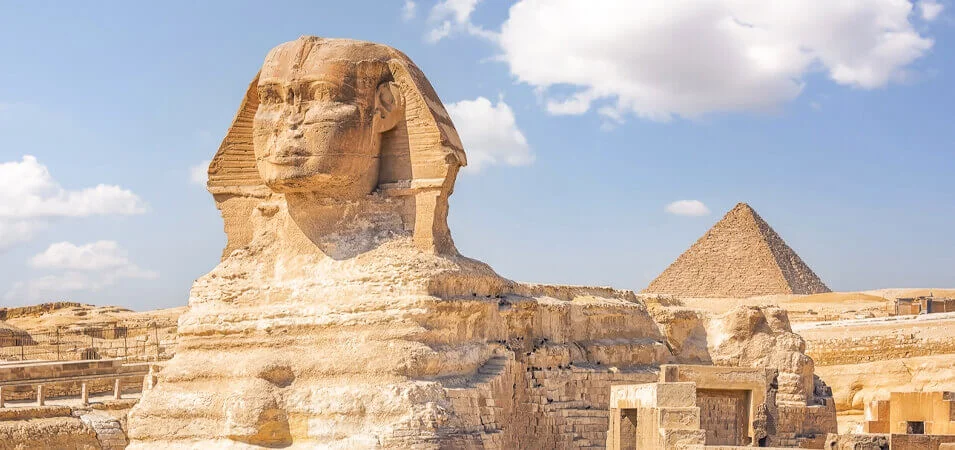
The Great Sphinx of Giza, with its lion’s body and human face, stands as one of the most recognizable symbols of ancient Egypt. Yet its origins and purpose continue to inspire debate.
When Was the Sphinx Built?
Most scholars attribute the Sphinx to Pharaoh Khafre of the Fourth Dynasty (c. 2500 BCE), carved from a single limestone outcrop near the pyramids. Its features and proximity to Khafre’s pyramid support this theory.
A Guardian and Symbol of Power
The Sphinx likely served as a protective guardian, watching over the necropolis and representing royal strength. Its lion body symbolized might, while the human face represented intelligence and divine authority.
Mysteries Still Unsolved
Erosion patterns, missing inscriptions, and later restorations leave questions unanswered. Some propose older origins or alternative symbolic meanings. Regardless, the Sphinx remains a masterpiece of ancient engineering and iconography.