• MAIN PAGE
  • LATEST NEWS
    • Lost Cities
    • Archaeology's Greatest Finds
    • Underwater Discoveries
    • Greatest Inventions
    • Studies
    • Blog
  • PHILOSOPHY
  • HISTORY
  • RELIGIONS
    • Africa
    • Anatolia
    • Arabian Peninsula
    • Balkan Region
    • China - East Asia
    • Europe
    • Eurasian Steppe
    • Levant
    • Mesopotamia
    • Oceania - SE Asia
    • Pre-Columbian Civilizations of America
    • Iranian Plateau - Central Asia
    • Indus Valley - South Asia
    • Japan
    • The Archaeologist Editor Group
    • Scientific Studies
    • Aegean Prehistory
    • Historical Period
    • Byzantine Middle Ages
    • Predynastic Period
    • Dynastic Period
    • Greco-Roman Egypt
  • Rome
  • PALEONTOLOGY
  • About us
Menu

The Archaeologist

  • MAIN PAGE
  • LATEST NEWS
  • DISCOVERIES
    • Lost Cities
    • Archaeology's Greatest Finds
    • Underwater Discoveries
    • Greatest Inventions
    • Studies
    • Blog
  • PHILOSOPHY
  • HISTORY
  • RELIGIONS
  • World Civilizations
    • Africa
    • Anatolia
    • Arabian Peninsula
    • Balkan Region
    • China - East Asia
    • Europe
    • Eurasian Steppe
    • Levant
    • Mesopotamia
    • Oceania - SE Asia
    • Pre-Columbian Civilizations of America
    • Iranian Plateau - Central Asia
    • Indus Valley - South Asia
    • Japan
    • The Archaeologist Editor Group
    • Scientific Studies
  • GREECE
    • Aegean Prehistory
    • Historical Period
    • Byzantine Middle Ages
  • Egypt
    • Predynastic Period
    • Dynastic Period
    • Greco-Roman Egypt
  • Rome
  • PALEONTOLOGY
  • About us

The Mysterious Megaliths of Carnac in France

December 6, 2025

Unraveling the Purpose of the Stone Alignments of Brittany

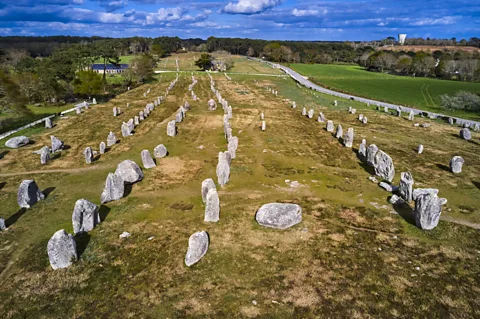
The Carnac stones in Brittany, France, form one of the world’s largest and most enigmatic megalithic sites. Stretching for miles, these thousands of standing stones have puzzled researchers for centuries.

A Monumental Undertaking

Erected around 4500–3300 BCE, the Carnac alignments include long rows of stones, dolmens, burial mounds, and stone circles. Their precise placement required immense planning and cooperation.

Theories Behind the Stones

Scholars propose several explanations:

  • Astronomical observatory: Alignments may mark solstices or lunar cycles

  • Ritual pathways: Stones may have guided processions or ceremonies

  • Territorial markers: They could signify sacred or social boundaries

Despite extensive research, no single theory explains the entire complex.

The Legacy of Carnac

Today, Carnac remains a symbol of Europe’s prehistoric ingenuity. Its sheer scale and mystery continue to fascinate archaeologists and visitors alike.
← The Origins of the Egyptian Sphinx: Guardian of the DesertThe Secret Language of Ancient Symbols and Glyphs →
Featured
image_2025-12-07_012832539.png
Dec 6, 2025
The Sacred Geometry of the Mayan Calendar
Dec 6, 2025
Read More →
Dec 6, 2025
image_2025-12-07_012007022.png
Dec 6, 2025
The Role of the Moon in Ancient Calendars
Dec 6, 2025
Read More →
Dec 6, 2025
image_2025-12-07_011156079.png
Dec 6, 2025
The Secrets of the Ancient Ziggurats of Mesopotamia
Dec 6, 2025
Read More →
Dec 6, 2025
image_2025-12-07_010524059.png
Dec 6, 2025
The Ancient Practice of Sky Burials in Tibet
Dec 6, 2025
Read More →
Dec 6, 2025
image_2025-12-07_005545537.png
Dec 6, 2025
The Lost City of Petra: Carved in Stone
Dec 6, 2025
Read More →
Dec 6, 2025
image_2025-12-07_004417823.png
Dec 6, 2025
The Ancient Ritual of Human Sacrifice: Why and Where?
Dec 6, 2025
Read More →
Dec 6, 2025
read more

Powered by The archaeologist