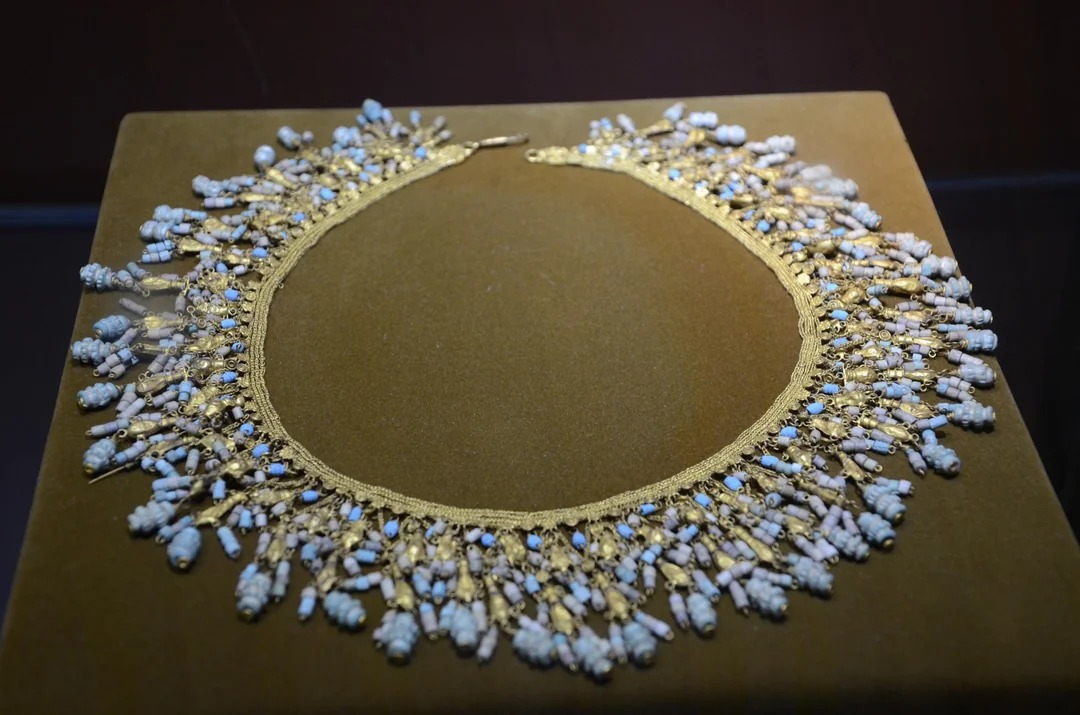
The Parthian Empire, reigning from 247 BC to 224 AD, was a powerful civilization that bridged the East and West, fostering trade, culture, and artistic expression. One of the most exquisite examples of their craftsmanship is a recently discovered necklace, showcasing the intricate work and luxurious materials typical of this period.
A Masterpiece of Ancient Jewelry
This necklace, hailed as one of the best-preserved relics from antiquity, was unearthed from a sealed box, shielding it from the ravages of time. The necklace not only survived but retained its delicate chains, a rarity for artifacts this ancient. What makes this piece extraordinary is the use of multiple valuable materials, which were prized for their rarity and beauty.
Materials Fit for Royalty
Crafted with a blend of gold, silk, emerald, and turquoise, this necklace speaks to the wealth and artistic sensibilities of the Parthian elite. Gold, a symbol of power and immortality, forms the base of the necklace. Its durability ensured the structure’s survival through centuries, while silk, a luxurious material from the famed Silk Road, adds a soft and supple texture to the design.
The emeralds and turquoise, sourced from distant lands, showcase the Parthian Empire’s vast trading network and influence. Emerald, known for its rich green hue, was often associated with fertility, rebirth, and power, while turquoise was believed to offer protection and tranquility. Together, these gems elevate the necklace to a level of grandeur befitting nobility or even royalty.
Historical Significance
The Parthians were known for their eclectic style, often blending Persian, Hellenistic, and local influences. This necklace is a testament to the empire’s ability to merge various cultural aesthetics into a cohesive and luxurious design. The inclusion of silk, a rare and expensive fabric in the ancient world, speaks to the importance of the Silk Road in the Parthian Empire’s economy.
Moreover, the intricate chains and flawless preservation of this necklace provide a glimpse into the technological advancements and craftsmanship of the time. Jewelry in the Parthian period was not just a form of decoration but also a status symbol, a marker of wealth, power, and connection to divine forces.
A Glimpse into Parthian Society
The discovery of this necklace offers valuable insight into the society that produced it. The Parthian Empire was a crossroad for trade between East and West, and this piece reflects the cosmopolitan nature of the empire. The blending of materials and techniques indicates a fusion of cultural influences, symbolizing the Parthians' role as a bridge between different civilizations.
Additionally, the preservation of the necklace suggests it was likely owned by someone of high status, possibly even royalty. Jewelry like this would have been worn during important ceremonies, serving both as an adornment and as a statement of the wearer’s power and influence.
This necklace from the Parthian Empire is more than just an ancient artifact; it’s a window into a world that thrived on luxury, artistry, and the fusion of cultures. Its blend of gold, silk, emerald, and turquoise, coupled with its incredible preservation, makes it one of the finest surviving examples of Parthian craftsmanship. As we study this masterpiece, we continue to uncover the rich and complex history of an empire that played a pivotal role in shaping the ancient world.