The Role of Women in Ancient Egypt
February 17, 2025
Women in ancient Egypt occupied a remarkably strong and respected position compared to their counterparts in many other ancient civilizations. While Egyptian society was largely patriarchal, women enjoyed extensive legal rights, economic independence, and social influence. They participated actively in family life, religion, business, and even politics, with some rising to rule the entire kingdom as pharaohs. Their status reflects the unique cultural values of ancient Egyptian civilization, which emphasized balance, order, and social harmony.
Social Roles of Women
In everyday life, Egyptian women possessed significant personal freedom and legal protection. They could own, inherit, buy, and sell property, manage businesses, and control their own finances. Women were also legally allowed to initiate divorce, and marriage contracts often ensured financial security for wives, including provisions for alimony and property rights.
Most women were responsible for managing the household, raising children, and producing essential goods such as food, clothing, and textiles. Common occupations included:
Weavers
Bakers
Brewers
Midwives
Musicians
Entertainers
Wealthier women supervised estates, servants, and agricultural production. Education was not widespread, but elite women could read, write, and participate in administrative activities.
Marriage in ancient Egypt was generally based on mutual agreement rather than strict family arrangements. Women retained their own property after marriage, and their legal identity remained separate from that of their husbands.
Religious Roles of Women
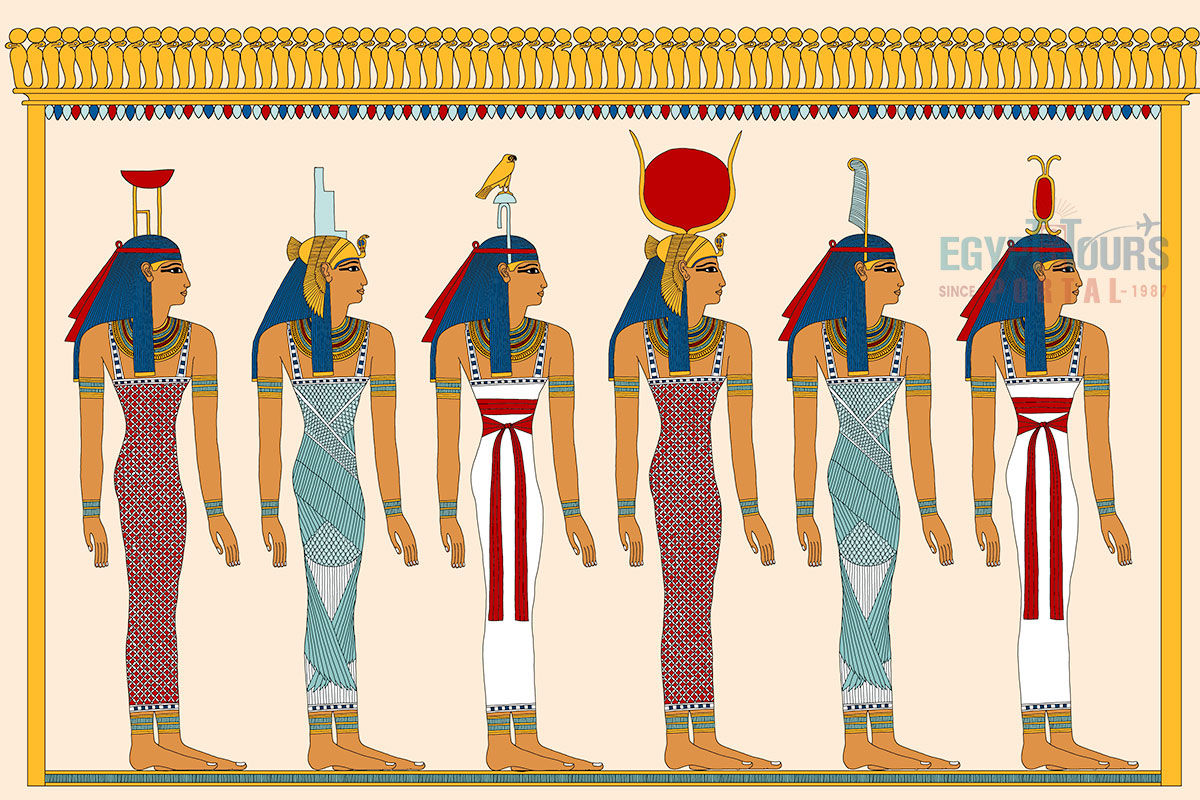
Religion was central to Egyptian life, and women played important roles in religious institutions. Many served as priestesses, especially in the worship of goddesses such as Isis, Hathor, Neith, and Mut. Female musicians, dancers, and singers performed in temple rituals, honoring the gods through sacred music.
The most powerful religious position held by women was the “God’s Wife of Amun.” This title was reserved for elite royal women, particularly during the New Kingdom. The God’s Wife controlled large estates, commanded temple resources, and exercised major political and economic influence in Thebes.
Women were also associated with religious symbolism of fertility, rebirth, and divine protection. Goddesses such as Isis represented motherhood, magic, and royal authority, reinforcing the spiritual importance of women in Egyptian belief systems.
Political Roles of Women
Although men dominated formal political structures, women could achieve significant political power in ancient Egypt. Some queens ruled as pharaohs, the highest authority in the land.
The most famous female ruler was Hatshepsut (c. 1479–1458 BCE), who governed Egypt as a full pharaoh. She adopted traditional male royal imagery and led major building projects and trade expeditions. Her reign was marked by stability and prosperity.
Other influential women included:
Nefertiti, who played a key role in religious reforms
Queen Tiye, a powerful advisor to Pharaoh Amenhotep III
Cleopatra VII, the last ruler of Egypt, who skillfully navigated Roman politics
Even non-royal women could appear in court, sign contracts, own land, and petition government officials, demonstrating their legal autonomy.
Women, Law, and Legal Rights
Egyptian law treated women as independent legal individuals. They could:
File lawsuits
Testify in court
Own businesses
Inherit property
Write wills
Unlike many ancient societies, women were not considered the legal property of their fathers or husbands. This legal equality allowed women to maintain economic stability and personal agency throughout their lives.
Conclusion
Women in ancient Egypt enjoyed a level of independence, respect, and legal protection that was rare in the ancient world. Their roles in society extended beyond the household into religion, business, and politics. From everyday workers to powerful queens and priestesses, Egyptian women shaped their civilization in meaningful ways. Their status reflects the advanced and balanced nature of ancient Egyptian society, where women were recognized as essential contributors to social order, spiritual life, and political authority.
References
Encyclopaedia Britannica – Women in Ancient Egypt
https://www.britannica.com/topic/women-in-ancient-Egypt
Wikipedia – Women in Ancient Egypt
https://en.wikipedia.org/wiki/Women_in_ancient_Egypt
World History Encyclopedia – Women in Ancient Egypt
https://www.worldhistory.org/Women_in_Ancient_Egypt/
The British Museum – Women in Ancient Egypt
https://www.britishmuseum.org/collection/galleries/ancient-egypt
National Geographic – Powerful Women of Ancient Egypt
https://www.nationalgeographic.com/history/article/ancient-egypt-women-power