The linguistic legacy of the Viking Age in England is one of the most profound examples of cultural hybridization in history. It is not merely a record of trade or raids, but a testament to deep-seated settlement and social integration that fundamentally altered the English language.
The Archaeological Foundation for Linguistic Change
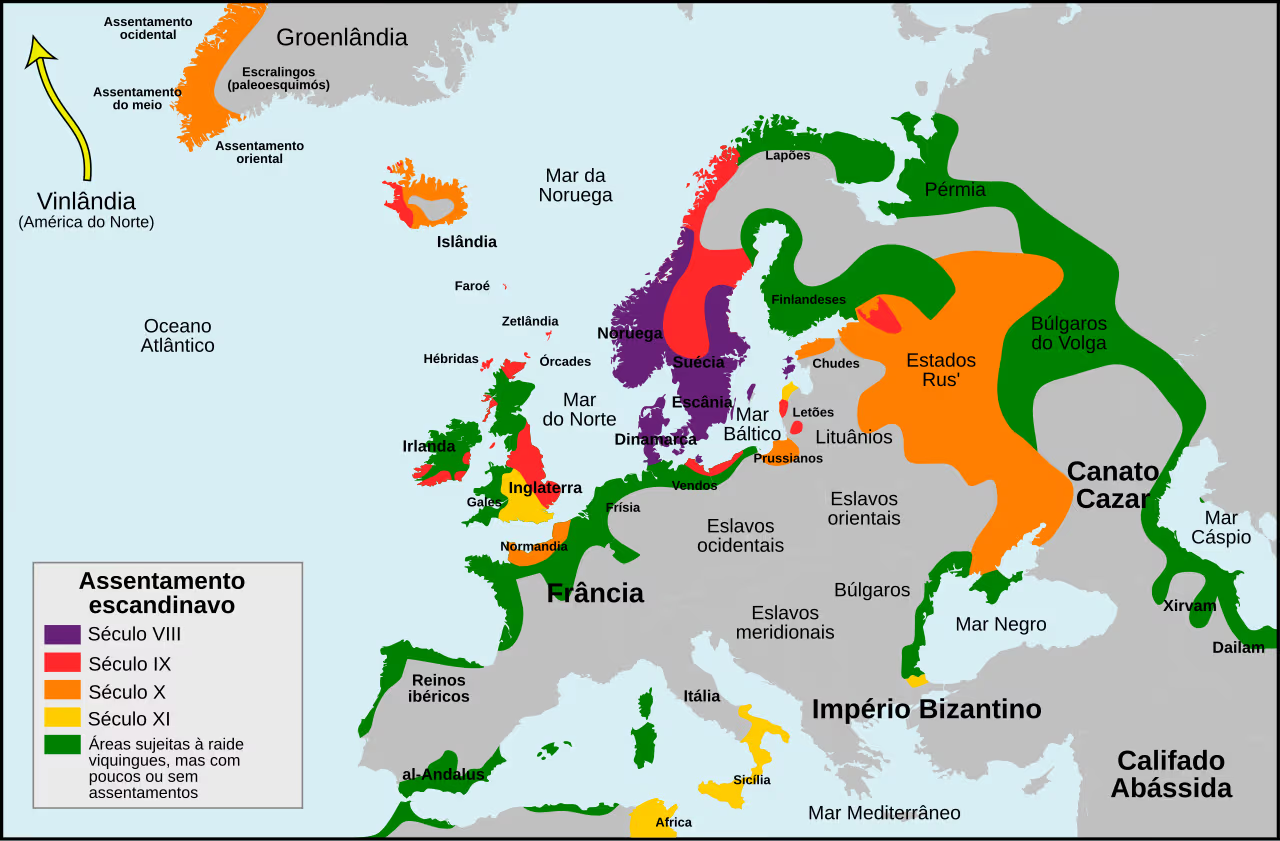
The transition from Old English to Middle English was accelerated by the Danelaw—the region of Northern and Eastern England where Norse law and custom prevailed. Archaeological evidence provides the direct context for this linguistic mixing:
Settlement Patterns: Excavations of Viking-age farmsteads in the Danelaw reveal a "landscape of integration." Unlike the initial raiding period, late 9th-century sites show Norse settlers living in proximity to the Anglo-Saxon population, leading to the necessary evolution of a "contact language."
Material Culture and Trade: The discovery of Norse-style combs, jewelry, and gaming pieces alongside Anglo-Saxon pottery indicates that these two groups did not exist in isolation. They interacted in marketplaces, creating the specific social environment needed for the adoption of "loan words" related to everyday activities.
Place-Name Archaeology: The dense concentration of place names ending in -by (farm/settlement), -thorpe (village/hamlet), and -thwaite (clearing) corresponds precisely with areas of heavy Norse landholding, mapping the geographical spread of Old Norse influence across the English Midlands and North.
The Mechanisms of Linguistic Adoption
The adoption of Old Norse into the English vernacular was not limited to trade terminology; it permeated the grammatical and domestic core of the language:
The "Core" Vocabulary: Unlike words borrowed for prestige (like later French influence), Norse words were integrated into the base of the language. Terms like sky, egg, window, knife, and husband replaced or augmented Old English equivalents because the groups lived so closely that these household objects became common ground.
Grammatical Shifts: The most striking evidence of this contact is the adoption of Norse pronouns. The English third-person plural pronouns (they, them, their) are of Norse origin. This implies a level of intimate integration where speakers of both languages likely intermarried or lived in bilingual households, necessitating a simplified, standardized pronoun system.
The "Standardization" of Verbs: The verb "to be" saw significant Norse influence. The adoption of the word are—replacing the various regional forms of "be"—was likely driven by the need for clear communication between Norse and English speakers in common trade and legal contexts.
The Role of Social Interaction
Archaeology suggests that the "dark" raiding narrative is incomplete. The linguistic evidence points toward:
Intermarriage: Analysis of burial sites in the Danelaw often shows hybrid burial rites, blending Christian Anglo-Saxon customs with pagan Norse practices, suggesting families where parents likely spoke different native tongues.
Market Dynamics: The establishment of the Five Boroughs (Derby, Leicester, Lincoln, Nottingham, and Stamford) created institutionalized centers of trade. These sites acted as "linguistic hubs" where merchants, farmers, and soldiers from different backgrounds had to establish a shared dialect to conduct business efficiently.
Legal Fusion: The term "law" itself comes from the Old Norse lagu. The adoption of this word into English legal nomenclature underscores how the Norse-controlled regions reorganized the social structure of Northern England, effectively rewriting the vocabulary of justice and governance.
The Viking influence on English serves as a structural "fossil." While the longships have long since decayed, the daily English vocabulary remains a permanent archaeological record of a society where, eventually, the distinctions between Viking and Saxon were subsumed into a new, blended identity.