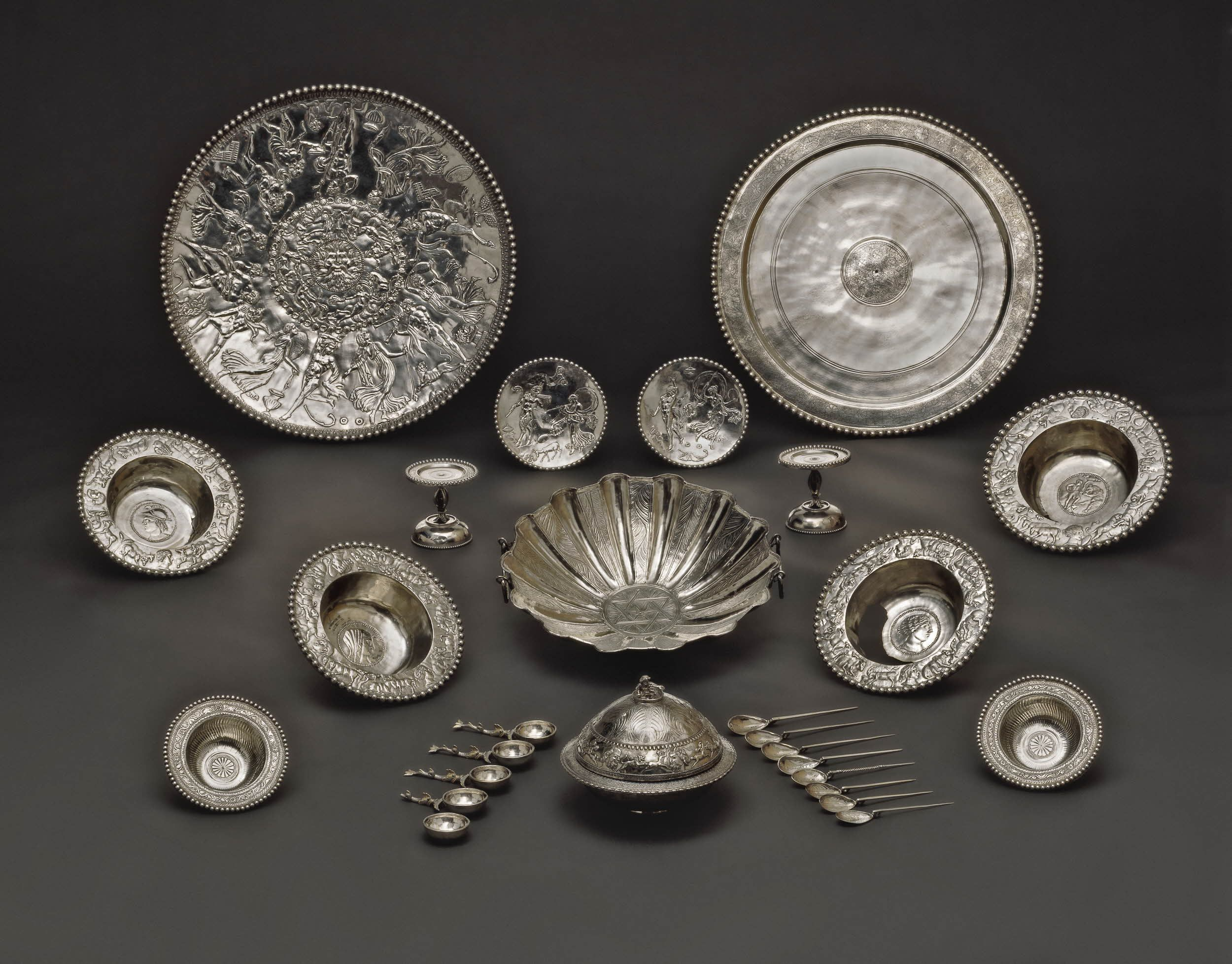
Roman silver hoards, specifically the Mildenhall and Sevso treasures, offer a rare glimpse into the opulent domestic lives of late-antique aristocrats. These collections illustrate the intersection of extreme wealth, classical mythology, and the volatile political climate of the 4th century CE.
The Mildenhall Treasure (Britain)
Discovered by a farmer in Suffolk, England, in 1942, this is one of the most significant Roman finds in Britain. It consists of 34 pieces of luxury silver tableware, likely hidden for safekeeping during the collapse of Roman administrative control in Britain.
The Great Dish: The centerpiece is the "Great Dish" (Oceanus Dish), a massive 60-centimeter-wide silver plate. It is decorated with a complex, swirling relief depicting the sea god Oceanus, surrounded by Nereids and Dionysian motifs.
Artistic Style: The work displays the late-Roman preference for dramatic, high-relief scenes that emphasize dynamic motion and intricate detail. The imagery blends Hellenistic mythological tradition with the specific decorative fashions of the 4th-century elite.
Evidence of Use: The presence of a varied set—including bowls, platters, and ladles—suggests that this was not merely decorative, but functional equipment used for lavish convivia (banquets). These events were essential tools for social networking and political theater among the Roman governing class.
Cultural Context: The hoard signifies the presence of a powerful, wealthy official in Britain during a period of rising instability. Its burial was likely a desperate, last-minute attempt to protect personal wealth from encroaching raiders or civil unrest.
The Sevso Hoard (Geography Uncertain)
Unlike the Mildenhall find, the Sevso Hoard is a collection of 14 massive silver vessels that has been shrouded in controversy, legal battles, and mystery regarding its true origin.
The Inscription: One of the most famous items, the "Sevso Plate," bears an inscription linking the silver to a man named Sevso. It also features a depiction of a hunting scene and a monogram that incorporates the Chi-Rho, signifying the owner’s Christian faith.
The "Luxury" Benchmark: The sheer size and weight of these pieces—many are over 70 centimeters in diameter—place them among the most valuable luxury items ever recovered from the ancient world. They represent the peak of Roman craftsmanship, utilizing techniques like gilding, niello inlay, and extremely precise engraving.
Geopolitical Clues: While its exact find-spot remains a subject of intense debate, the style and iconography strongly suggest it originated in the Danube region (modern-day Hungary or Croatia). The collection likely belonged to a high-ranking official serving in the court of a late-Roman Emperor, possibly during the reign of Constantine or his successors.
The Mystery of Ownership: The hoard’s history—smuggled out of its country of origin, sold on the black market, and subject to decades of litigation—mirrors the chaotic fragmentation of the later Roman world. It stands as a symbol of the massive wealth inequality that defined the late-Imperial period, where a single domestic dining set could equal the annual revenue of an entire province.
Shared Significance of Roman Silver
Status Projection: These hoards were not just assets; they were instruments of power. By dining on silver plate decorated with scenes of the gods, the owner projected an image of classical learning (paideia) and divine favor to their guests.
Mythological Literacy: Both hoards feature heavy mythological themes. The use of figures like Bacchus, Hercules, and Oceanus served as a "visual language." To own and display this silver was to claim membership in the elite, educated class that preserved the cultural heritage of the Greco-Roman world.
Economic Clue: The burial of such treasures serves as a historical "stop-watch." They mark the precise moments when the security of the Roman provinces failed, and wealthy families were forced to hide their assets in the earth, hoping to retrieve them once order was restored—a hope that, in these cases, remained unfulfilled for over 1,500 years.